

The “Golden Rule” for maintaining consistency
The secret to not driving the AI ”crazy” when you upload an image is to establish an impassable perimeter. This is the Master Promptthe basic structure that you will have to glue Before of every desired effect.
The command to always use together with image upload: “Exactly maintain the composition, geometry and all architectural elements of the original image. Only modify the lighting, color grading and photographic texture following these indications: (…)”.
Let’s put it to the test: 4 styles for 4 atmospheres
Here are some practical examples. Load your base image (maybe a neutral render or a rough model), paste the Master Prompt and add one of these descriptions.
1. Effect Flash On: raw and material
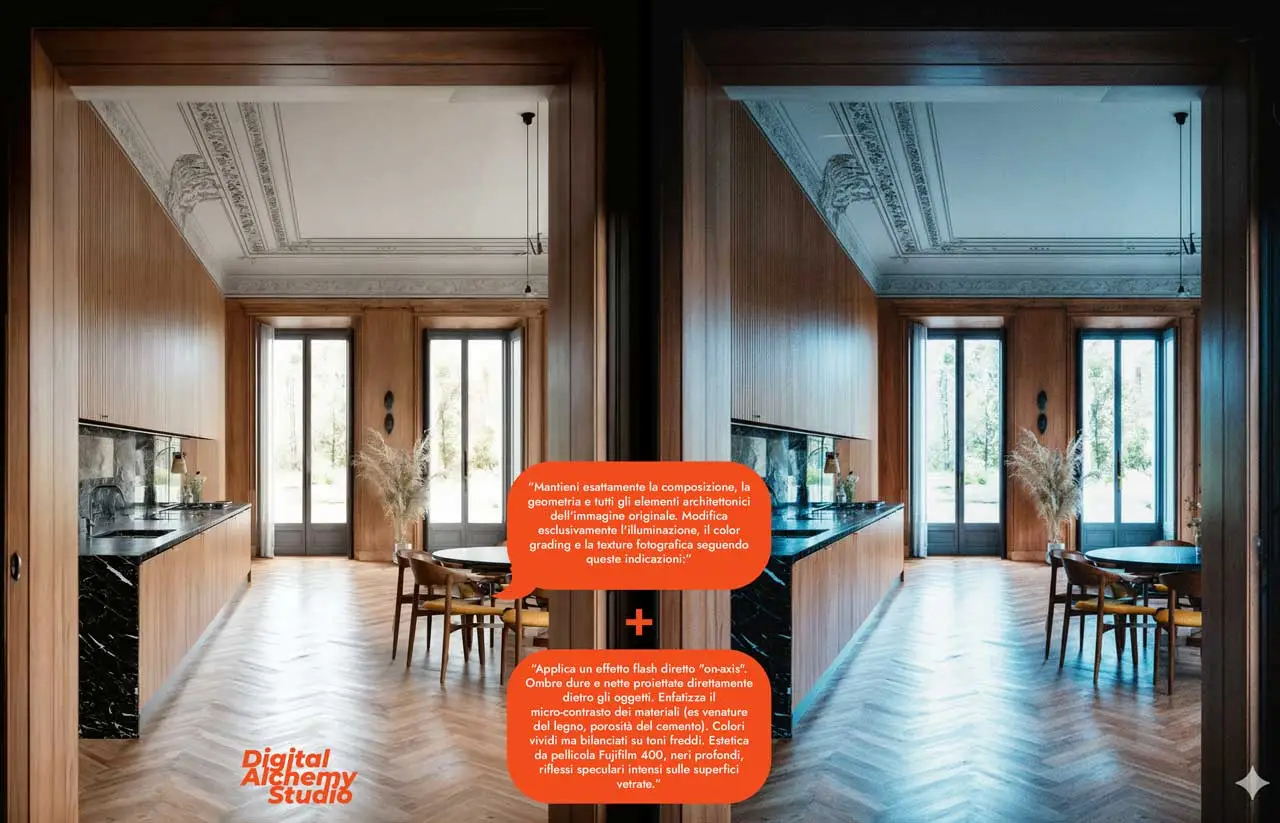
The prompt: “Applies a direct “on-axis” flash effect. Hard, sharp shadows projected directly behind objects. Emphasizes the micro-contrast of materials (e.g. wood grain, porosity of concrete). Vivid but balanced colors on cold tones. Fujifilm 400 film aesthetics, deep blacks, intense specular reflections on glass surfaces.”
2. Golden Hour: the heat that sells the project
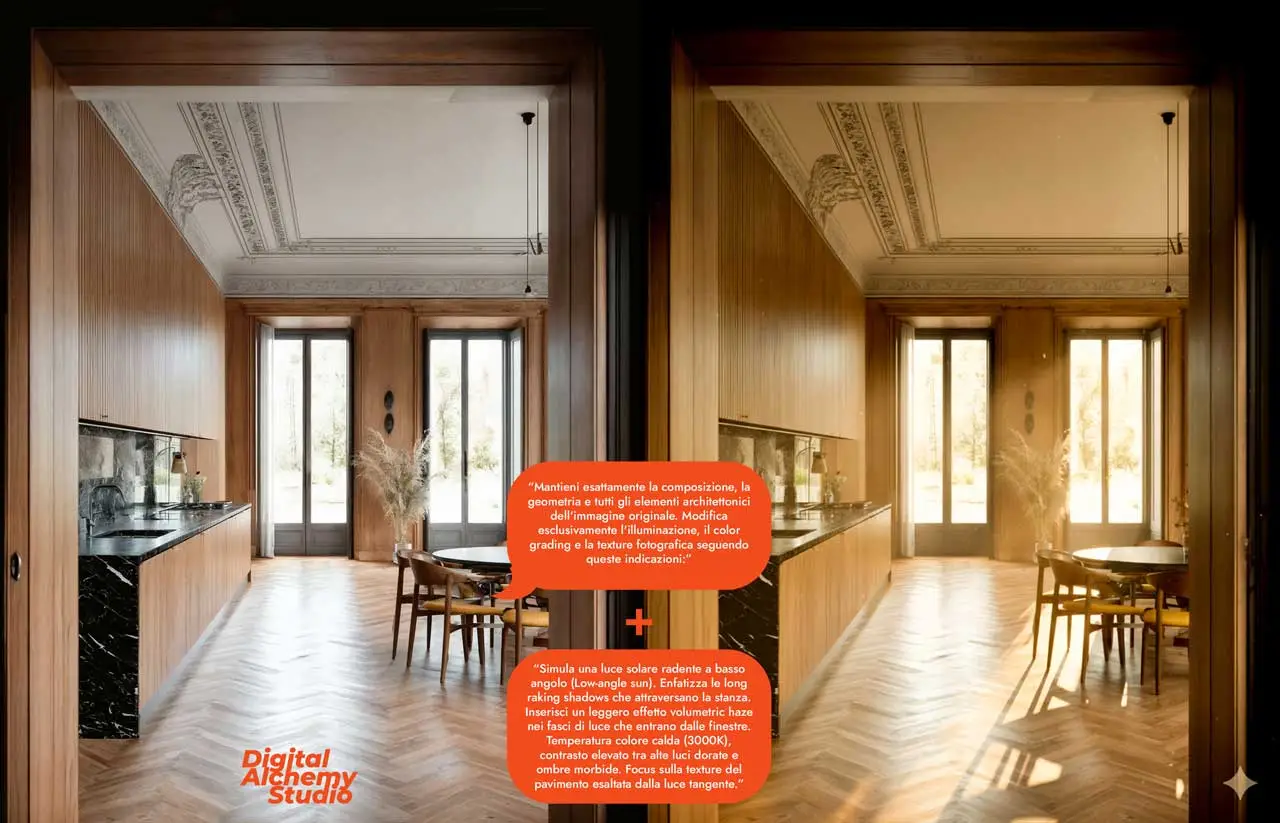
The prompt: “Simulate low-angle sunlight. Emphasize the long raking shadows that cross the room. Insert a light volumetric haze effect in the light beams that enter from the windows. Warm color temperature (3000K), high contrast between golden highlights and soft shadows. Focus on the texture of the floor enhanced by the tangent light.”
3. Blue Hour: cinematic elegance
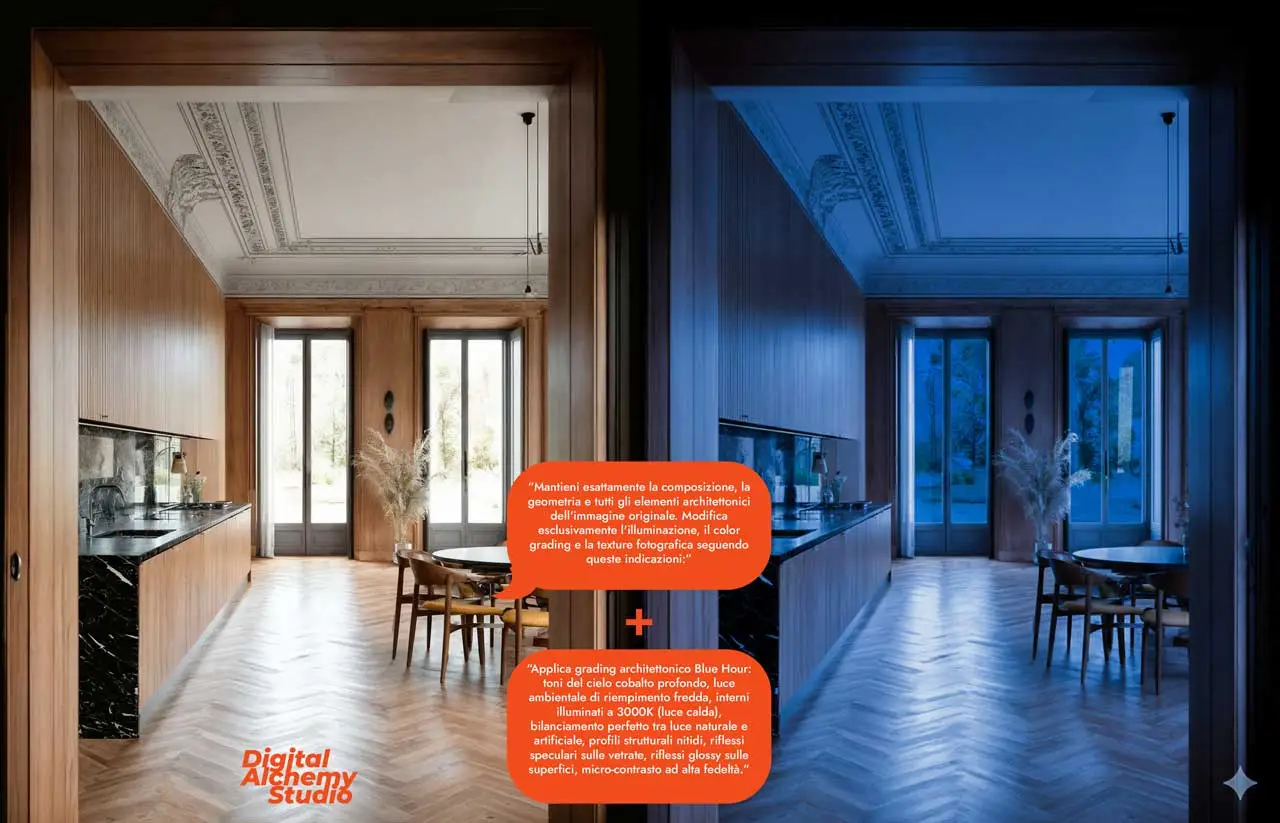
The prompt: “Apply Blue Hour architectural grading: deep cobalt sky tones, cool ambient fill light, interiors lit at 3000K (warm light), perfect balance between natural and artificial light, sharp structural profiles, specular reflections on glazing, glossy reflections on surfaces, high fidelity micro-contrast.”
4. Ceiling LED Light: nocturnal luxury
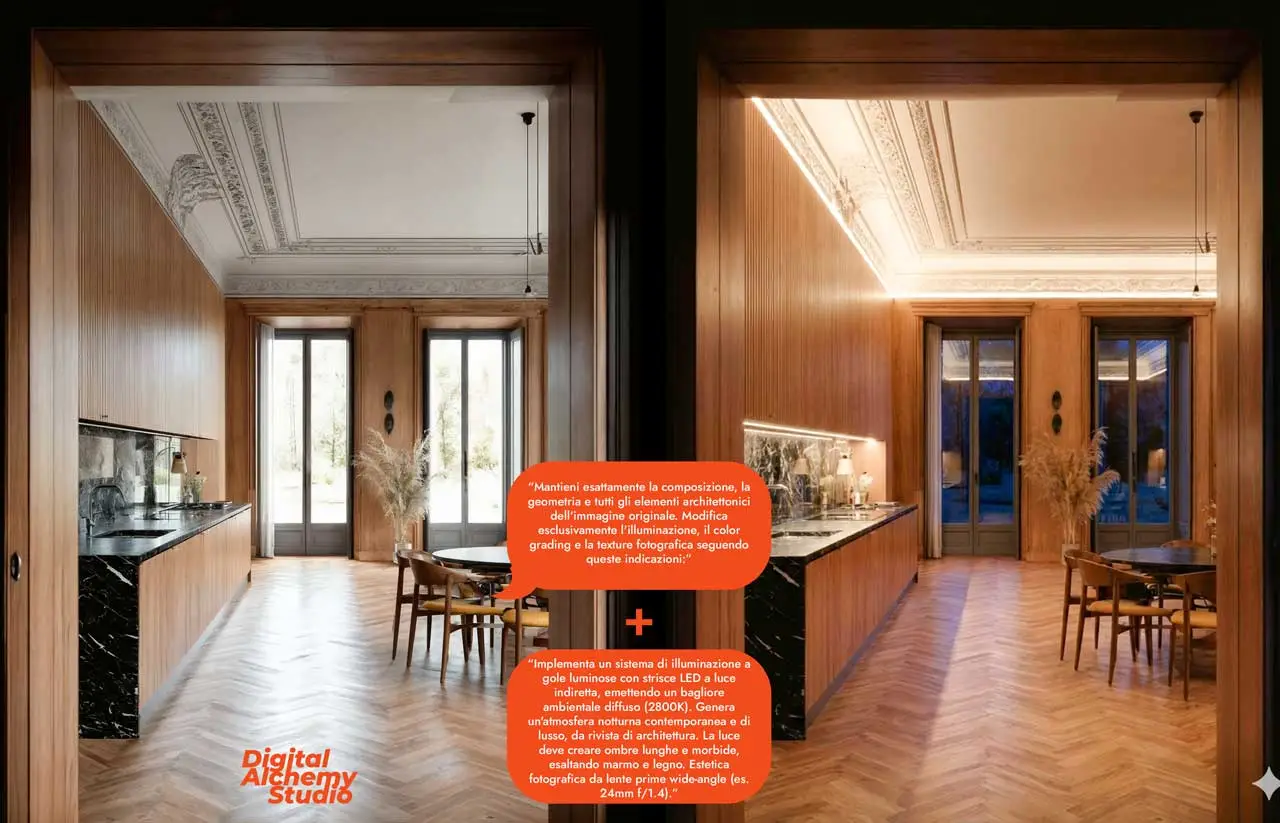
The prompt: “It implements a luminous throat lighting system with indirect light LED strips, emitting a diffused ambient glow (2800K). It generates a contemporary and luxury night-time atmosphere, reminiscent of an architecture magazine. The light must create long and soft shadows, enhancing marble and wood. Photographic aesthetics from a wide-angle prime lens (e.g. 24mm f/1.4).”
In conclusion
As we have seen in these tests, the key is not to hope that the AI “guesses”, but to guide it with strategic references and technical terms borrowed from real photography. The architecture remains yours – the AI only takes care of turning on the right light. Until next time viewing!
The weekly column “Architectural Prompting” is edited by experts Luciana Mastrolia, Giovanna Panucci and Andrea Tinazzo
>> If you are interested in these topics, also sign up to the free Linkedin Newsletter AI & Design for Technicians, we’ll talk about it here!