
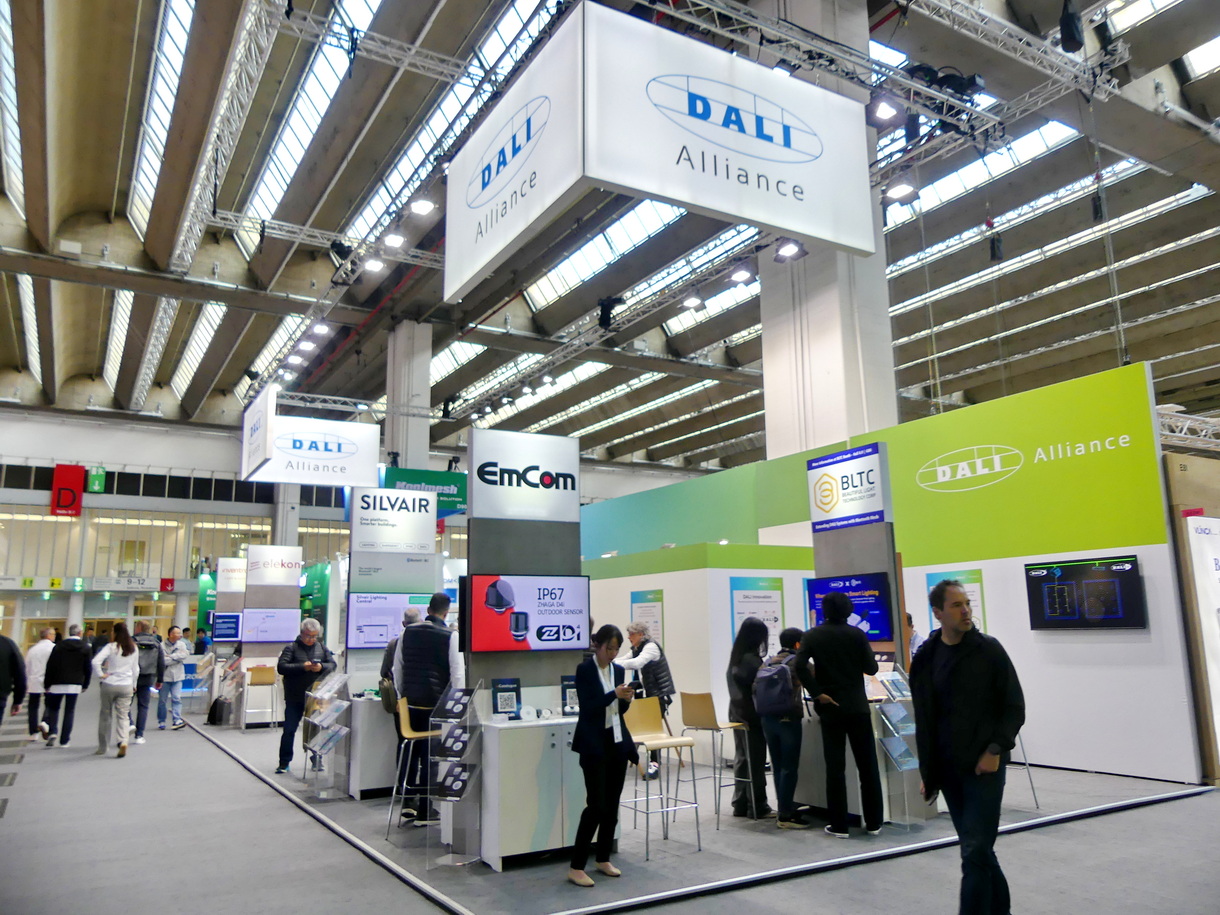
The development of LEDs was accompanied by a destandardization of their connection. Lighting control has also suffered from a proliferation of protocols. Zhaga and DALI restore standardization
Let’s remember the days of incandescent bulbs. They knew physical connection standards: the socket and the screw. And the bulbs from different manufacturers were perfectly interchangeable. The arrival of LEDs has called this standardization into question. Initially, the different manufacturers opted for different physical solutions for connecting their LEDs into luminaires. To the point, even today, that when we buy a LED lightfor domestic or tertiary use, it is indicated that the source is not changeable: when the LEDs are at the end of their life, the entire fixture must be replaced. When we insist on the circular economy, it has a bad effect.
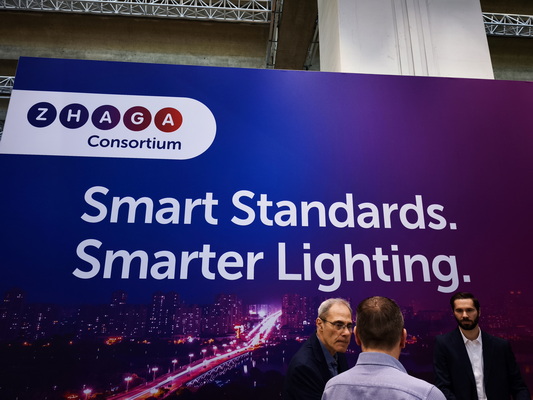
The Zhaga association has developed 26 standards to make LEDs and the components of lighting fixtures carrying LEDs interoperable. © PP
ZHAGA, a global standardization effort
At Light Light&Buliding exhibition which takes place from March 9 to 13, 2026 in Frankfurtwe came across Zhaga, a global standardization effort that addresses this problem. The Zhaga Consortium is an international association which brings together more than 650 industrialists around the world, 140 associate members and 25 founding members. Signify and Wago are among the members, as well as the Belgian industrialist Schréder SA. Sylvania and Lacroix Environnement are associate members.
THE Zhaga’s goal is to offer physical standards and interfaces for lighting components. The association calls them “Books” and publishes 26 of them so far. These books also cover LED modules for spotlights (Book 10 without drivers, Book 17 with incorporated driver) as well as on programming the luminaires using NFC (Book 24). The aim of this standardization is twofold. First of all, it is about making it easier for lighting manufacturers who can now choose from interchangeable offers from multiple component suppliers. Then, this allows end users, domestic or professional, to change their light sources at the end of their life without having to recycle the entire luminaire. Otherwise, lighting installers and electricians should never again offer materials that do not meet Zhaga standards. By the way, these standards make it possible to develop a real positive message about LEDs: they consume little and are changeable at the end of their life. The Zhaga standards also constitute a simple way to comply with the European Directives: Ecodesign (EU 2019/2020) and Energy Display (EU 2019/2015) which require the possibility of replacing light sources, while the European ESPR regulation (EU 2024/1781) requires the possibility of repairing luminaires.
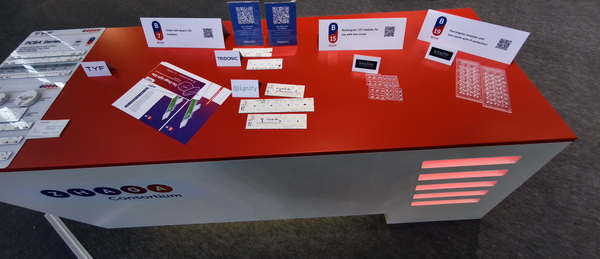
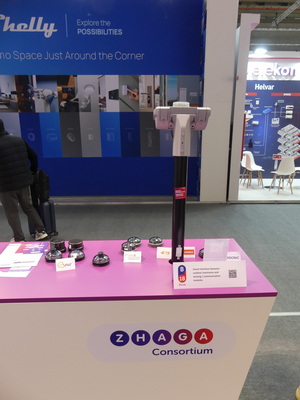
The results of the Zhaga association’s standardization efforts are palpable: both for interior lighting installations and for systems installed outdoors, including public lighting, standardized components are available for all types of implementations and all lighting powers. © PP
DALI protocol ensures scalability of lighting control and beyond
The second brick in the construction of perfect circularity of luminaires is the DALI protocol, developed by the DALI Alliancedan international association. It is not new at all, but offers recent developments, including:
– DALI+the DALI application layer on the Thread mesh radio protocol;
– DALI2 which provides the connection of various types of probes (temperature, relative humidity, CO2, presence, etc.) and the collection of data;
– And DALI4i which ensures the simple connection of IoT-ready luminaires to a DALI network.
A DALI network, wired or radio, can now control lighting, fans, solar protection, and be integrated into the HVAC installationreport all kinds of information from various probes. Which makes it particularly flexible and, compared to other less universal protocols, considerably reduces the hardware necessary, since only one DALI terminal controller provides multiple functions.
A DALI+ controller accepts 64 connected devices, in fact 63 because one channel must be kept for the wireless controller. Connecting a DALi automaton to a building’s TCP/IP network, either via Thread or directly via Ethernet, allows all information to be sent to supervision. THE DALI automatons also have their Zhaga standardization : Book 20 for interior drivers, Book18 for drivers for exterior lighting installations.
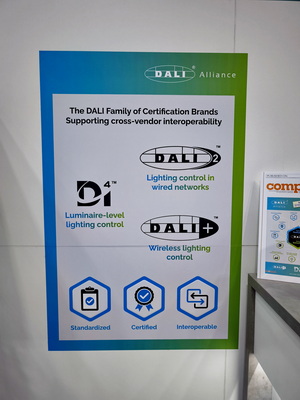
Developments in the DALI protocol make it particularly flexible in the event of extension of control in an existing building. By updating the automation software, new functions are added. By bridging wired DALI and radio DALI+, it is easy to extend the network to new premises in the building. © PP
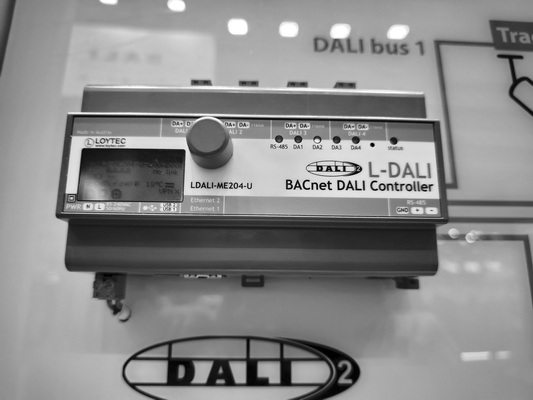
The DALI Alliance has launched a working group to define the criteria for evaluating the circularity of DALI controllers. The results are expected in 2027. © PP
L’use of Zhaga standardized components and DALI standard controllers guarantees the interoperability and replacement of components, as well as the evolution of the possibilities for controlling lighting installations and beyond.