
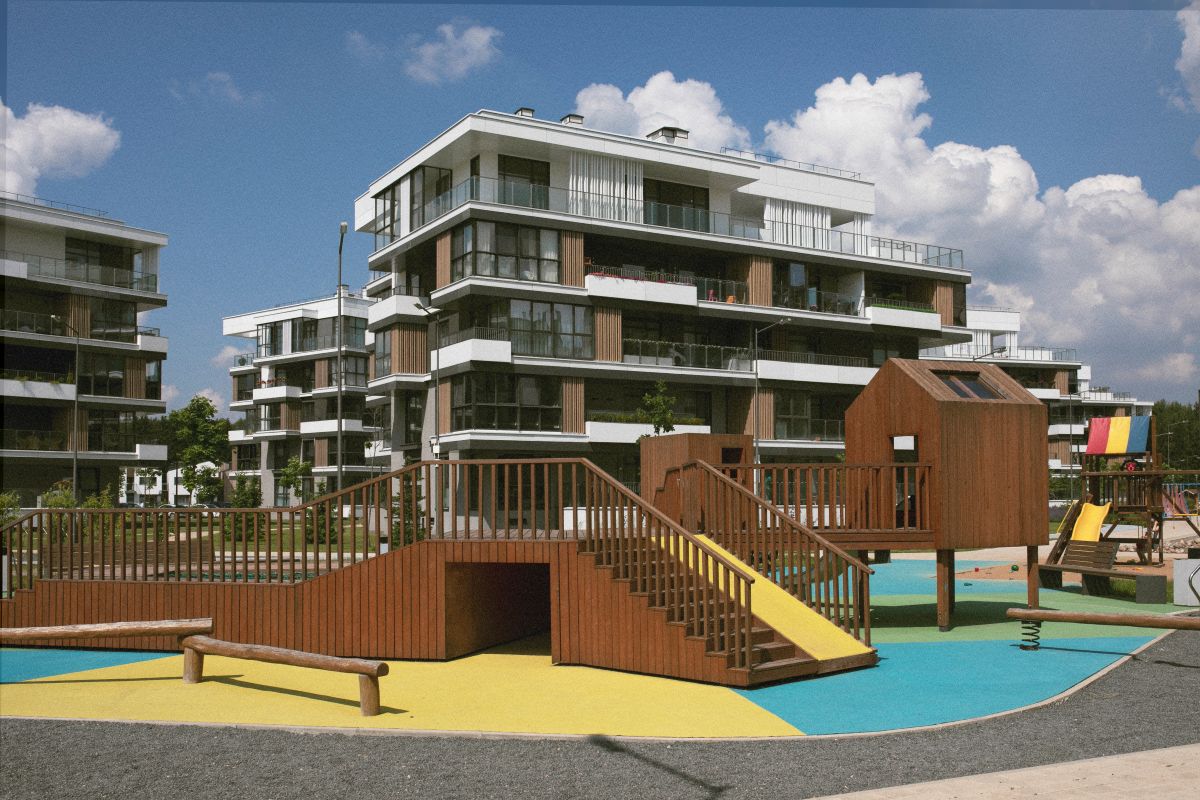
In ten years, the social housing stock has grown significantly, but is still struggling to meet the needs of the most modest households, particularly in very social housing, in a context of record demand.

Despite a sustained growth in the social housing stock over the last decadestructural imbalances persist. Between slowdown in production, mismatch with the income levels of applicants and record pressure on demand, the model is now showing its limits.
Sustained growth, but a pace that is running out of steam
In the space of a decade, the social housing stock has experienced significant growth, with 747,000 housing put into service – in other words: allocated to applicant households – while, at the same time, 220,000 units were sold or demolished. As of January 1, 2024, France had 5.13 million social housing unitsan increase of 11.4% compared to 2014, according to Ancols data (L’National social housing control agency).
This dynamic, which is very real, is however showing signs of running out of steam. The annual rate of production has contracted significantly over the years, going from 59,000 new housing units in 2014 to only 35,000 in 2023. A gradual slowdown. And now structural.
At the same time, the landlords have been able to partially adjust their offer to sociological changes in demandparticularly in developing small-scale housing : almost 40% of recent constructions concern T1 and T2 apartments, in response to the rise of single households, which now represent almost half of applicants. On a territorial level, Ancols also notes a relative coherence, the most tense areas logically concentrating the majority of new constructions.

Nearly 40% of recent programs concern small-sized housing (T1 and T2), a direct reflection of the increase in demand for single households. © loservice.fr
The persistent deficit of very social housing, a black point of the model
But behind these adjustments, a major fragility persists: the chronic insufficiency of very social housing (PLAI)yet intended for poorest households. Over ten years, their growth remains marginal – limited to 4% – even though demand was already well above supply in 2014. At that date, almost 60% of applicants had resources below the PLAI ceilingsfor only 44% of the fleet corresponding to this category. An inadequacy which has since become more pronounced and which questions the capacity of the model to respond to the most vulnerable audiences.
The Social Union for Housing continues to warn of this structural imbalance. Its general director, Marianne Louis, points to a shared responsibility for public policies, recalling that the production of very social housing remains closely conditioned by state aid, via the National Stone Aid Fund. A lever considered insufficient.
While the sector called for an increase in PLAI’s annual production to 60,000 units from 2022, only 30,000 housing units were financed in 2025. A significant gap… and revealing.
In a context where 2.9 million households were still waiting for social housing end of 2025 – a record level – the question of financing, and more broadly of prioritization of the most modest audiencesstands out more than ever as a central issue for the entire housing chain.