
Absence of building permit/partial discrepancy: relevance for tax purposes
A first important element recalled by the judges of Palazzo Spada can already be deduced from the heading of the art. 34″Interventions carried out in partial non-compliance with the building permit”: the pecuniary sanction alternative to demolition does not apply in the case of a building entirely constructed in the absence of the qualifying document (2) or in the case of total non-conformity with the building permit obtained (3).
The evidentiary aspect
Considering that the application of the financial penalty former art. 34, paragraph 2, of the Consolidated Law on Construction has no restorative value of the violated building structure, the rule is a derogation from the general rule set by the first paragraph and therefore must be interpreted restrictively. It follows that:
- it is necessary that unequivocal demonstration be provided that the demolition, due to its material consequences, would affect the stability of the construction as a whole; it is evidently a burden of proof on the interested party(4) and certainly not on the municipal technical office;
- the rule in question cannot be applied for the sole reason that the demolition could affect the functionality of the building or imply a considerable expense(5), being irrelevant, in particular, whether more or less expensive tools or systems have been built in the part to be demolished(6).
The concrete case
In the specific case, the municipal technical office had rejected the request with which the recipient of a demolition order had requested the application of the pecuniary sanction in place of the demolition, pursuant to art. 34, paragraph 2(7), for illegal building interventions consisting in the construction, in the absence of a building permit, of a roof placed on the flat roof on the 6th floor of a condominium building and the subsequent covering of the same; request justified with the assumption that the demolition of the roof could not have taken place without prejudice to a photovoltaic system built on the same roof pursuant to a previous communication of the start of works.
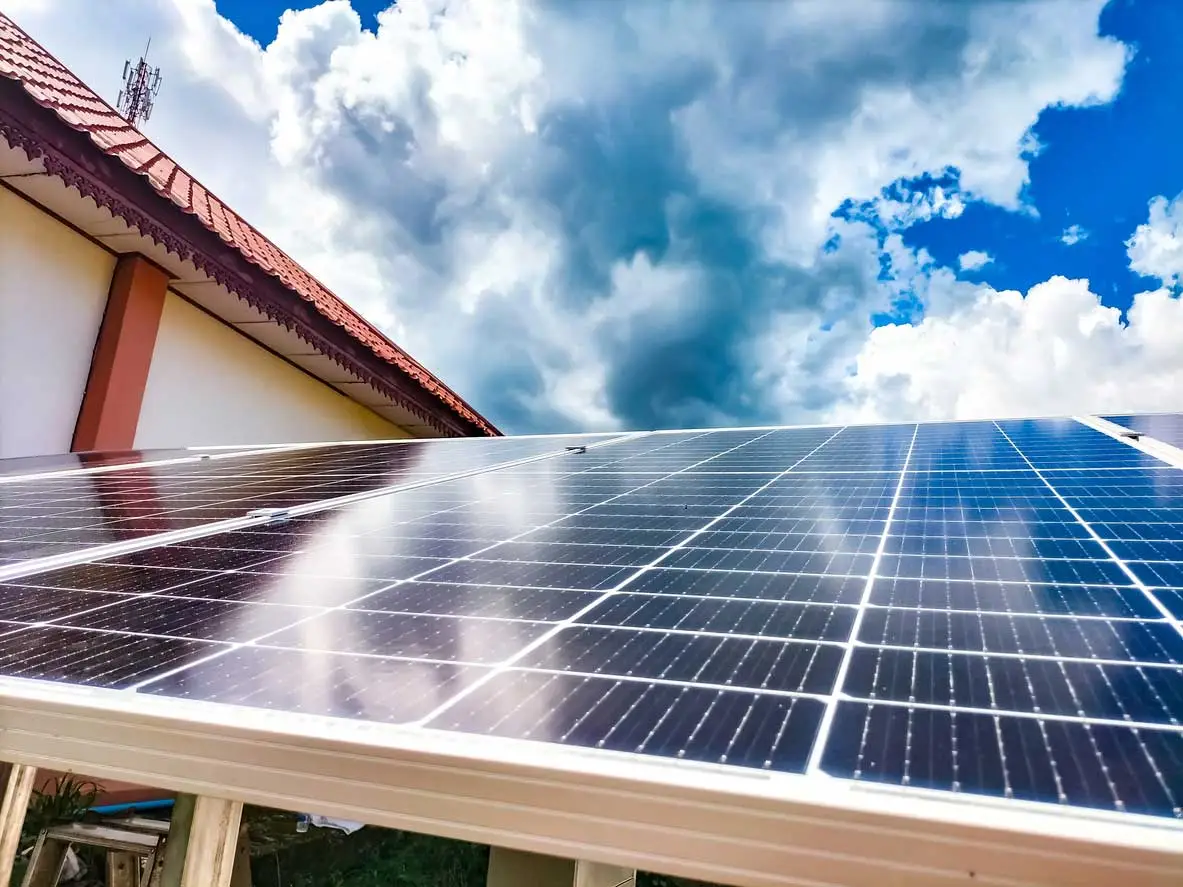
According to the judges of Palazzo Spada (who confirmed the first degree sentence), a photovoltaic system placed on the roof of a building is not a portion of the building that can (if applicable) be considered to have been built in compliance with the building’s qualification, since it is not a portion of the building at all, but a system placed at the service of the same, which does not affect its stability or possibility of use and which, among other things, lends itself to being dismantled and certainly not “demolished”.
Opining differently and granting relevance, however, to the legitimacy of the system considered in itself alone (where ever this was possible), the implementation of installation interventions of photovoltaic solar systems even in free activity or with a simplified authorization procedure (pursuant to Legislative Decree no. 190 of 25 November 2024, which now constitutes the sedes materiae) would end up removing the underlying buildings, even if completely untitled, from the adoption of measures to restore the violated building structure.
Consequently, the decision of the municipal technical office and of the first instance judges who had deemed the second paragraph of the art. to be inapplicable to the case in question was considered correct. 34 of the Consolidated Construction Law.
Furthermore, according to the judges, the regional legislation on photovoltaic systems was to be considered irrelevant in the specific case which, created to promote and encourage environmental sustainability and energy saving, cannot lead to exceptions to the provisions of the Consolidated Building Act; without considering, however, that once the system had been dismantled and the roof removed, it was physically possible to reposition the photovoltaic panels on the flat roof.
>> If you want to receive news like this directly on your smartphone, subscribe to our new Telegram channel!
Notes
(1) Taxation must take into account the values in force at the time of submission of the application: TAR Campania, Salerno, sec. I, heard. 11 September 2020, n. 1123.
(2) Cons. right. adm. for the Sicilian Region in sg, sent. 25 January 2024, n. 70.
(3) TAR Calabria, Reggio Calabria, sentence. 27 September 2021, n. 719.
(4) TAR Lazio, Latina, sec. II, sentence. 26 January 2026, n. 163.
(5) Council of State, sec. V, sent. 5 September 2011, n. 4982 and sent. 12 November 1999, n. 1876, with reference to the similar provision contained in the art. 12 of the law. 28 February 1985, n. 47.
(6) Council of State, sec. VI, sentence. 9 April 2013, n. 1912, where it is stated that “if these profiles could also be taken into consideration there would be a risk of transforming the institution in question into a sort of “disguised amnesty””.
(7) We remind you that requesting the taxation application involves recognizing the existence of an abuse: see. TAR Campania, Salerno, section. II, sentence. 30 October 2025, n. 1755.
In collaboration with studiolegalepetrulli.it
Thank you for subscribing to the newsletter.