

Two government texts planning to reduce the list of isolated works eligible for MaPrimeRénov’ aid were rejected by the National Housing Council (CNH), which brings together housing stakeholders.

The government is facing a serious setback on its reform of MaPrimeRénov’. Meeting in session, the CNH (National Housing Council) rejected the draft decree and order which plans to refocus aid on overall renovations only. A consultative decision, certainly, but which crystallizes the opposition of a significant part of the construction industryworried about the consequences for households and businesses alike.
The monogestic in the sights of the executive
The government is preparing to publish a decree and an order which would profoundly modify the operation of MaPrimeRénov’. The stated objective is to concentrate public funding on comprehensive renovations, deemed more energy efficient. On the other hand, the aid granted to work carried out “by gesture”that is to say in isolation, would be greatly reduced.
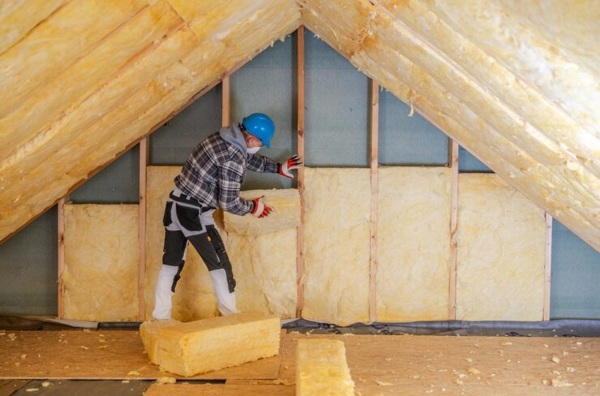
Concretely, several categories of work would fall outside the system. In particular, wood and pellet stoves, solar water heaters and solar heating systems (excluding overseas territories), heat pumps dedicated solely to the production of domestic hot water, ventilation systems, roof and attic insulation work as well as the replacement of windows would be excluded. © Magnific
Conversely, some equipment would remain eligiblenotably :
– heat pumps intended for heating – air/water, geothermal or solar thermal;
– Connection to a heating network, energy audits;
– The removal of fuel tanks as well as certain specific work carried out overseas.
THE section devoted to overall renovationswould not be changed and would continue to finance these different positions when they are part of an overall renovation project.
A massive rejection from the National Housing Council
Even before their publication, these texts received a particularly cold reception within the National Housing Council, the consultative body having rejected them by 25 votes against, six votes for and seven abstentions. Although this opinion is not legally binding on the government, it reflects the extent of the reservations expressed by representatives of communities, professionals and housing stakeholders.
However, the Ministry of Housing nevertheless insists and defends its reform, claiming “a choice of responsibility” and considering that the public funds must be directed towards renovations offering the best energy gains. This refocusing is also part of a constrained budgetary context as well as a continuation of the electrification plan presented in the spring.
In favoring overall renovationsthe executive intends to favor operations deemed more effective than the accumulation of work carried out piecemeal.
An outcry in the industry
For many professionals, removing this aid risks holding back individuals who have neither the budget nor the capacity toundertake a complete renovation. Audrey Zermati, Effy’s strategy director, denounces “a new disastrous signal sent to energy renovation“.
Same story from the French Building Federation, which accuses the government of “give up energy renovation“with a”incomprehensible decision and contrary to the stated environmental ambitions“.
Jean-Christophe Repon, the president of CAPEB, fears a dissuasive effect for households and artisans alike, warning that “the worst enemy of renovation is not monotony, it is the absence of work. If the French are asked to do everything at once, many will simply give up on renovating their homes“.
Beyond the potential drop in the number of construction sites, the professional organizations are concerned about the economic repercussions for craft businessesvery present on the renovation work carried out by gesture. For them, the desire to exclusively favor overall renovations could produce the opposite effect to that sought: slowing down the pace of renovations by discouraging a portion of households who, unable to finance a complete project, would simply give up on undertaking work.