In the panorama of large infrastructural works – from HS/HC railway corridors to motorway junctions and the redevelopment of abandoned industrial complexes – the environmental variable can no longer be classified as a mere accessory item or formal fulfillment. In modern executive contexts, the unexpected or poor management of environmental liabilities represents the main threat to the continuity of the construction site, with the real risk of operational blocks, disputes, budget overruns and reputational damage.
The environmental de-risking strategy: assuming and eliminating environmental liabilities
General Contractors and contracting authorities find themselves operating in territories full of historical stratifications, interferences and previous environmental contaminations. Entrusting environmental management to a specialist structure means transferring the entire operational, regulatory and logistical complexity to an entity capable of securing the construction site in multiple respects:
- Administrative and Criminal De-Risking: the rigorous management of the procedures pursuant to Legislative Decree 152/2006, the correct qualification of the matrices (excavated earth and rocks vs waste), the millimetric traceability and the technical dialogue with control bodies and ARPA protect the order from disputes.
- Temporal and Economic De-Risk: the almost entirely in-house execution – characterized by the lesser use of subcontracting on the market – combined with a solid internal engineering capacity, allows you to react on sight in the face of unforeseen events, guaranteeing full compliance with contractual milestones.
- Technological and Precision De-Risking: the introduction of machines with 3D/GNSS positioning and on-board dynamic weighing on the excavation faces eliminates waste, segregating only the contaminated matrices and optimizing the recovery (End of Waste) or disposal flows.
Complex environmental remediation: the experiences of Elios Ambiente
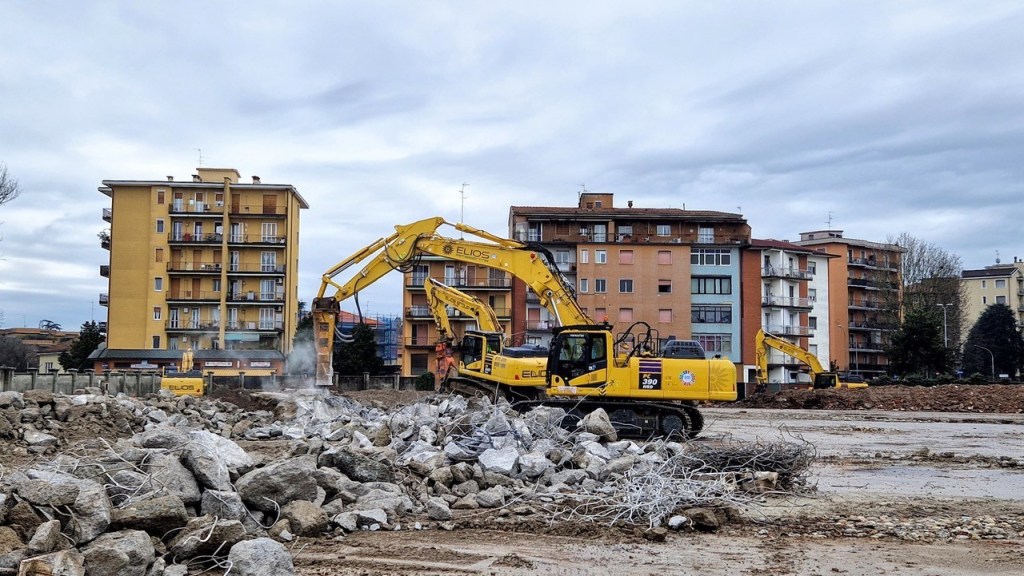
The credibility of the De-Risking action is reflected in the experience gained in the field: Elios Ambiente is historically and currently a protagonist in interventions with the highest degree of environmental, technical and institutional criticality in the country:
- Site of National Interest (SIN) of Bussi sul Tirino (AQ): design activities have started for the remediation of landfills 2A and 2B on the former Solvay areas. One of the most impressive and symbolic environmental interventions in Italy, in which Elios operates as a principal within an RTI led by the multinational DEME (agent) and integrated by SEMATAF (principal).
- The areas of the ICMESA affair in Seveso and the iconic construction site in the Bosco delle Querce: intervention still underway in the areas affected by the historic industrial accident and in the neighboring municipalities, with the very delicate management of operational activities within the Bosco delle Querce, a symbolic place of Italian environmental memory.
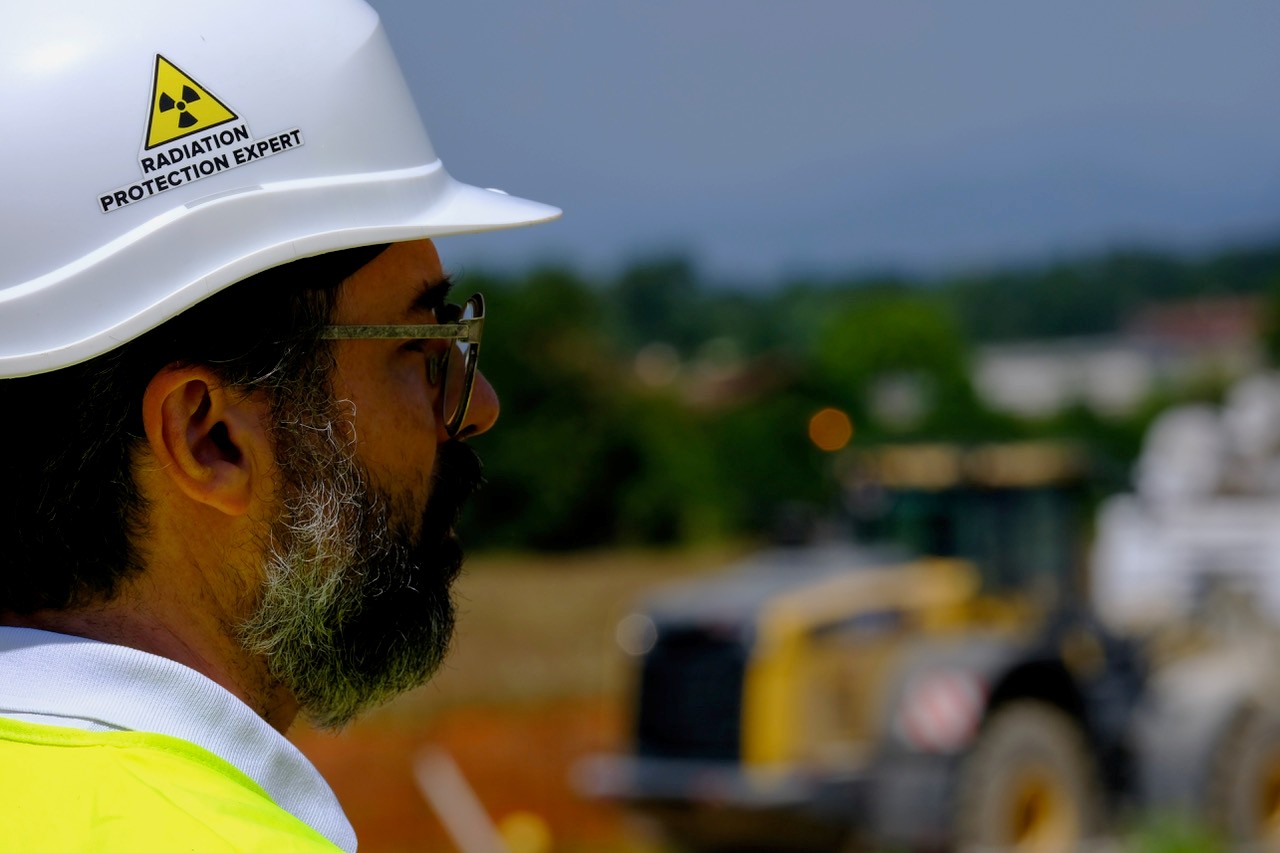
- Safety and confinement in Capriano del Colle (BS): completion in record time of the special perimeter diaphragm works of the former “Ex Metalli Capra” landfill, characterized by the presence of waste with radioactive contamination from Cesium-137.
- The largest construction site for “Orphan Sites” in Lombardy: ongoing reclamation of the large former Snia industrial areas in Cesano Maderno, territorial redevelopment intervention on a regional scale.
- UNESCO Archaeological Heritage – Ercolano Scavi (NA): completion of the reclamation and rehabilitation of contaminated land on behalf of the prestigious Packard Humanities Institute / Packard Foundation, combining environmental excavation techniques with severe archaeological conservation constraints.
- Steel and heavy industry – Former ILVA of Taranto: completion of the complex activities of removal of blast furnace waste and demolition of storage tanks on behalf of ILVA SpA in AS
Capillary presence on the main high-speed rail nodes
Elios’s presence on the large infrastructural corridors is reflected in the active participation in the main railway consortia of the country, where the speed of movement, the remediation of asbestos (anthropic and natural) and the management of excavated earth are crucial for the progress of the routes:
- HS/HC Brescia-Verona section: alongside the CEPAVDUE Consortium, with continuous tutoring, excavation and waste management/historical landfill activities along the route.
- HS/HC Verona-Padua section: with the IRICAVDUE Consortium, managing the environmental criticalities of the Veneto corridor.
- New Trento railway ring road: operational with the TRIDENTUM Consortium for the management of complex construction site interference.
- Terzo Valico dei Giovi (Genoa): alongside the COCIV Consortium, engaged in the delicate processes linked to the excavation and management of the rock matrices.
- High Speed Passante and Belfiore Station in Florence: working with the FLORENTIA Consortium for the environmental and logistical management of the materials coming from the TBM excavation and the construction of the underground node.
Certifications, qualifications and operational capabilities
The ability to fully assume environmental risk is supported by a solid and certified corporate structure:
- System certifications: ISO 9001, ISO 14001, ISO 45001, SA8000.
- National Register of Environmental Managers: registrations at the highest levels (unlimited class in categories 8 Intermediation, 9 Remediation of contaminated sites, 10A and 10B Remediation of compact and friable asbestos).
- SOA certifications: coverage of strategic categories including high-ranking SOA OG 12 (Reclamation and environmental protection works), as well as OG 1, OG 3, OG 8 and OS 23 (Demolitions).
- Land-Sea Versatility and Intermodal Logistics: specialized interventions both on land and in the port/marine area, supported by an integrated logistics vision (road/rail) to absorb large volumes while reducing the carbon footprint of the work.
Conclusions
Environmental cleanups on large construction sites can no longer be considered as a factor of uncertainty or a potential source of delay. When historical liabilities are addressed with engineering vision, cutting-edge means and a proven de-risking capacity, the construction site of the large-scale work is transformed into a driving force for concrete territorial regeneration, guaranteeing large contracting authorities certainty on timing, real sustainability and operational serenity.