
Five programs financed by the EECs are stopped, the Heat Fund is suspended despite its recognized effectiveness. The CEEs are reoriented towards programs promoting the electrification of uses.
Publi-Information 

Even the National Assembly protested with a letter to the Prime Minister on November 3, against the elimination of the ACTEE programas well as four other programs – Roofs First, Zero Energy Exclusion Territory, SLIME and Tims – intended to support the most precarious households.
Since its launch in 2019, underlines the National Assembly, the ACTEE program has supported 7,800 municipalities, or more than 22% of the total municipalities in France. Its second component, completed in 2024, financially supported the renovation of 13,824 public buildings, including 4,884 school buildings. ACTEE ends on December 31, 2026. Announced on June 26, the emergency plan, which mobilized €40 million from the ACTEE program, was reduced to €10 million. This will not make it possible to achieve the objective of 40,000 schools renovated in 10 years.
THE ACTEE+ program continues until December 31, 2027, but it is reduced to the adaptation of 2,500 schools to high heat, compared to 12,500 initially planned.

With the SLIME program (Local Intervention Service for Energy Management), local authorities benefit from financial support and concrete support to combat energy poverty. This system allows them to facilitate the identification and support of households facing energy poverty as well as significant financial difficulties in their territory. © PP
Funded by the EECs since 2013, the SLIME program is managed by Cler solutions, a subsidiary of the Cler network. In more than ten years, more than 120,000 households have benefited from this support, which allows on average a reduction of €329 per year per household. The program also plays an essential role in communities. It provides them with financial resources, engineering and a methodological framework to structure a local policy to combat energy poverty. It also promotes cooperation between social, housing and energy stakeholders. THE Financing of SLIME by the CEE ends at the end of December 2026.
The Zero Energy Exclusion Territories program is part of an objective of sobriety accessible to all. It helps to remove all obstacles to the efficient renovation of the homes of low-income people through technical, administrative, social and financial support, training for stakeholders, engineering and tools. It is managed by the Stop Exclusion Energétique association. The “Roofs First” program was launched in 2012 by the Foundation for Housing the Disadvantaged, formerly the Abbé Pierrre foundation.

The “Roofs First” program supports the production and major rehabilitation of very social housing at controlled rents for low-income households (resources below the PLAI ceiling), aims to renovate or build energy-efficient housing, targeting DPE AB in new construction and AC in rehabilitation, sustainably reducing tenants’ costs. © PP
“Roofs First” allowed construction or renovation 500 to 600 housing units per year. Recognized as a program to combat energy poverty under the Grenelle 2 law, it was partly financed by the CEE system and by the foundation’s own funds. Her financing by the EECs ends at the end of December.
THE Tims program (Territories Inclusion Mobility Sobriety) is a French national initiative launched in 2023 and financed by Energy Savings Certificates (CEE). Tims is a program which aims to develop sustainable and inclusive mobility in the territories. The objective? Achieve energy savings by encouraging more economical modes of mobility while allowing people in precarious mobility to access essential services and fully exercise their fundamental rights.
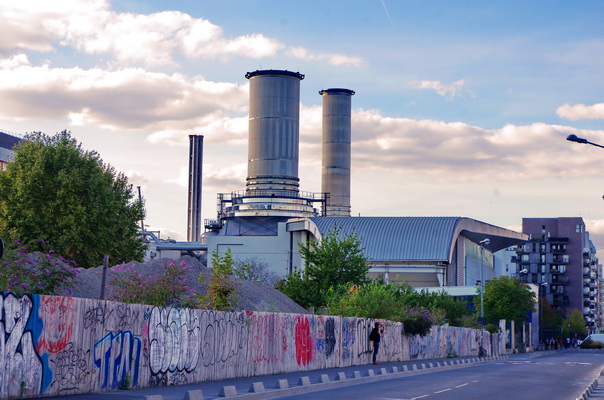
The Heat Fund, which finances in particular the extension of heating networks, is suspended and its budget increases from €800 to €500 million for 2027. © PP
Suspension of the Heat Fund
The icing on the cake, however, was the suspension of new funding requests from the Chaleur Fundmanaged by ADEME, announced by the government on November 3. In the 2027 Finance bill, the funding from the Chaleur Fund drops to €500 million compared to €800 million in 2026. Created in 2009, the Heat Fund is however the main tool allowing manufacturers, businesses and communities to decarbonize heating and cooling systems. His suspension was denounced as a shock for 8 unions and professional associations in the Renewable Energy sector. Aid for waste heat recovery studies remains open until December 31, 2026, with no guarantee of funding for the work. In 2025, the Court of Auditors published an evaluation of the operation of the Heat Fund from 2018 to 2023.
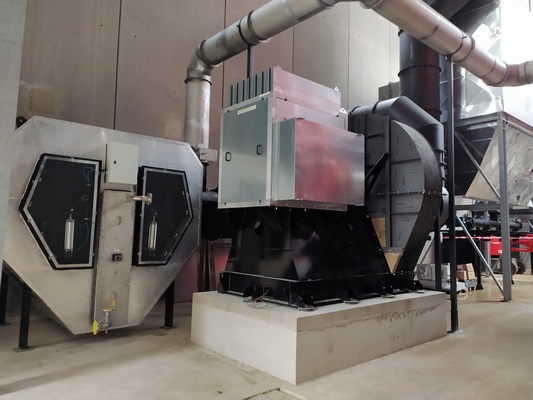
The Court of Auditors judged the effectiveness of the Heat Fund to be greater than that of many other energy aids. The Fund, supported by France Relance and France 2030 to the tune of €742 million in 2023, generated 35.3 TWh of cumulative renewable heat between 2009 and 2023, meeting more than 70% of national objectives. However, its efficiency has eroded since 2018, particularly between 2022 and 2023, due to inflation. © PP
ADEME explained that as of November 5, €1.8 billion of applications had been submitted to the Chaleur Fundbut not yet educated. Anyway, the Heat Fund budget was reduced to €500 million for 2027. The latest assessment of the Chaleur Fund, published by ADEME in April 2022, shows 1,200 projects supported, 801 million euros fully committed in 2025, including 727 million in investment aid accompanying more than 2.4 billion euros in installation expenses. The 2025 aid amounted to 298 million euros for networks, 155 million for biomass, 85 million for geothermal energy and 21 million for waste heat recovery.
In short, the Heat Fund is effective, it is therefore urgent to suspend it, without announcing a resumption date. Sylvain Wasserman, the president and CEO of ADEME, explains in a LinkedIn post that this suspension is linked to the reduction in the Heat Fund budget to €500 million for 2027.
16
Most of the CEE in housing renovation is redirected towards heat pumps. Since September 2026, almost all single-act insulation or heating measures, such as attic insulation or the installation of wood stoves, have disappeared. All that remains is the installation of a heating heat pump, the connection to a heat network and the removal of an oil tank. © PP
All this for what?
According to Politico, the Ministry of Energy believes that aid, including EECs, is not reduced, but redirected towards electrification, in particular towards leasing social of electric vehicles or loans for the electrification of small businesses. The main terms of this plan for the building, let us remember, are:
– the gradual ban on gas boilers in new homes;
– The reorientation of MaPrimeRénov’ towards heat pumps;
– A gas exit bonus of up to €1,000 per home put in place, as well as a specific plan of €50 million to support households heated with oil;
– The ban on new oil heating installations is extended to bio-fuels, with the aim of halving the number of households using fuel oil by 2030.
As far as transport is concerned, the aim is to achieve two new vehicles out of three electric in 2030. leasing social <100 €/month is renewed for 50,000 vehicles intended for low-income households, and a new system for 50,000 vehicles appears for the "heavy-roller" middle classes (home helpers, nurses, craftsmen, etc.). Aid for the purchase of electric vehicles, up to €7,700 for individuals, €9,500 for utility vehicles and up to €100,000 for heavy goods vehicles, is renewed. Arrangements to support the deployment of charging infrastructure, including assistance for the installation of home terminals, have been put in place.