
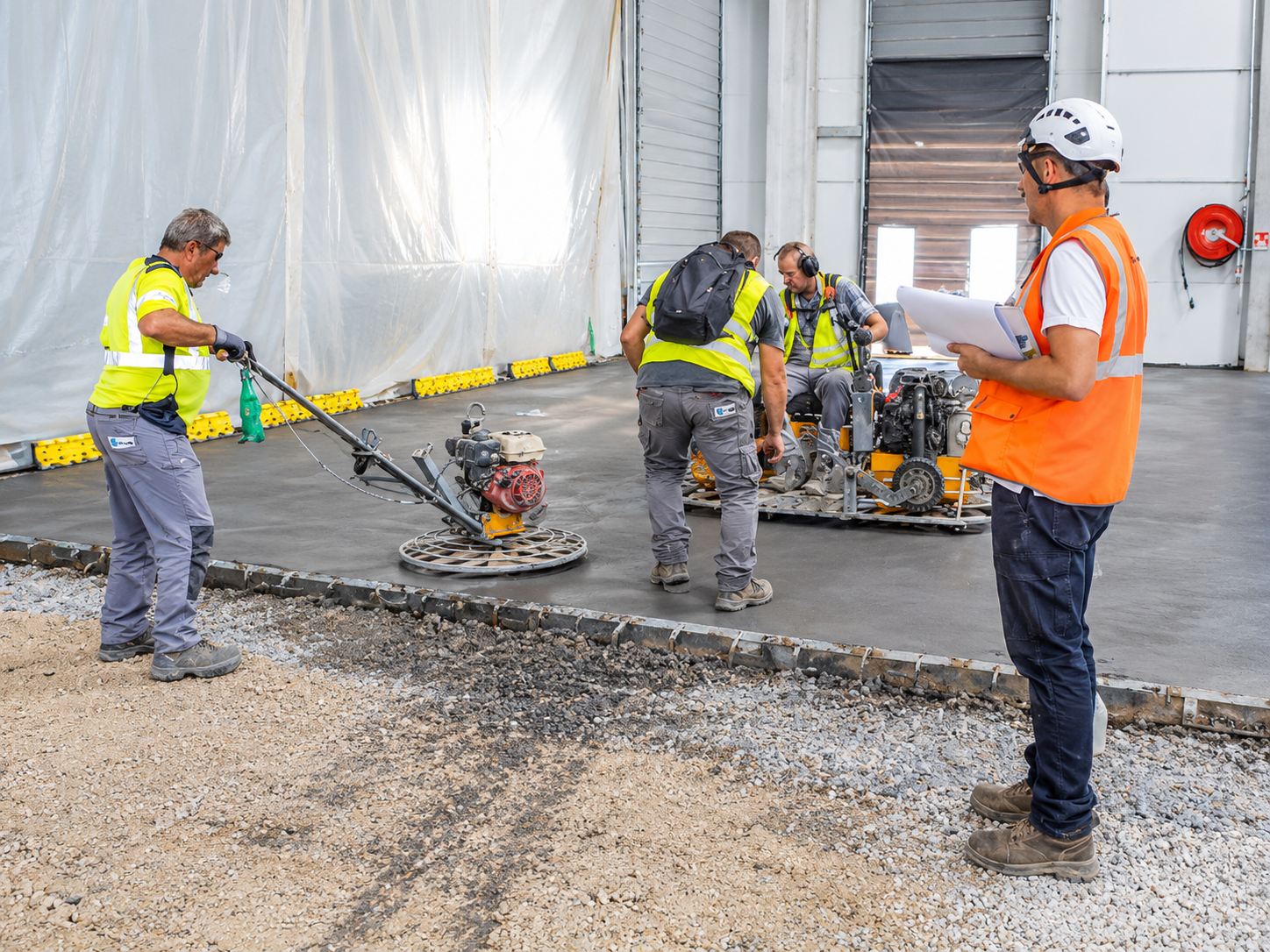
Based on 108 hours of observation in four companies, the OPPBTP study identifies five levers to reduce the arduousness of the profession, from site logistics to equipment and prevention.
Publi-Information 

A curved back in almost three quarters of the postures observed, more than 2.8 tonnes of loads carried manually by operator over a day, up to 12 km traveled on a construction site… The figures give a precise idea of the demands to which tile workers are exposed. In order to better understand the constraints of this activity and identify solutions adapted to the realities on the ground, the OPPBTP conducted a study with UNESIFFB, UMGO-FFB, CAPEB and three prevention and occupational health services.
Carried out between March 2024 and March 2025 in four voluntary companies, this analysis is based on the method of analysis and evaluation of working conditions (MAECT). In total, 108 hours of work were studied, from site preparation to surface treatment, including reinforcement, incorporations and placement of concrete. The observations were supplemented by measurements relating to noise, vibrations, dust – particularly silica –, heart rates and thermal environments.

The MAECT (method of analysis and evaluation of working conditions), developed by the OPPBTP, makes it possible to study the realities of work on construction sites, beyond the simple identification of professional risks. It analyzes the constraints encountered by the companions and the possibilities of improving their conditions of intervention. Developed by a group of ergonomists, it is based on 21 factors divided into four main families. © IA / Laure Pophillat
Very real physical constraints
THE slab engineer is involved in the production of reinforced concrete slabs, paving and floors ; an activity mobilizing varied technical skills, acquired mainly through experience, tutoring and oral transmission. There is in fact no training specifically dedicated to this profession, a point which underlines the importance of the know-how developed directly on construction sites.
OPPBTP observations show that the physical constraints are particularly marked. THE working postures put a lot of strain on the backwith 72% of the positions observed carried out with the curved back. THE handling also represent a heavy load since the accumulation of loads carried manually can exceed 2.8 tonnes per operator over a day. To this are added the travel, which can reach 12 km per sitesometimes with equipment or loads.
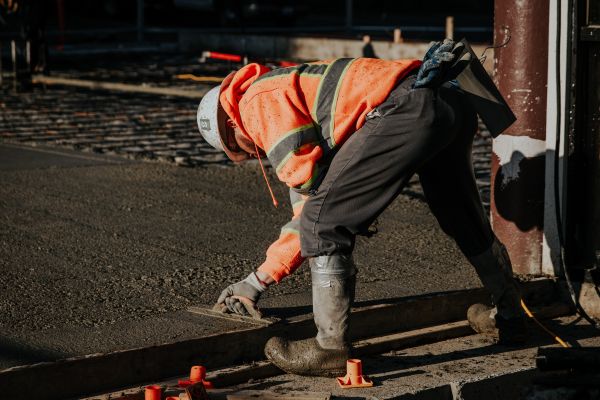
The OPPBTP data aims to highlight the need to reduce handling, limit painful postures and better organize supplies, even if the study relates to practices which already contribute to alleviating these constraints: mutual aid between companions, distribution of tasks and use of handling equipment when available – it is still necessary that these resources are present on the site. © Magnfic
Teams must deal with hazards
Organization of the construction site
The difficulty is not only due to gestures and postures. The organization of the site also plays a determining role, particularly because the paving operations remain closely dependent on the characteristics of the concrete, as well as its delivery and setting times. Thus, a router delay, a setting time different from that expected or a delay in the intervention of the different trades can quickly disorganize the work. The teams must then adapt, sometimes at the cost of significant time constraints.
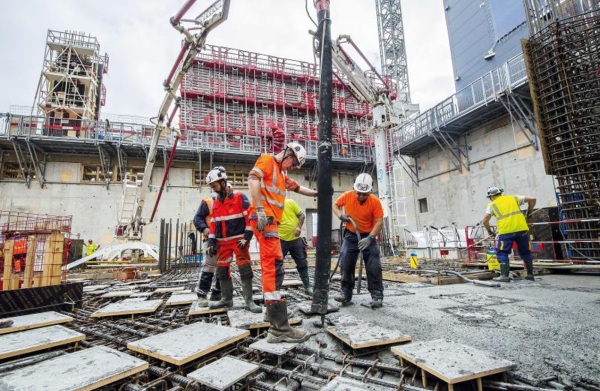
The OPPBTP insists on the anticipation of deliveries, the coordination of stakeholders and the adjustment of human and material resources to the actual conditions of the site. © BTP Prevention
The preparation appears generally satisfactory in the situations studied, but certain preventive measures are not always applied to the end; this is particularly the case for hygiene facilities, which remain unevenly adapted to the needs of companions.
Noise, dust, vibrations: exposures to better control
The measurements carried out on the four construction sites also highlighted several professional exposures. Noise, vibrations and dust are among the nuisances linked to operations and the equipment used. The presence of silica among the dust measured calls for particular vigilance, while carbon monoxide can accumulate when thermal machines operate in insufficiently ventilated spaces. Thermal and light conditions vary, depending on the environment and the periods of intervention.
The choice of machines, their maintenance and their equipment are as important as individual protection. The organization recommends in particular favoring suction devices on portable power tools, sawing systems with water spraying and, when possible, electrical equipment that is less noisy and emits less carbon monoxide than its thermal equivalents.
Five levers to lighten the work of paving engineers
Logistics and flow circulation on the site
This includes better anticipating concrete deliveries, working on formulations and keeping site installation plans up to date. The OPPBTP also recommends developing mechanized means to limit handling, such as utility vehicles equipped with spreaders, transport trolleys for trowels or even self-propelled spreaders.
Equipment allowing work at eye level must also be favored, with, for example, pole tying machines, handle smoothers or cutting tables.
Improve living conditions on the construction site
Said improvement involves clothing and protective equipment adapted to climatic conditions and physical efforts, but also through functional living bases, the provision of which should be planned with the clients. Mobile solutions can also be studied when traditional installations do not meet site constraints. The study also invites us to examine the possibilities offered by new processes, such as robotic casting.
Team planning and organization
The study also invites us to review the planning of interventions by comparing different work organizations, in particular operating in two shifts, increasing the number of staff per shift or even the use of shift schedules.
THE pouring methods, by concrete pump or routeras well as the reinforcement solutionsnotably the use of fiberglass frames, are also among the avenues to be examined.
The evolution of materials and machines
The OPPBTP calls for working with manufacturers to reduce, or even eliminate, certain physical constraints and nuisances. The replacement of thermal equipment with electric models can notably help limit carbon monoxide emissions, while technical developments are expected to reduce noise and vibrations.
Prevention
Finally, the fifth lever concerns the management of prevention within companies. The designation of a referent, the organization of regular discussion times on working conditions and safety, as well as theintegration of prevention from site preparation must contribute to installing these practices in the daily functioning of teams. The development of prevention skills completes this approach.
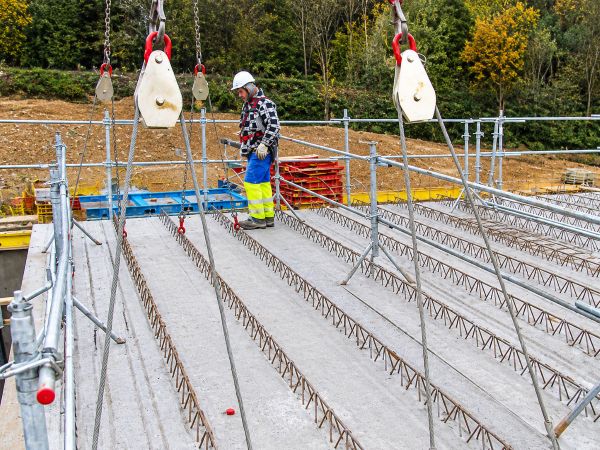
Presented to professional partner organizations, the results of the study confirmed the relevance of the advanced approaches, the implementation of which will now be worked on with companies in the sector in order to concretely measure their effects on construction sites. The discussions will focus in particular on the availability of equipment, the anticipation of deliveries, the choice of processes and the distribution of tasks, all factors having a direct impact on the organization of interventions and the working conditions of companions. © OPPBTP