
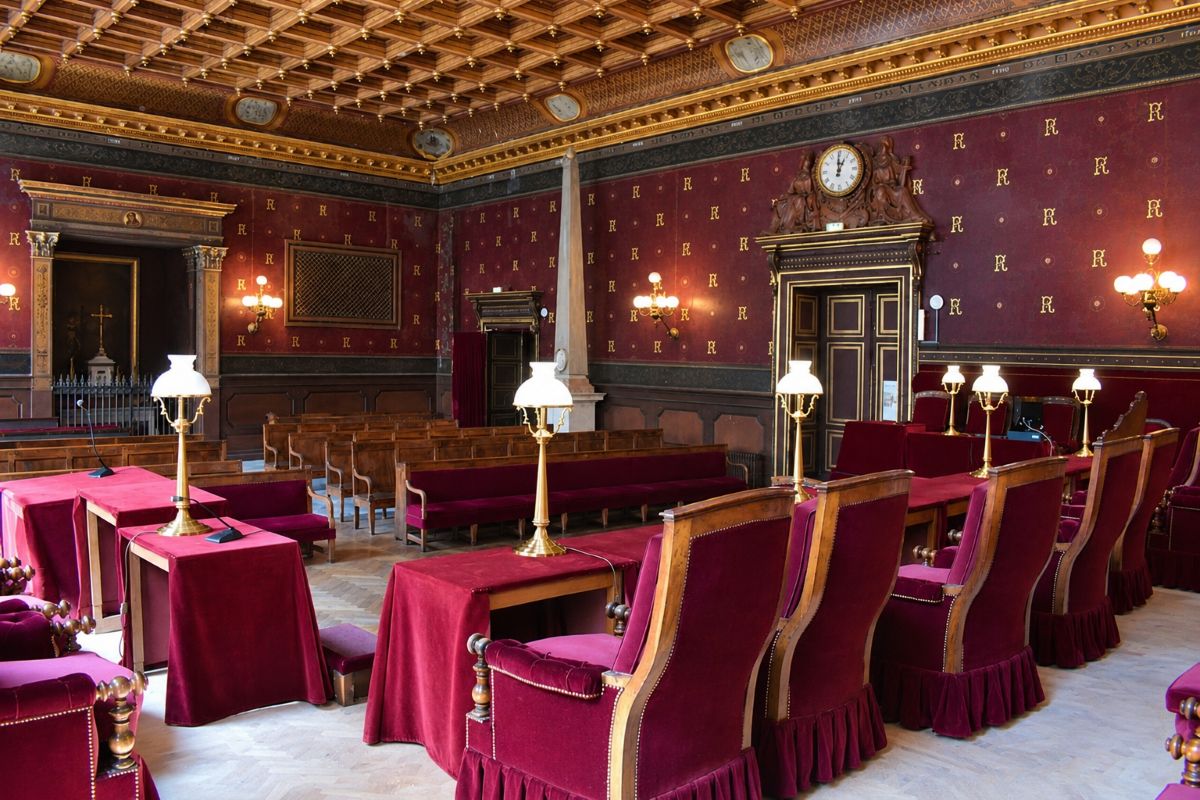
Threatened by structural disorders, the Grand’Chamber of the Toulouse courthouse must undergo 3.4 million euros of work to preserve its medieval ceiling and its decorations.
Five centuries of judicial history hang on one restoration. At Toulouse courthouse, the Grand’Chamberbuilt between 1469 and 1492 to accommodate the hearings of the Parliament of Toulouse, is today weakened by significant structural disorders. Classified as historical monuments since 1999, this ceremonial room, which has long hosted appeal trials and solemn hearings of the court of appeal and the judicial tribunal, has been closed to the public since November 2025. Facing the risk of partial collapsethe Court of Appeal joined forces with the Heritage Foundation to launch a subscription intended to contribute to its preservation.
Estimated at nearly 3.4 million euros, the cost of the operation will be borne largely by the Ministry of Justice, under the control of the Occitanie regional directorate of cultural affairs (DRAC). The collection, officially launched on November 16, 2026, must raise 120,000 euros over three years, in order to complete this public envelope and to support in particular the restoration of heritage decorations. “In a restricted budgetary context, we said to ourselves that we could offer local financing“, explains Nicolas Jacquet, the attorney general at the Toulouse Court of Appeal. “This room has five centuries of justice behind us, we must pass this heritage on to future generations.”, he pleads.
Infiltrations, fungi and wood-eating insects
There closing of the Grand’Chamber is not a simple patrimonial precaution. Indeed, water infiltration from the roof damaged the framework, while the humidity encouraged the development of fungi and wood-eating insects; damage having weakened the beams, the floor and part of the medieval ceiling. After reporting a risk of partial collapseL’chief architect of historical monuments recommended the security of the room, now supported.
THE catering program plans to take over the most vulnerable elements of the building:
– consolidation of the framework;
– Repair of the roof and ceiling;
– Treatment of biological infestations;
– And, finally, removal of the causes of humidity.
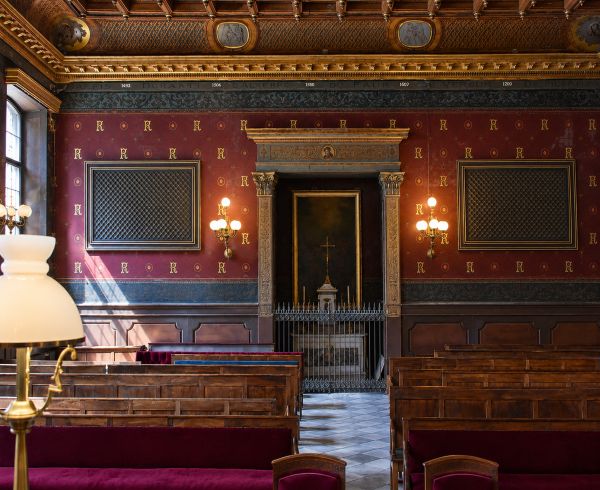
The painted decorations and woodwork will also be subject to specific restoration. The intervention must therefore address the disorders at their origin, while preserving the historical elements which give the room its exceptional character. © Heritage Foundation
A medieval ceiling among the oldest in France
There Grand’Chamber is also distinguished by the fact that it houses theone of the oldest medieval parliament ceilings preserved in Francecomposed of painted boxes – 247, according to the Heritage Foundation –, whose decor has evolved over the centuries, the paintings bearing witness to several successive redecoration campaigns. Originally, the boxes were decorated with four white lilies arranged in a star shape on a black background bordered in red. Under the Third Republic, this decoration was replaced by an alternation of single wild roses and double roses. The walls also received a garnet red background, decorated with letters R and Languedoc crosses. The primitive decoration was only rediscovered between 1997 and 1998, during a diagnosis carried out by thechief architect of historical monuments.
The very organization of the room preserves the memory of its judicial uses. The vast rectangular volume distinguishes, by its floor treatment, the space reserved for audiences, to the west, with stone paving alternating light and dark tiles, from the part intended for the court, to the east, covered with parquet flooring. In the axis of the room there is also a chapel, equipped with a marble altar surmounted by a tabernacle. During the expansion of the courthouse in 2008, the west and south walls of this chapel were rebuilt, the room then finding itself enclosed within the new complex.
Patronage as a complement to state funding
To raise private funds, the court of appeal relies on the Heritage Foundationwhich collects donations. Its regional delegate, Anne-Marie Leroy, recalls that this method of financing has gradually become established in the most expensive restoration operationslike the mobilization that accompanied the construction of Notre-Dame de Paris. “It has become customary for the State to call on patronage to finance costly works“, she observes. The judicial sector is also starting to use these subscriptions; collections have notably been initiated for the Paris courthouse and the Parliament of Brittany, heavily damaged by a fire. “This is quite new to us. This tends to develop. There are budgetary issues. This makes it easier to close the budget“, estimates Rémi Dartiguelongue, the interregional delegate of the general secretariat of the Ministry of Justice.
The Toulouse subscription is sponsored by three personalities: François Molins, former public prosecutor of Paris and former attorney general at the Court of Cassation, the rugby player Fabien Pelous and the starred chef Michel Sarran. For François Molins, the preservation of the room goes beyond the sole issues of the functioning of the judicial institution. “It is a historic place. Our common heritage, our collective identity. It is up to us to maintain it“, he explains.
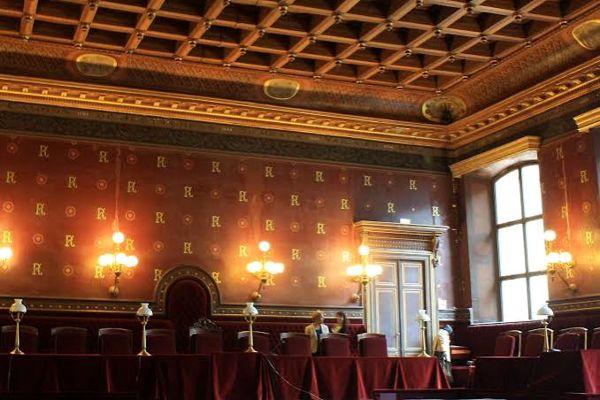
Individuals, businesses and professionals who wish to participate in this operation can make a donation directly on the Heritage Foundation website, the sums paid giving entitlement to a tax reduction, a subscription which must thus contribute to the financing of part of the work while mobilizing Toulouse residents around a building intimately linked to their collective history. © Heritage Foundation
Scheduled to last three years, the project must be completed at the end of 2029, the date on which the Grand’Chambre will regain its function as a courtroomwhile its restoration must also offer the opportunity to introduce this place to the public, through visits, particularly during European Heritage Days, heritage tours, conferences as well as educational actions carried out with universities and educational establishments.