
Brussels accuses several manufacturers of additives for cement and concrete of having formed a “cartel” in order to impose higher prices on their customers after the start of the war in Ukraine.

The European Commission accuses several manufacturers of additives for cement and concretewhose Mexican heavyweight Cemex and a subsidiary of the French group Saint-Gobainofhaving formed a cartel in order to impose higher prices to their customers.
Brussels suspects price collusion
The European Commission has officially sent a Statement of Objections to several manufacturers of additives for concrete, cement and mortars. She suspects them ofhaving set up a cartel aimed at coordinating price increases between 2021 and 2022in the context of soaring costs caused by Russia’s invasion of Ukraine.
THE The additives concerned are essential chemicals to improve the performance of concretes and mortars – strength, handling, grip, durability, etc. They are, obviously, widely used on building and public works sites.
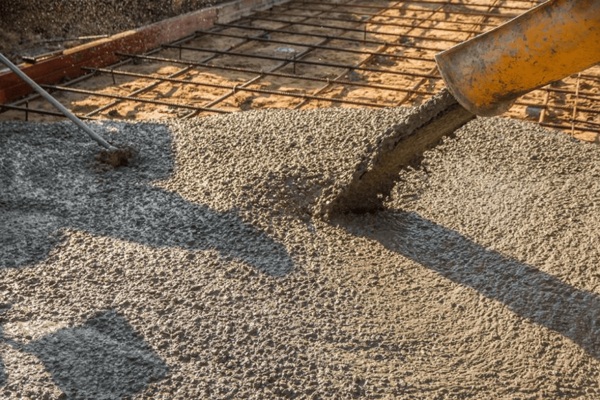
Incorporated in small quantities during manufacturing, these chemical additives make it possible to very precisely modify the behavior of concrete and mortar. Depending on their formulation, they improve fluidity, reduce water requirements, accelerate or delay setting, reinforce mechanical resistance, limit cracking or increase durability in the face of external aggression. They are today essential to most technical concretes used on construction sites. ©Infociments.fr
Several major players involved
The investigation, opened after surprise inspections carried out in 2023, targets several international groups and specialized companies, including:
– Cemex, the Mexican cement group ;
–Sika, leader Switzerland chemicals for construction ;
– Mapei, Italian specialist in building solutions ;
– Chryso, a subsidiary of Saint-Gobain;
– TAM Groupe, French company specializing in adjuvants.
The Commission also suspects the involvement of several professional organizations established in France, Germany and Spain.
Fines of up to 10% of turnover
At this stage, no infringement is legally established. The companies concerned now have the possibility of responding to grievances formulated by Brussels and to fully exercise their rights of defense.
If the accusations were confirmed, the sanctions could be particularly heavy. European competition law indeed allows the Commission toimpose fines of up to 10% of annual global turnover on companies found guilty of anti-competitive agreements.