With the municipal and presidential elections approaching, the elevator sector is calling for its issues to be fully integrated into public policies, between renovation, accessibility and transition.


At the end of its 2026 general meeting, held on March 31, the Elevator Federation calls for a change of scale. In a context marked by the renewal of municipal teams and the opening of the political sequence leading to the presidential election of 2027, the profession intends sustainably place the modernization of elevators at the heart of public policiesbetween housing, accessibility and adaptation to aging. Because, often relegated to the simple rank of technical equipment, the elevator nevertheless stands out as an essential infrastructure, just as much a key link in daily mobility, a tool for inclusion and a concrete lever for living together.
As a reminder, the Elevator Federation, whose creation dates back more than 100 years, represents the entire profession: integrated companies, maintenance operators, equipment manufacturers or service and support providers, including elevator professionals (since 2016).
Almost 170 companies currently members of the Federation represent nearly 90% of the sector’s economic activity and more than 17,000 employees.
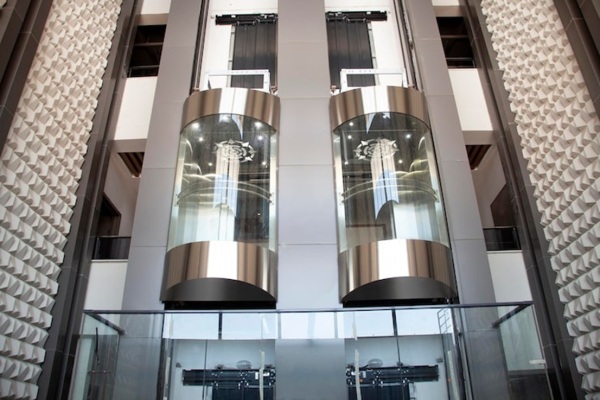
The three key figures for the elevator: 2.83 billion euros in turnover in 2025, 94% of French people consider it a priority to replace outdated elevators and 72% of French people are regular users of the elevator (Source: IPSOS 2026 barometer “The French and the elevator”). © Freepik
A solid sector, caught up in the challenge of renovation
With a turnover of 2.83 billion euros in 2025 (+ 1.1% over one year) and a fleet of 661,000 devices in service, the elevator sector displays facade stability. A certain dynamic, which in reality masks strong disparities. Indeed, sales of new equipment fell significantly (-9%, to 10,100 units), falling to their lowest level in ten years – a direct reflection of the slowdown in new construction.
Conversely, the modernization market is gaining ground. It will increase by 8.5% in 2025, to 255 million euros, a sign of progressive awareness. Because the park is aging: 40% of elevators are over 25 years oldand a quarter are over 40 years old. So much equipment now faced with contemporary requirements in terms of safety, performance and accessibility.
Uses are also evolving. According to the Ipsos 2026 barometer for the Elevator Federationone in two French people know that the device they use dates from before 2000. And the perception is clear: a large majority considers it necessary to renovate the oldest installations. In a society marked by the aging of the population and urban densification, the modernization of the fleet is now essential as an essential condition for mobility that is universal, inclusive and sustainable.

“94% of French people consider the replacement of obsolete elevators as a priority in the context of the renovation of buildings and 80% are in favor of a compulsory annual provision to finance their modernization. These figures constitute a clear signal addressed to public authorities and owners” specifies Florence Bigé, here in photo, the re-elected president of the Elevator Federation. © Studio Géhin
Municipal 2026, presidential 2027: the elevator in search of political recognition
At a time of renewal of municipal teams and as the presidential election approaches, the Fédération des Elevators intends to bring the subject to the forefront of public debate : fully recognize the strategic role of this equipment and include it sustainably in housing, accessibility and transition policies.
Because beyond its technical function, the elevator stands out as an immediate operational lever in the face of major contemporary challenges: adaptation of housing to aging, universal accessibility, renovation of condominiums, attractiveness of territories or even environmental performance. It concretely conditions the keeping of elderly people at home, the autonomy of people with reduced mobility and, more broadly, access to housing for all.
Accelerate, modernize, anticipate: an operational roadmap
Faced with these challenges, the sector is putting forward a clear strategy, structured around technical, economic and societal priorities.
Accelerate the modernization of the fleet
The Federation pleads for a full integration of elevators into renovation policies. This requires removing obstacles, particularly financial ones, and encouraging a logic of anticipation in co-ownerships. Because underinvestment first penalizes the most vulnerable groups and slows down the adaptation of the park. Modernizing, here, is as much an imperative of equity as of performance.
Strengthen security and anticipate changes
Another priority: supporting regulatory developments while strengthening equipment reliability. The digitalization of the fleet – predictive maintenance, connectivity, artificial intelligence – is emerging as a structuring lever to improve the availability and security of installations.
Supporting environmental transitions
The sector is intensifying its commitments to the circular economy, reuse and energy efficiency. A modernized elevator can generate up to 70% energy savings. Significant potential, which fully places the sector in the building decarbonization trajectory.
Attract skills and structure the future
Finally, the question of human resources becomes central. With nearly 1,000 annual recruitments, the sector seeks to strengthen its attractiveness: promotion of professions, partnerships with training sectors, retraining, feminization. Non-relocatable, the sector constitutes a pool of qualified jobs anchored in the territories.
Through this roadmap, the Federation intends to change its status: make the elevator no longer a simple piece of equipment, but a real everyday infrastructure.
Andrew Meier