
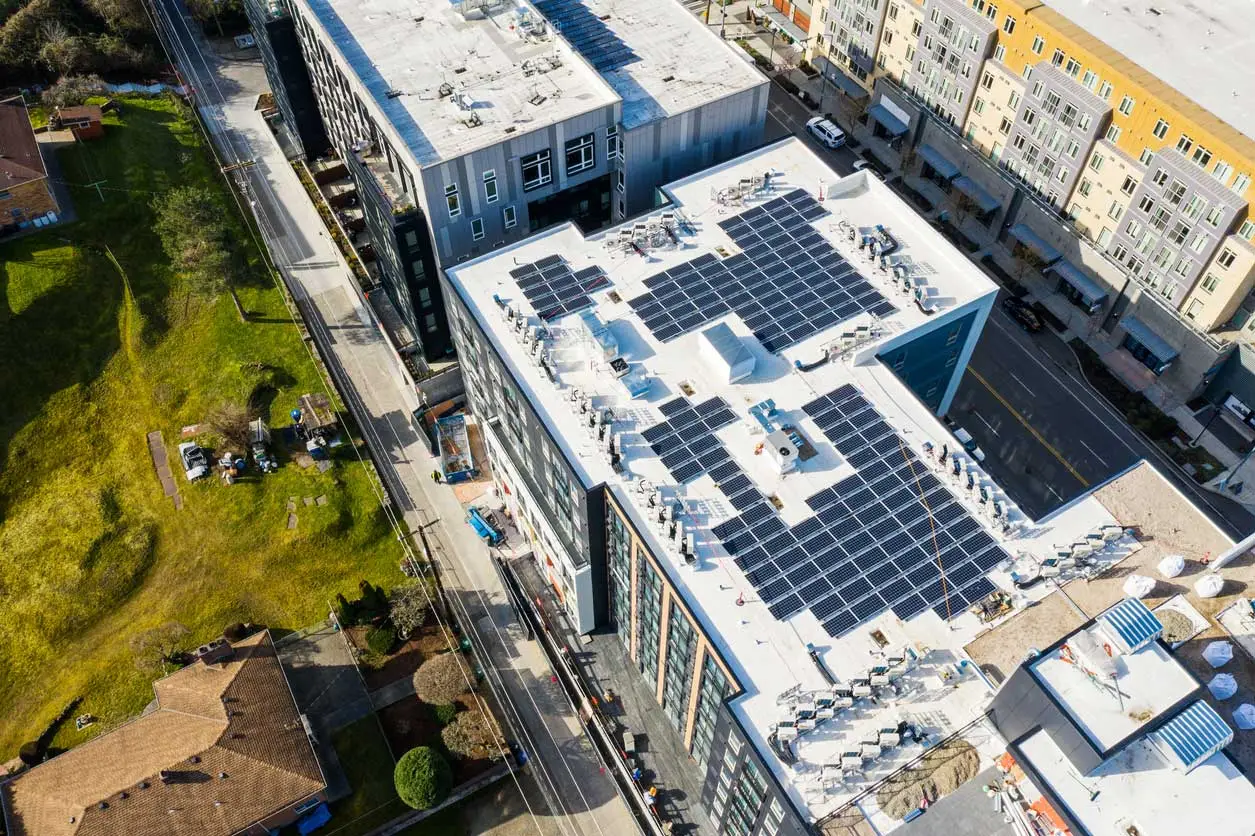
Photovoltaic system and the different forms of use in progress
The individual condominium owner who intends to install a photovoltaic system on the common roof or pavement must in any case respect the principle established by Article 1102 of the Civil Code, whereby he cannot alter the destination of the common property and must allow equal use of the common property by the other condominium owners. Generally speaking, it is believed that the installation of solar panels on the roof of a building cannot be considered an alteration of the common thing, as the main function of the roof remains unchanged.
The application of a solar panel on the roof of the building, as well as an antenna, does not change the primary function of the roof in the slightest. For paving, however, the installation of the system by the individual must still take place in compliance with the clauses of the regulation which have as their object the different forms of use of the roof.
If, for example, the pavement is also intended as a drying room, this purpose cannot be completely compromised but a reasonable reduction of this function may be considered admissible. This interpretation is derived directly from the rule (1122 bis cc) which in the third paragraph provides that, “at the request of the interested parties”, the assembly can proceed to “distribute the use of the flat roof and other common surfaces, safeguarding the different forms of use envisaged by the condominium regulations or in any case in place”. The installation of photovoltaic panels, therefore, must not be incompatible, due to the methods of implementation, with the different use of the common roof already in place.
In this regard, a case analyzed by the Court of Venice (sentence no. 703 of 23 January 2026) deserves to be taken into consideration. In this case, a condominium owner challenged a resolution that had authorized another condominium owner to build a photovoltaic system on a condominium flat. According to the actress, this decision violated the provisions of the articles. 1122-bis, 1102 and 1120 of the Civil Code since, on the one hand, the right granted to the condominium owner to install the photovoltaic panels prevented the condominium owner from using the pavement until now exercised and recognized in a final sentence (the placement of a drying rack and the external unit of the air conditioning system, as well as the holding of lunches or breakfasts), on the other the placement of the photovoltaic panels exceeded the established limits from the art. 1122-bis cc, representing prohibited innovation.
The Court ruled in favor of the actress. According to the same judge, the installation of photovoltaic panels, as authorized by the assembly, was incompatible with the use of the paving that the previous sentence had already recognized for the condominium. The judge himself observed that, although in abstract terms the remaining space might seem sufficient to keep the drying rack or the external air conditioning unit, the reality of the facts, confirmed both by the defense’s admissions and by the photographs produced, showed a very different situation. It emerged that the panels would occupy almost all of the usable surface area.
Illegal modification of the flat roof
As has recently been underlined, not even the resolution that gives a single condominium owner the possibility of modifying the flat roof, at his own expense, transforming it into a sloping roof is lawful. In the present case it emerged that, beyond the apparent harmlessness, the request accepted by the assembly had a very specific and far from secondary effect: preventing the neighbor from continuing to use the flat roof, which he accessed directly from his real estate unit.
The proposed transformation was therefore not a simple improvement or extraordinary maintenance work, but a real change in the destination of the common good, such as to deprive the neighboring condominium of the possibility of exercising an already recognized right. In other words, the work not only affected the structure, but also the balance of rights between the participants in the condominium, depriving one of them of the use of the pavement to which he was entitled.
In this case, the authorization to transform the flat roof into a sloping roof, the subject of the contested resolution, therefore constitutes a prohibited innovation pursuant to art. 1120 of the last paragraph of the Civil Code, as it makes the common part in question, the flat roof, unusable for the use or enjoyment of even a single condominium owner (Venice Court of 20 June 2023, n. 1086).
Thank you for subscribing to the newsletter.