
Italy is largely subject to hydrogeological instability phenomena. The areas most affected are obviously the mountain ones, but land subsidence can also occur on the plains. We are almost always talking about events connected to floods or lowering of the water table, alternating with periods of severe drought. These are extreme but increasingly frequent climatic events in our territory.
Normally it is proposed to intervene with a consolidation technique on the entire portion to be consolidated. In certain cases, however, it may be strategic to intervene with two different types of consolidation, optimizing the pros and cons of the methodologies currently available. In this new case history, as in the previous one, we will see how two SYStab techniques were used together:
Type of problem
The intervention was carried out by SYStab, in the Cesena (FC) area, on a residential house with one floor above ground and built in load-bearing masonry on continuous ribbon-shaped foundations. Over the last ten years, a portion of the building has shown clear signs of deterioration.
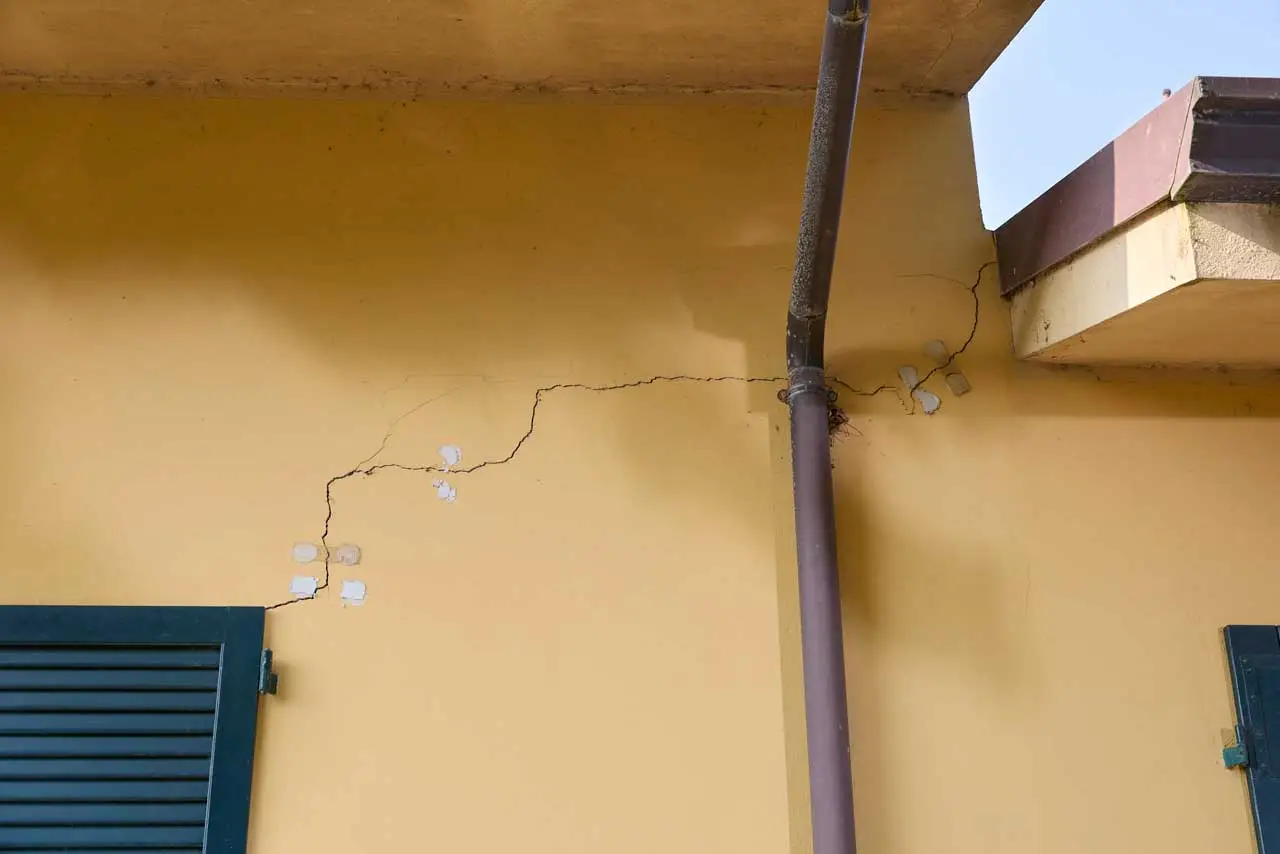
In particular, the phenomenon of cracking and the appearance of cracks in the load-bearing walls and partitions was highlighted at the end of the summer season. Given the nature of the soil in the area, the cause of the problem was identified as volumetric shrinkage due to the drying of the first layers of clayey material, which are particularly sensitive to variations in humidity. The phenomenon probably appeared years after construction and only in the last period due to:
- hot periods of prolonged drought;
- lowering of the water table;
- presence of tall trees nearby.
Consolidation of foundations and soil with pre-loaded micropiles and slow expansion resins
The technicians appointed by the client examined all the possible methodologies for consolidating the foundations, but immediately focused on the use of a mixed technique: micropiles and resins to stabilize the house and reduce costs and invasiveness to a minimum.
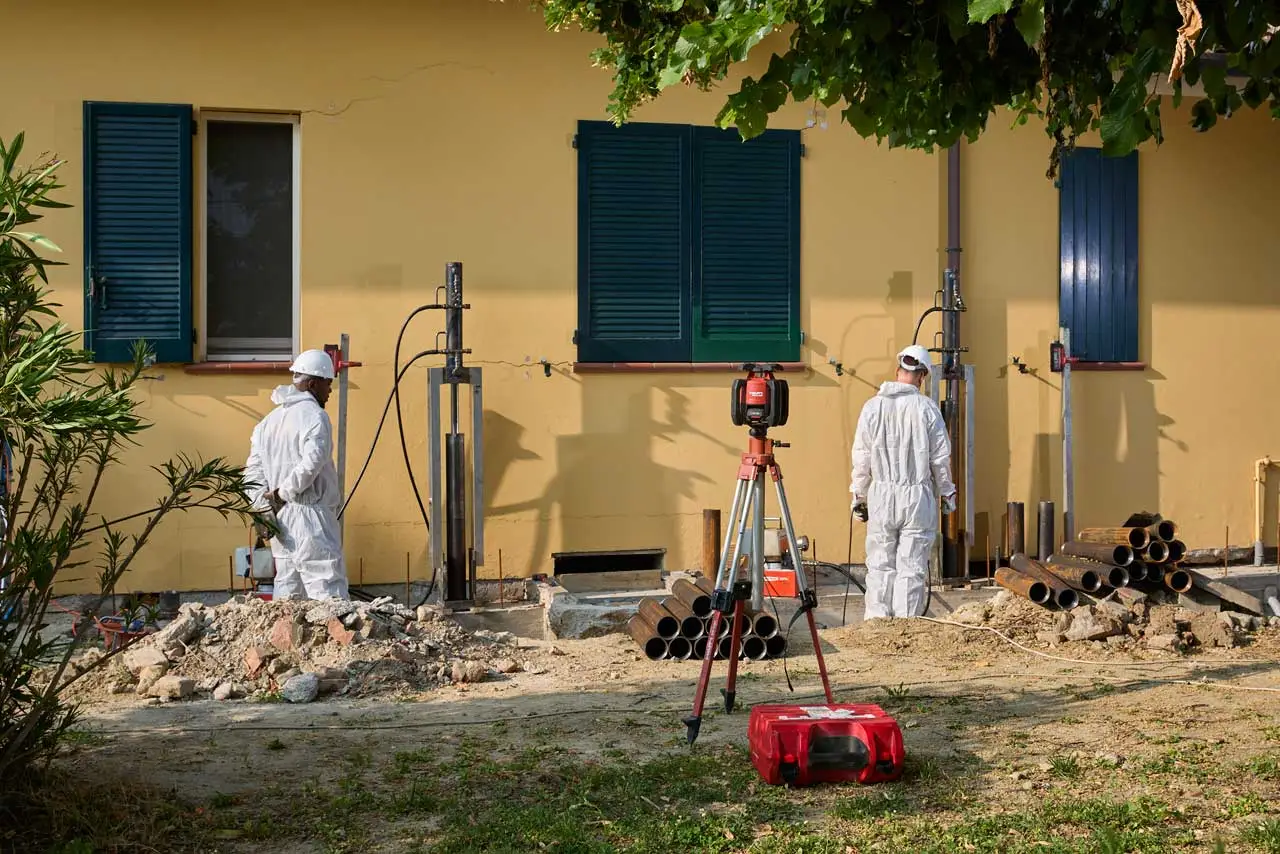
For the perimeter wall, which showed the greatest settlements, the technicians opted for the use of deep foundations. The SYStab Preloaded Poles were deemed suitable given the need to operate quickly and reduce the invasiveness of the construction site, given that the house was inhabited and finished.
In the case in question it was decided to create a new concrete foundation curb in which the SYStab jacket tubes were arranged. Once the casting of the new curb was complete, it was possible to proceed with the insertion of the micropiles with hydraulic jacks in contrast with the existing structure.
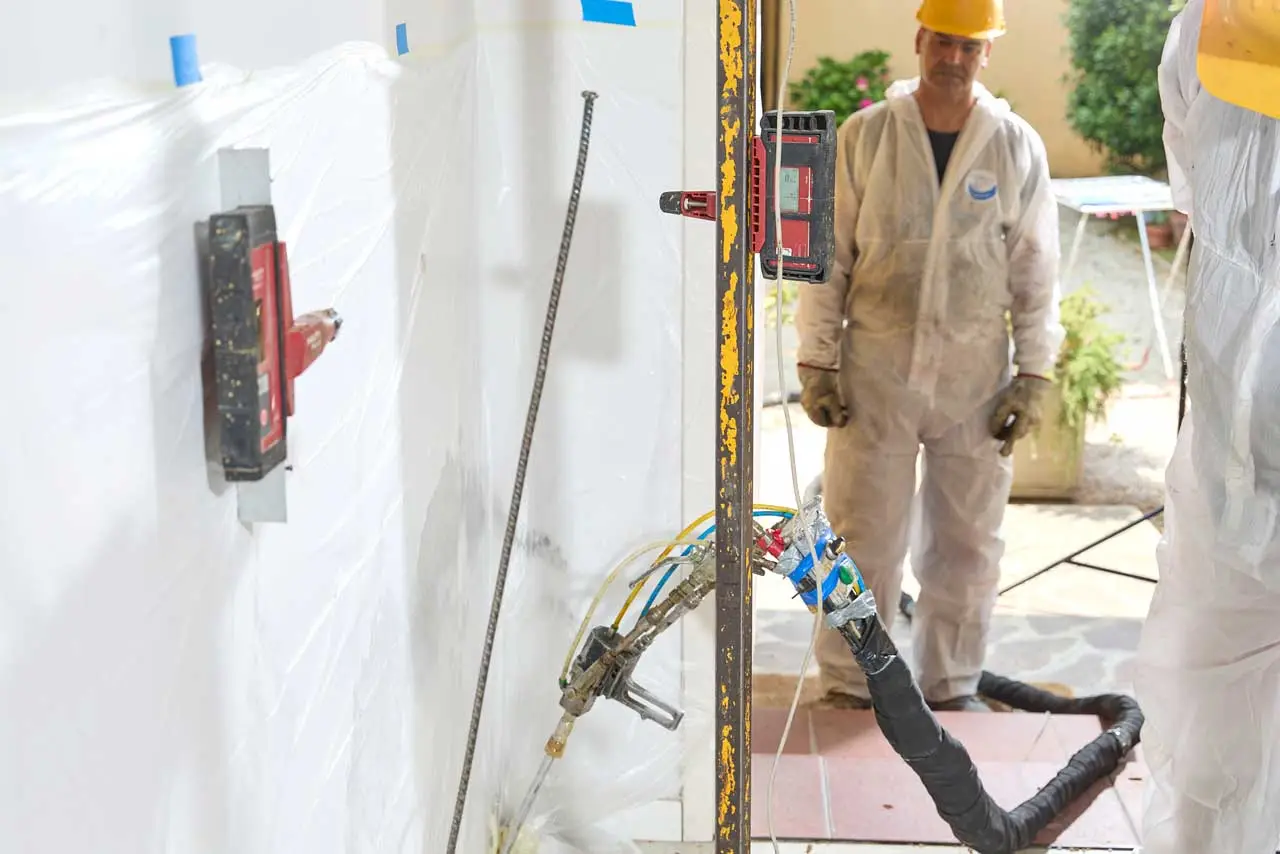
For the internal load-bearing walls, it was decided to use an even less invasive consolidation, which would not require demolition or excavation. The only technique that allows stabilization of the soil and foundations is the one based on the injections of self-expanding resins directly into the significant volume of the foundation. The consolidation work takes place through 25 mm micro-perforations and the use of aluminum cannulae for the injection of the two-component and self-expanding resins into the ground. On average, everything is done in a couple of days.
Advantages of consolidation performed with pre-loaded micropiles
The consolidation of the foundations with pre-loaded micropiles made it possible to definitively stabilize the external load-bearing wall, restoring safety and allowing the repair of cracks in the walls. The resins served to stabilize the internal walls marginally affected by the collapse, without excavations or demolitions.
Consolidation with pre-loaded piles has various advantages compared to traditional techniques, and combined with resin injections it allows the vast majority of instability to be resolved:
- very rapid implementation times when compared to classic methodologies;
- does not produce any waste material;
- possibility of operating at reduced heights, even in basements (150 cm in height is enough);
- does not normally use mud or water (dry construction site, also suitable for narrow, internal environments);
- does not produce any vibrations harmful to the superstructures;
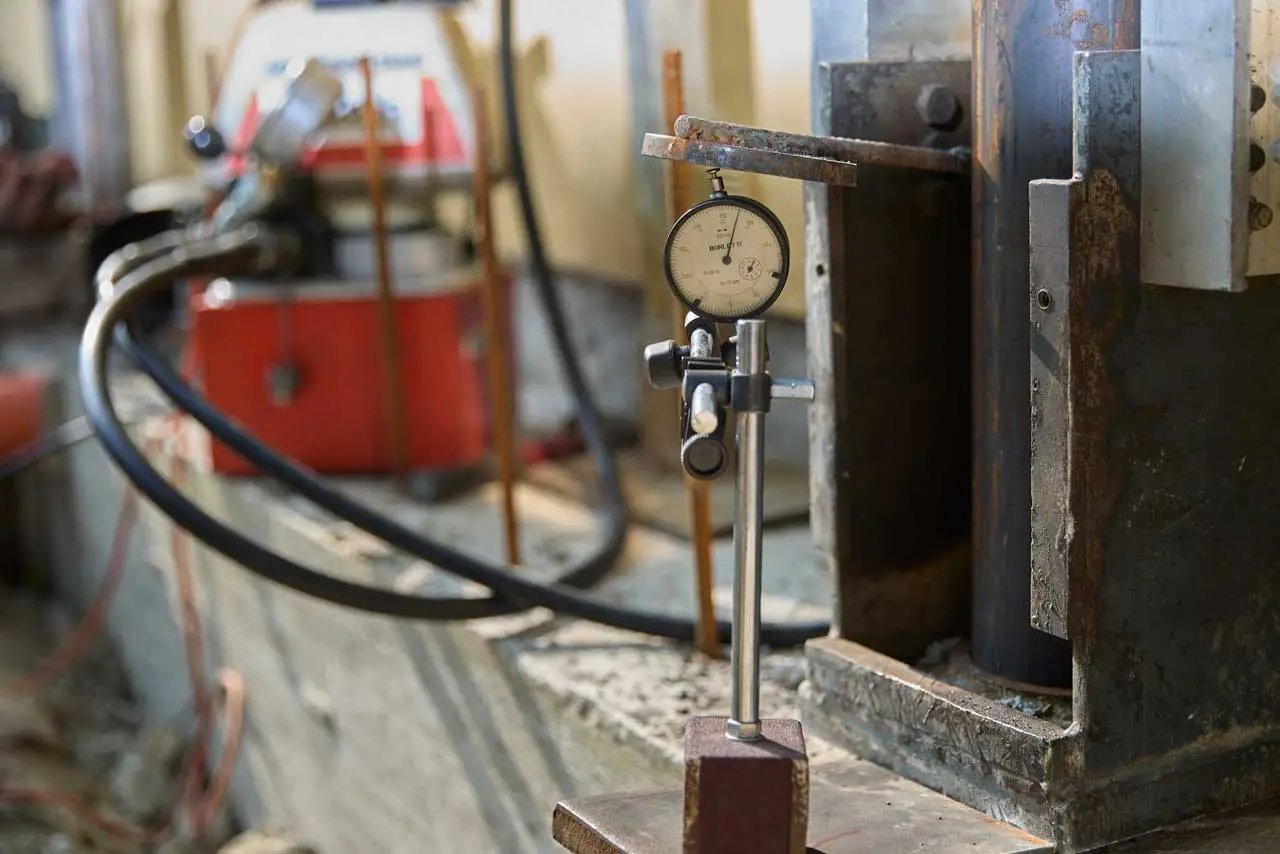
- the capacity of each micropile is tested during construction;
- preload with elimination of primary settlements for all micropiles made.
The overall construction work, including injections and insertion of the micropiles (8 micropiles with a diameter of 114 mm and an average length of 11 metres), including the final fixing of the micropiles using jacket tubes embedded in a new reinforced concrete curb, lasted only 4 days. The technology used made it possible to operate quickly, with minimal inconvenience and without producing harmful stress on the inhabited structure.
For further information
SYStab preloaded piles
Injection of SYStab expanding resins