
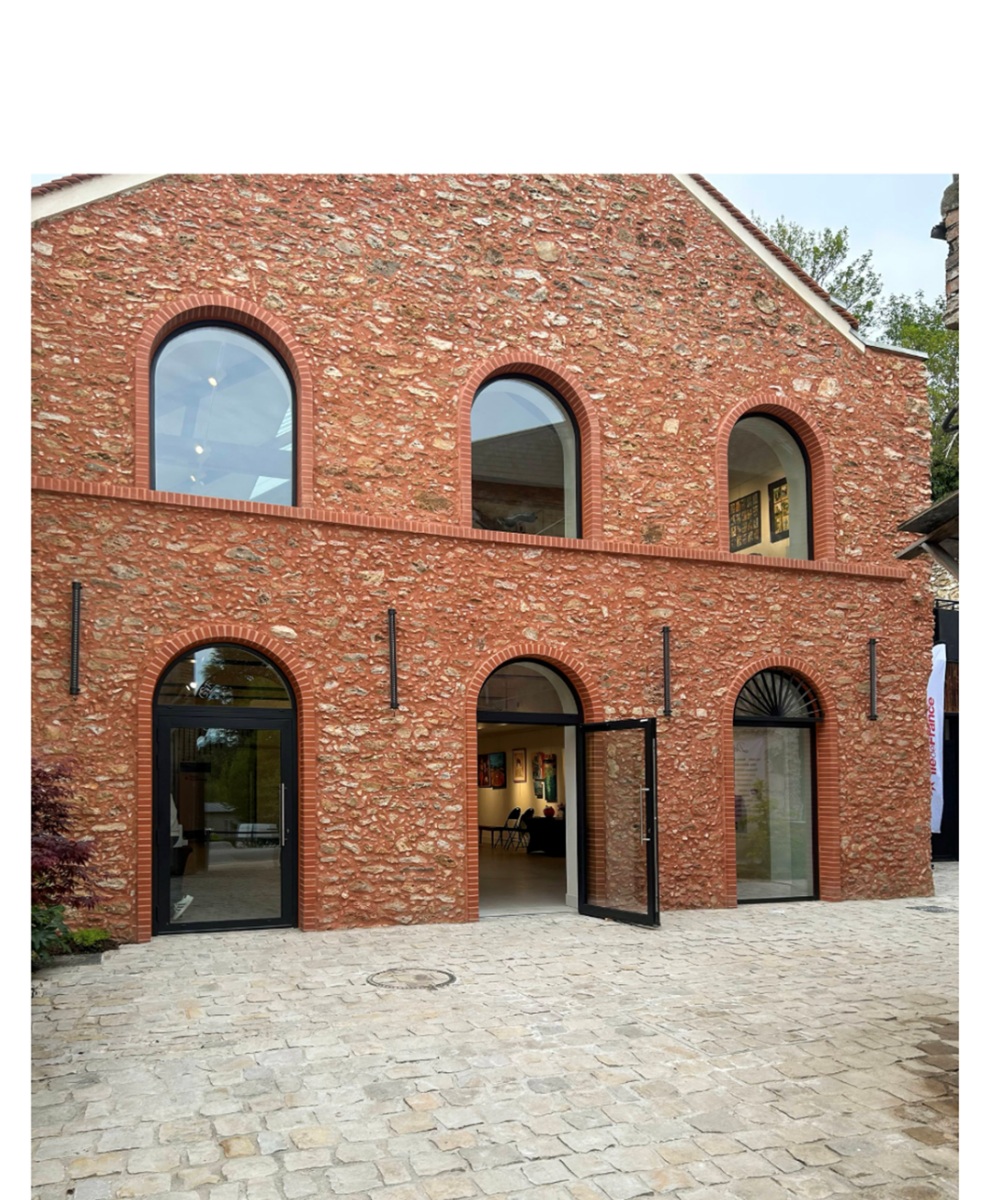
In Bièvres, A26 transforms an old agricultural barn into a cultural space, reconciling structural rehabilitation, contemporary writing and sustainable materials.
Publi-Information 


In Bièvres (91), the transformation of La Grange aux Fraises illustrates an approach to rehabilitation where contemporary intervention reveals rather than erases the existing. Delivered by the A26 agency, the project converts an old agricultural buildingwhich over time has become an aging exhibition hall, into a cultural facility redesigned in its uses as well as in its architectural style.
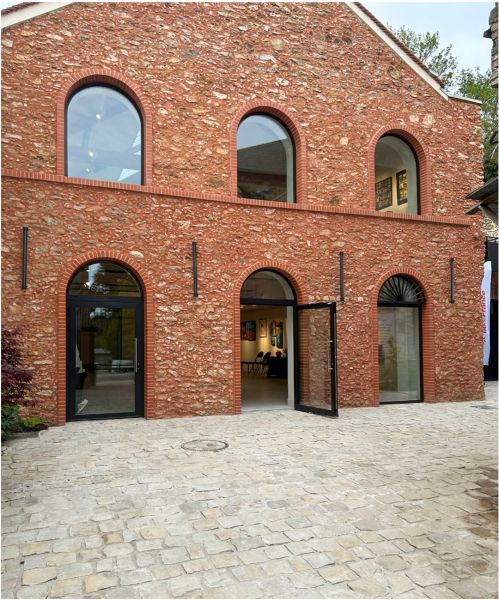
The building now adopts a new architectural style, articulating the memory of the place as well as constructive choices geared towards sustainability. © A26
Founded in 2012 on the initiative of several architectural firms wishing to pool their skills and resources within a common structure, A26 has gradually developed, a dynamic that has allowed it to become the seventh French agency and to join the ranking of the top 100 global agencies.
A multi-specialist agency, A26 brings together all the expertise necessary for the design of a project, from the urban vision to architectural and interior details: architects, town planners, design offices, economists, landscapers and even designers. This integrated approach allows it to intervene in global operations, in France and internationally.
A major intervention to free up volumes and secure the existing
Located rue de Paris, opposite the town hall, La Strawberry Barn retains in its name the memory of its original function: the storage of local market garden produce. Its sloping location, which ensured natural thermal inertia, constituted an asset that the project sought to preserve while thoroughly transforming the building.
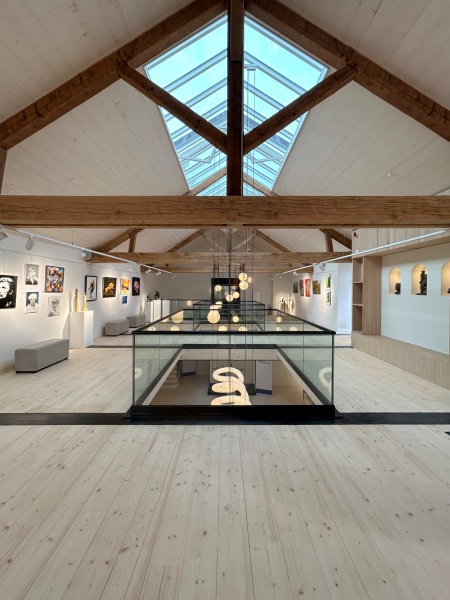
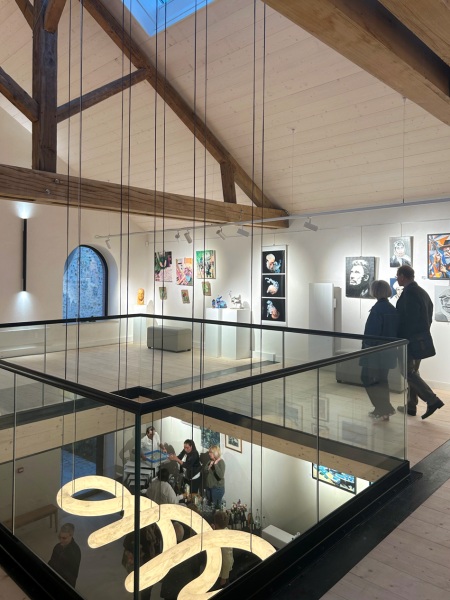
The intervention initially focused on structural upgrading, with a weakened framework that had become dangerous and floors that needed to be repaired. At the same time, the project has profoundly changed the perception of interior spaces: the removal of the central posts now makes it possible to create a continuous volume, more readable and fully modular. © A26
The treatment of the envelope also participated in this transformation, with the creation of a second inner skin in hemp blocks. The provision of natural light, via a glass roof, completes this work of spatial recomposition by revealing the entire volume.
Outside, a ground floor extension, opening onto the square, extends the existing building. Made in insulated bricks and dressed in a burnt wood claddingit affirms contemporary writing without breaking with the site. The landscaping, with planted terraces made of wooden logs and a raised garden, accompanies this new reading of the place.
In fact, the main interventions carried out were:
– securing the framework and repairing the floors;
– Creation of a second interior skin in hemp blocks;
– Removal of the central posts in order to free up the volumes;
– Integration of a glass roof for natural lighting;
– Creation of a extension in insulated bricks and burnt wood ;
– Landscaping with terraces and raised garden.
Biosourced, reuse, traditional techniques: a project anchored in its territory
Beyond the architectural choices, the project is based on a structured environmental approach. A26 has generalized the use of biosourced materials, from hemp used for wrapping to wooden elements integrated into the floors and structure.
The logic of reuse also guided the site, with the conservation and reuse of existing elements – paving stones, low walls, structural parts and even gates – helping to limit the project’s footprint while maintaining a tangible link with the history of the site.
Finally, the rehabilitation calls on traditional know-how, in particular for the restoration of the millstone facades, refinished with a lime coating based on crushed brick, or even for the flat tile roof and its masonry ridge.