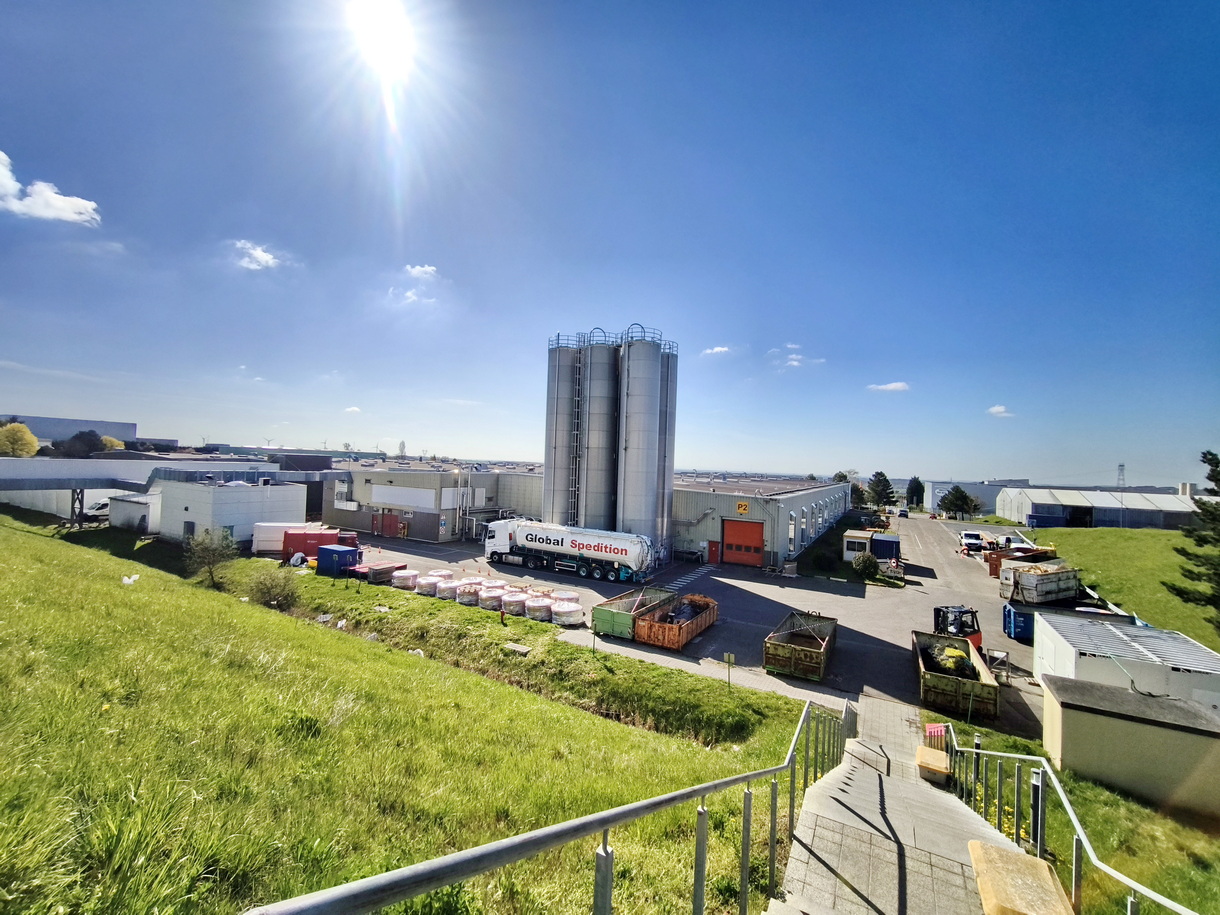
The LAPP cable factory transforms a logistics building into a workshop to develop its production. It manufactures cables for power supply, data transfer and for photovoltaic installations.

On April 2, 2026, we visited the LAPP cable factory in Forbach with Julien Mazelin, its general director. By the way, LAPP is pronounced lap and not LAPP, because it is the proper name of the company’s founders. The company was established in 1959 and remains 100% family owned to this day. During the 2025 financial year, it achieved a consolidated turnover of 1.93 billion euros.
LAPP employs around 5,700 people worldwide, has 27 international production sites and is present in more than 80 countries. Opened in 1990, the Forbach site was historically the group’s second factory, but it is the first in terms of the scale of its production.
In addition to the Forbach factory, the LAPP group has a second factory in Grimaud in Francenear Saint-Tropez, LAPP Muller, specialized in nuclear, navy and defense. Third company name of LAPP in our country, LAPP France is a commercial company which distributes all LAPP products and systems in France. The company still has 50,000 references in its catalog.
LAPP employs around 400 people in France.
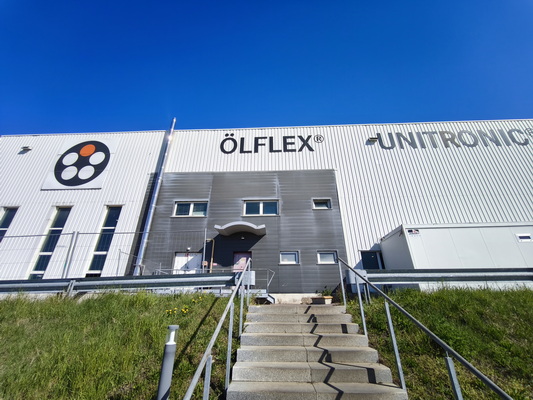
The LAPP Group produces ÖLFLEX cables for connection and control, UNITRONIC cables for data transmission, ETHERLINE cables for data transmission over Ethernet, HITRONIC optical cables, SKINTOP cable glands, EPIC industrial connectors, SILVYN cable guidance systems and FLEXIMARK marking solutions. © PP
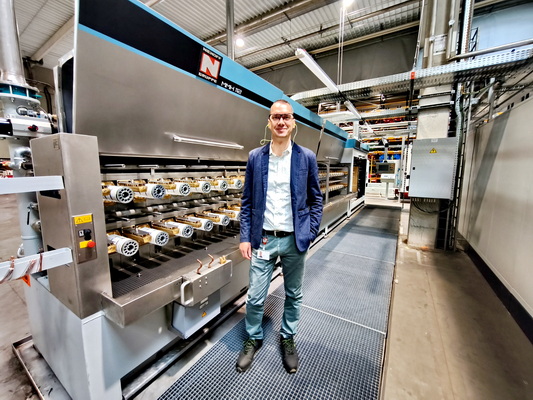
Julien Mazelin has managed the LAPP cable factory in Forbach since January 2025, after 20 years at Nexans. © PP
160,000 km of cables per year
L’Forbach factory – actually installed on the plateau in Oeting above Forbach – manufactures 160,000 km of cables per year and, thanks to the ongoing conversion of a logistics building into a production building, it will increase its production by 30% during 2027. The Forbach factory employs 243 people and around thirty temporary workers for the moment.
LAPP manufactures cables in Forbach under the ÖLFLEX brandthe first cable developed by the founder of the company in 1957. The ÖLFLEX cables carry power and data and are mainly used for connection of machine tools and robots. They are particularly flexible – connecting robots requires resisting a very large number of bends – and resistant to oil and all kinds of stress. L’factory also manufactures cable conductors for connecting electric vehicles and charging stations. Their final assembly is carried out in the Czech Republic.
L’Forbach factory also manufactures cables for connecting photovoltaic installations. Still in the field of renewable energy, LAPP Forbach manufactures cables for the internal wiring of electricity storage batteries and already supplies several battery gigafactories.
In tertiary and housing buildings, we will find LAPP cables for Ethernet networks, cables for charging electric vehicles and cables for photovoltaics installed on the roof. According to Julien Mazelin, the development of intelligence between equipment and the increase in the number of connected machines contribute to the increase in the volumes of data exchanged and to the development of the LAPP cable market, as does the boom in the development of data centers.
Cable manufacturing
L’LAPP factory in Forbach focuses on large series industrial manufacturing. It operates six days a week, night and day.
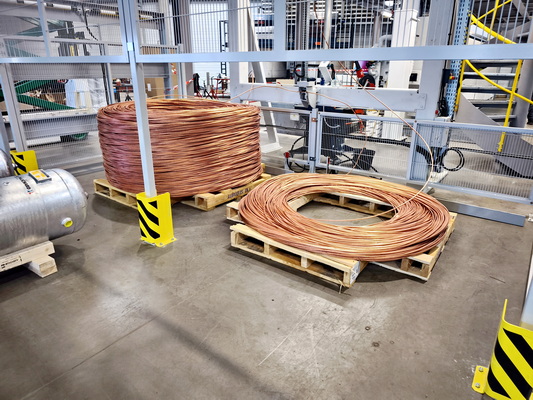
The factory receives reels of copper cable – it does not use aluminum cable – with a diameter of 8 mm. The first manufacturing step is wire drawing, i.e. reducing the diameter of the copper wires. Drawing is carried out very precisely in two stages. The first step is roughing and reduces the Ø to 6 mm. The second lowers it to 0.15 mm. The factory has five wire drawing machines which will all be brought together in the new hall, so as to allow optimization of the organization of production in the existing halls. © PP
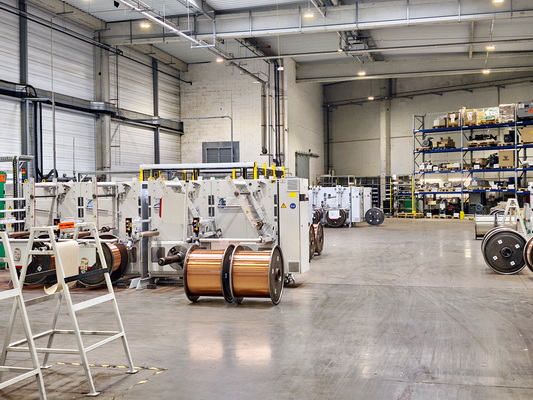
After drawing, the copper wires reaching the correct diameter are stranded. Which involves turning them and putting them together, a bit like the threads of a rope. The stranded cable is then capable of undergoing multiple bendings. The more the stranding pitch is reduced, then the cable is flexible and capable of undergoing multiple bending. © PP
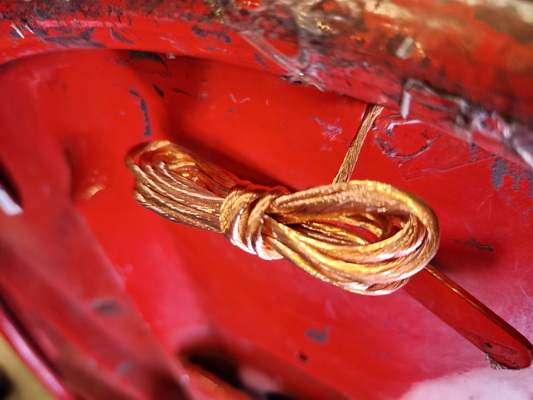
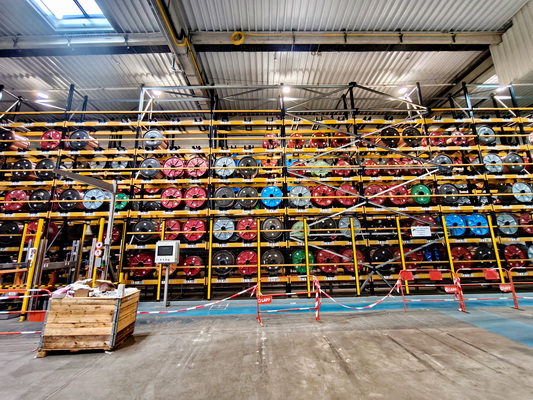
At the end of the wire drawing and stranding works, the copper cables are wound on drums and stored in a highly automated stacker crane. It is he who supplies the subsequent transformation stations: protection and sheathing. © PP
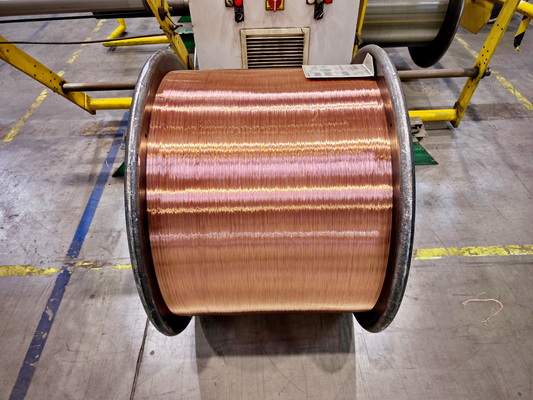
The Forbach factory uses class V flexible copper cable. Class 1 corresponds to rigid cables with a solid core. Class 2 indicates rigid multi-strand cables. Naturally, there are no classes 3 and 4. Class 5 refers to thin multi-strand flexible cables and class 6 corresponds to extra-flexible cables made up of extra-fine multi-strands. © PP
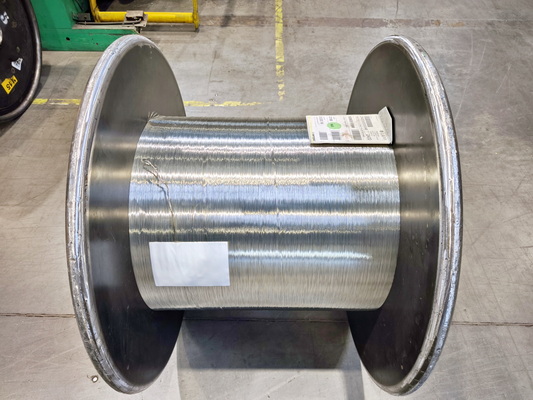
LAPP also uses tinned copper cables in Forbach for its cables intended for photovoltaics. © PP
After stranding, the next step is insulation, made from different plastic materials depending on the cables, and then comes theassembly of several insulated wires, then sheathing. The Forbach factory has developed a process, called SZ, which consists of carrying out the assembly and sheathing in a single pass at the same time. Which eliminates steps and speeds up production flows.
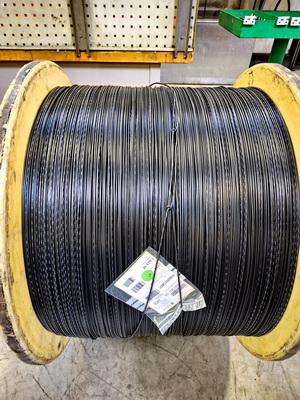
The cables are single-colored or of several colors, like the earth cables. © PP
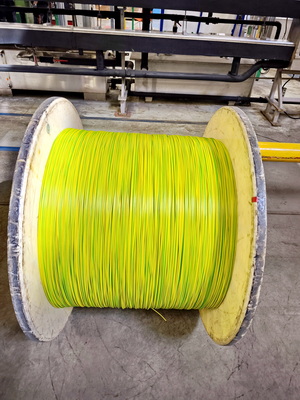
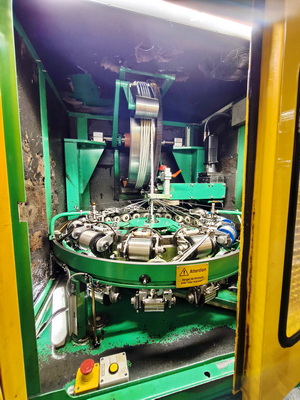
Cable protection is carried out either using copper braid for electromagnetic protection, or steel braid for mechanical protection. © PP
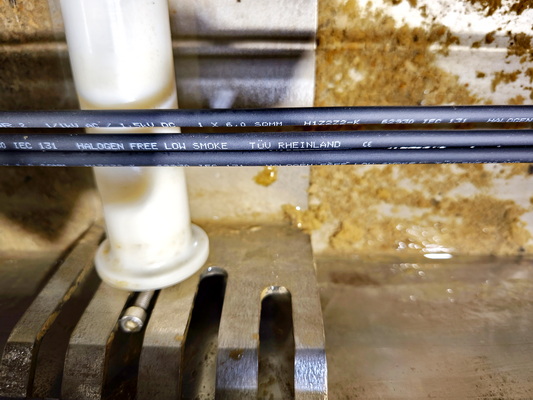
The final stage is that of marking which identifies the performance and use of the cables, as well as their certification. © PP