
Examples of urban relevance
The urban relevance was, therefore, understood in a restrictive sense, as it referred only to works of modest dimensions, such as:
- a swimming pool simply placed on the ground surface, without the use of building materials capable of transforming or impacting with invasive force on the layout of the land, of modest dimensions, with a purposeful connection with the main building (2);
- a room measuring 6.24 m2 intended for storage (3);
- a masonry building of approximately 1.00 m2, with a height of approximately 3.00 m, with only perimeter walls and no roof, completely unfinished, erected in adherence to a previously built property (4);
- a chicken coop that measured mt. 1.80 in length, m. 1.80 wide and m. 1.60 m high in the brick part and, in the metal mesh part, m. 4.50 in length, m. 2.80 wide and m. 2.00 in height (5).
The kennel hypothesis
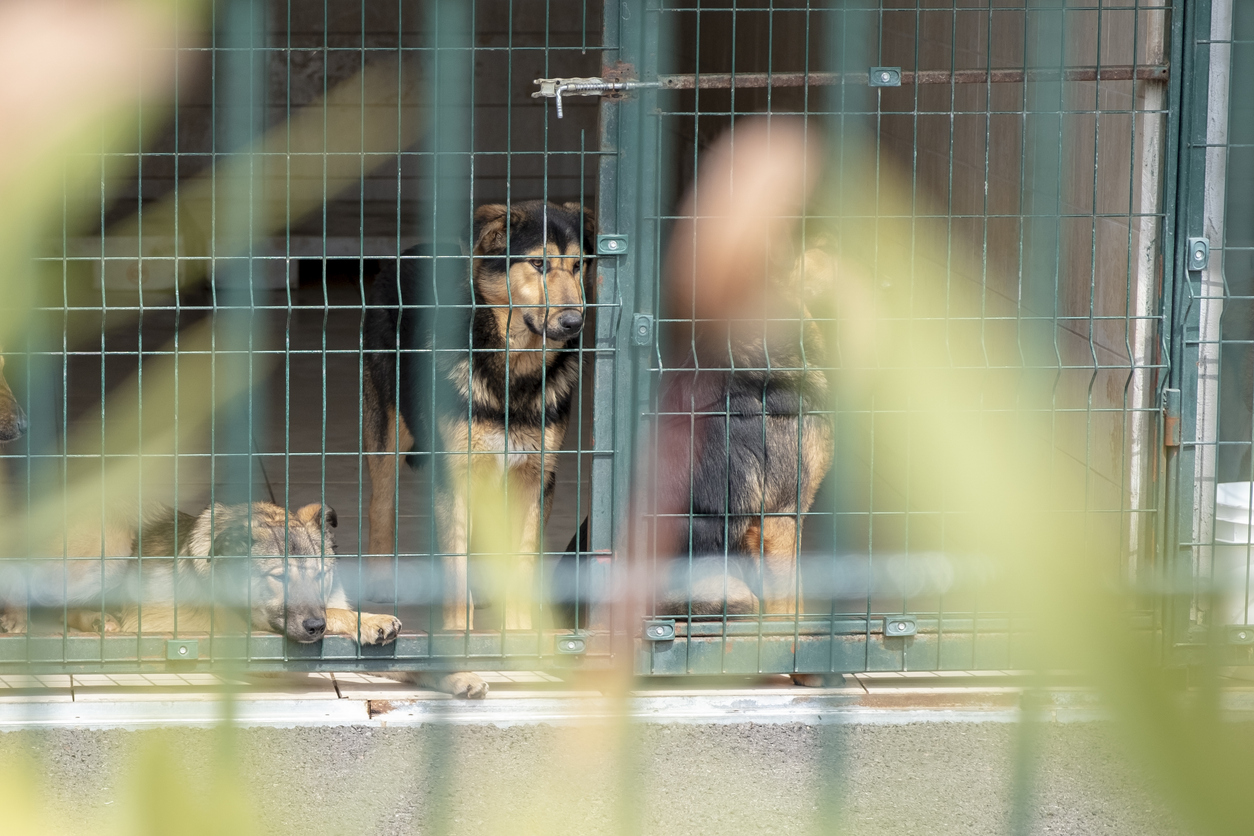
In the sentence 27 October 2026, n. 4817, the TAR Lombardia, Milan, section. IV, stated that six boxes intended for the shelter of pets (in practice, a kennel), with a height of approximately m. 2.10 and a variable plan from 2 x 2 to 2 x 5 metres, built with insulated panels and iron grills, must be considered a new construction with a significant impact on the morphology of the places and not merely precarious works.
In order to exclude the precariousness of the aforementioned works, the jurisprudence has specified that “The precarious nature of a product must be assessed not with reference to the type of materials used for its construction, but with regard to the use to which it is intended: in the sense that, if the works are aimed at satisfying stable and permanent needs, the precarious nature of the work must be excluded, regardless of the materials used and the construction technique applied; to identify the precarious nature of a work, one must therefore follow not the structural criterion, but the functional criterion, whereby if it is built to satisfy needs that are not temporary, it cannot benefit from the regime specific to precarious works, even if made with easily removable materials; consequently, any intervention that alters the state of the territory in a significant and lasting way is revealed to be suitable for producing urban transformation, noting any structural precariousness and removability of nothing, where this is not accompanied by an absolutely temporary use and for contingent and specific purposes.”(6).
Furthermore, in the specific case, these structures had been present for at least five years, a circumstance which was in clear contradiction with the precariousness of the intervention and was in itself incompatible with the temporary and contingent character that characterizes precarious works and, therefore, excluded the possibility of attributing this qualification to the works in question.
The necessary overall and non-atomistic evaluation
The Milanese judges also reiterated that the building interventions carried out must be evaluated not in isolation in relation to the individual artefacts created, but as a whole or in their entirety to identify which building permit would have been necessary overall (for example, the building permit rather than the SCIA), without therefore the possibility of considering the interventions separately to apply less burdensome building regimes and sanctions (7).
In the specific case, the works carried out, considered as a whole, did not have the characteristics of urban planning relevance, but rather those of new construction (pursuant to art. 3, paragraph 1, letter e) of Presidential Decree no. 380/2001).
A similar case
In the past, the TAR Campania, Salerno, section. II, in the sentence. 12 November 2019, n. 1986, had already stated that a building used as a kennel, placed against the retaining wall of the terracing of the aforementioned agricultural land, with dimensions of 3.00 x 6.40 metres, height varying from 2.80 to 3.00 metres, made up, on three sides, of pears made of lapillus and cement blocks and, as for the third, closed by a metal gate, with a roofing in panels of insulated corrugated sheet metal supported by a metal profile structure and a concrete screed, created adjacent to the aforementioned building, measuring 2.40 x 6.40 metres, fenced with electro-welded metal mesh supported by iron posts, all having a height of 1.50 metres.
The construction and dimensional characteristics, the type of materials used – as specified above – as well as the instrumentality of the artefacts in dispute to the satisfaction of needs that were not temporary and transitory but rather stable and long-lasting over time, according to the Salerno judges, allowed them to be excluded from their appurtenant nature, as they had determined a permanent alteration of the building and urban planning structure of the territory, with a consequent increase in the urban planning load.
>> If you want to receive news like this directly on your smartphone, subscribe to our new Telegram channel!
Notes
(1) Council of State, sec. VII, sentence. 15 May 2025, n. 4175.
(2) Council of State, sec. VII, sentence. 18 February 2025, n. 1376. Similarly, the Basilicata TAR, sec. I, in the sentence. 8 May 2023, n. 268, has qualified as relevance “a swimming pool 10 m long, 3 m wide. and 1.20 m high, as it is a small swimming pool, intended for the exclusive use of the main building”.
(3) TAR Lombardy, Milan, sec. II, sentence. 24 March 2025, n. 1019.
(4) TAR Lazio, Latina, sec. I, heard. 4 July 2022, n. 629.
(5) TAR Liguria, section. I, heard. 29 August 2020, n. 596.
(6) Council of State, sec. II, sentence. 16 March 2026, n. 2151; sent. 20 January 2026, n. 461.
(7) TAR Piedmont, section. II, sentence. 4 September 2026, n. 1825: “According to the jurisprudential direction, the evaluation of building abuse presupposes an overall and non-atomistic vision of the works carried out, since it is not possible to break down a part of them to deny the possibility of being subject to a specific sanction, since the damage caused to the regular planning of the territory derives not from each intervention in itself, but rather from the set of works in their contextual building impact and in their mutual interactions“; Council of State, section IV, sentence 6 May 2026, no. 3532.
In collaboration with studiolegalepetrulli.it
Thank you for subscribing to the newsletter.