With a range of certified and industrialized compressed raw earth bricks, Wienerberger is investing in a structuring market, driven by low-carbon construction requirements and the rise of geo-sourced materials.
Publi-Information 


With the launch of a range of compressed raw earth bricks, wienerberger is gaining a foothold in a segment that is still emerging, but increasingly structuring in the sector’s low-carbon strategies. Inherited from Bricks Technic Concept know-howintegrated into the group in 2024, this offer, now united under the BTC brand, is based on a uncooked geo-sourced material and targets projects where the reduction of the environmental footprint is linked to constructive quality requirements, particularly in operations combining wood and biosourced materials.
As a reminder, Wienerberger is the world’s largest producer of bricks and the leader of clay tile market in Europe as well as concrete pavers in Eastern Europe. In the field of pipeline systems (ceramic and plastic pipes), the company is one of the leading suppliers in Europe and one of the leading suppliers of facade products in North America. At the beginning of 2024, Wienerberger successfully completed the acquisition of Terreal, becoming the Europe’s leading provider of innovative all-in-one roofing and solar solutions, as well as solutions for the entire building envelope in Europe and North America.
With its more than 200 production sites, wienerberger generated a turnover of around 4.5 billion euros.
A structured, certified and nationally distributed offer
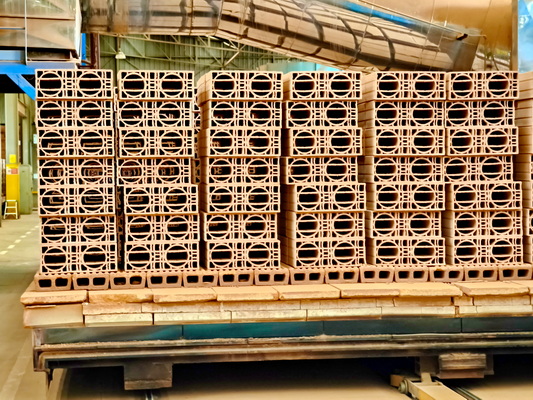
The system put in place aims to industrialize the use of raw earthwith a homogeneous and reproducible range. Marketed under the BTC brand, the Flexiterre solid bricks come in two families: Unstabilized BTCwhose cohesion rests solely on clay, and Lime stabilized BTCSsuitable for contexts more exposed to humidity. Four sizes are offered (30 × 10 × 10, 30 × 15 × 10, 30 × 20 × 10 and 40 × 20 × 10 cm), to meet different design needs.
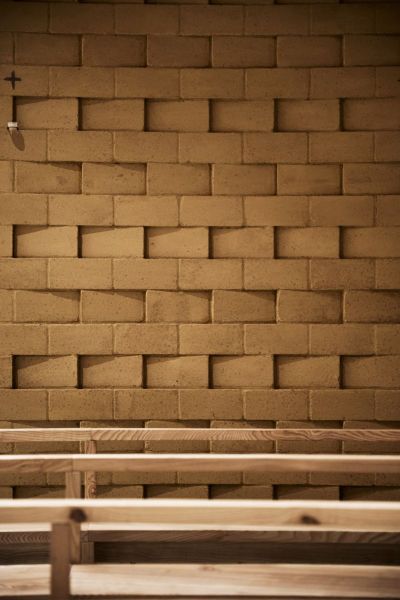
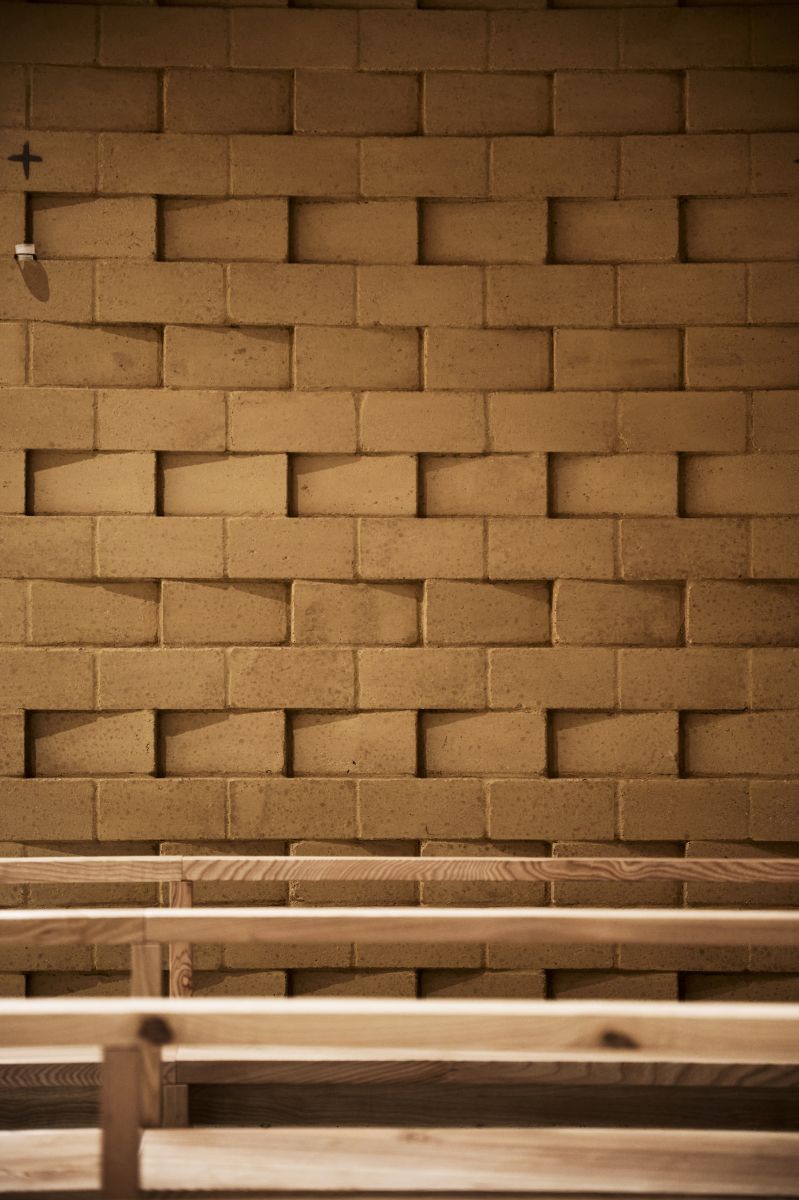
The whole benefits from a favorable Technical Experimental Assessment (ATEx) issued by the CSTB, a framework governing the creation of non-load-bearing interior partitions in compressed raw earth bricks, whether stabilized or not. This technical recognition helps to secure the use of the material from an insurance perspective as well as to simplify its integration into projects, without resorting to specific validations. To date, it is the only solution on the market to benefit from this level of certification. © Adrien Darles / Studio Adri1D_2
A supervised and supported implementation
There laying bricks Flexiterre relies on traditional techniqueswith no specific qualification requirements. It nevertheless requires careful execution, particularly for joints and cuts, in order to ensure the quality of the final result.
The ATEx also specifies the implementation conditions, with a rate of raising the partitions of between 1 m and 1.5 m per day to guarantee the stability of the structure. THE mortars vary depending on the nature of the bricks :
– for stabilized BTCS: PRB M2.5 mortar or “Clay of Aquitaine” type earth mortar;
– For non-stabilized BTC: earth mortar exclusively.
In an integrated offer logic, wienerberger offers compatible mortars as well as protection solutions – anti-dust, anti-spray. Training and site support complete the system.
A geosourced material with sought-after properties
Put forward in contemporary practices, the raw earth presents characteristics in line with current environmental expectations. THE BTC bricks are produced in Chasseneuil-sur-Bonnieure (Charente) using land from the group’s quarries and water, without cooking, which limits energy consumption and associated emissions.
Geosourced, infinitely recyclablethe material is fully part of a logic of valorization of local resources and circular economy. Beyond its environmental performance, the raw earth actively contributes to the comfort of use of buildings. In particular, it allows:
– natural regulation of humidity;
– Improving thermal comfort, particularly in summer;
– Healthier indoor air quality, without endocrine disruptors.
A response to developments in construction systems
By its properties and its method of implementation, raw earth brick is fully in line with current developments in the sector, in particular the rise in power of hybrid construction systems combining biosourced and geosourced materials. Particularly suitable for wooden frame buildings, it provides inertia and interior comfort, while promoting a more frugal and responsible constructive approach.
Its scope of application covers public facilities (schools, media libraries, cultural buildings) as well as collective housing or operations with strong environmental ambitions. Its raw appearance, intended to remain visible, also constitutes an architectural lever for designers seeking materiality as well as sobriety.
“Our ambition is to bring raw earth into a new era, by removing the technical and insurance obstacles that have hitherto limited its development. We want to offer building stakeholders a reliable and efficient solution, capable of meeting market expectations. Raw earth presents particularly interesting advantages in a low-carbon construction approach. Today we wish to give it its full place in contemporary projects, by providing the technical guarantees and industrial capacity necessary for its deployment.” explains Gérald Merlin, head of structure and facade markets for Wienerberger. © PP
© wienerberger