
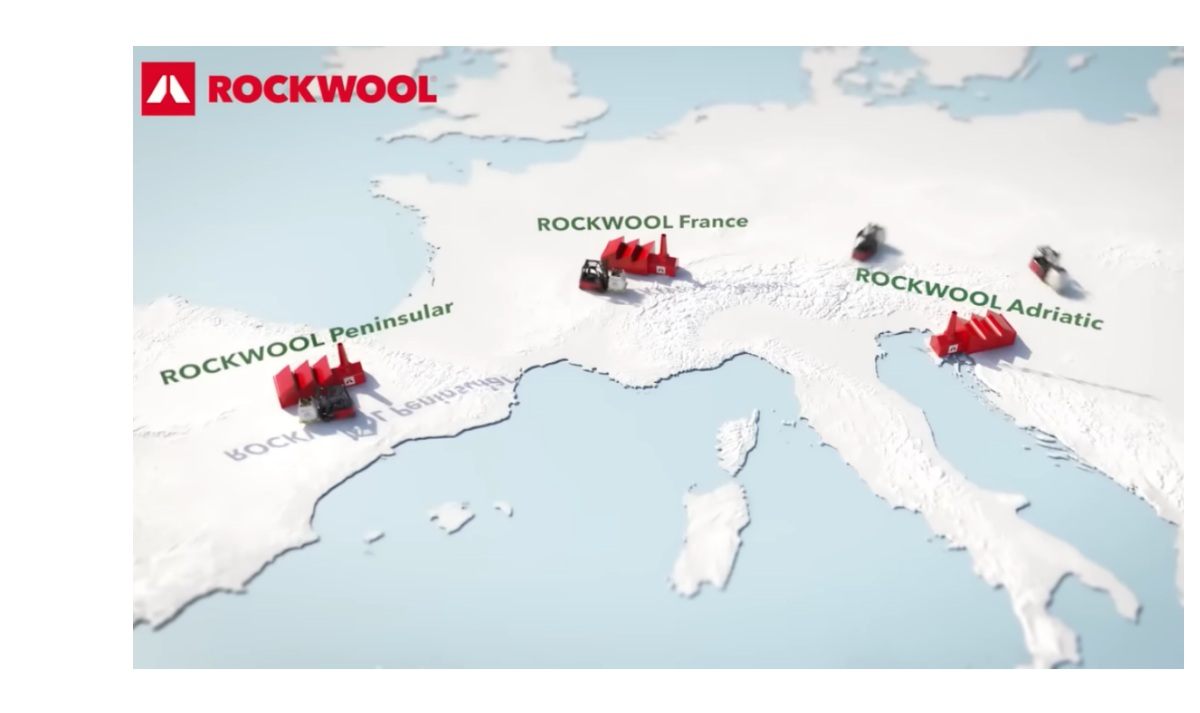
Faced with the massive volumes of waste generated by the construction sector, Rockwool is strengthening its Rockcycle program in order to develop the collection and recovery of rock wool.


Every year in France, the construction sector produces nearly 46 million tonnes of wasteof which approximately 85% comes from deconstruction operations. Faced with this challenge, the Ministry of Ecological Transition relies in particular on the EPR (Extended Producer Responsibility) sectors, and more particularly on that of Building Construction Products and Materials (PMCB), called to play a driving role in the development of recycling. In this context, Rockwool intensifies its Rockcycle programdedicated to the collection and recovery of rock wool waste.
As a reminder, Rockwool France SAS, subsidiary of the Rockwool grouprelies on its factory and its 816 employees in order to offer innovative insulation solutionslocally anchored. On a global scale, the group brings together around 12,000 employees in 40 countries and has established itself as a leading player in rock wool solutions. Its expertise covers a wide range of contemporary issues linked to sustainability: energy performance, acoustic comfort, fire safety, water management or resilience to climate risks. Versatile, rock wool constitutes the heart of its activity and makes it possible to meet varied needs, ranging from the insulation of buildings to industrial applications, including facades, horticulture or even the naval and offshore.
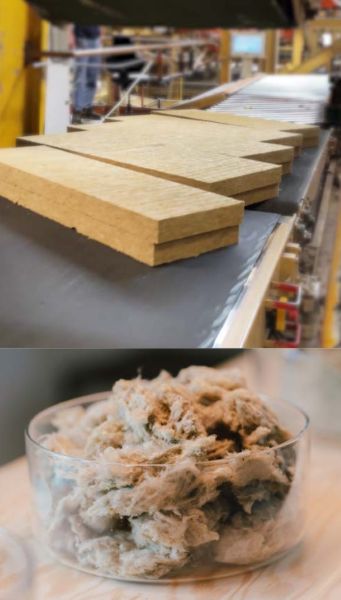
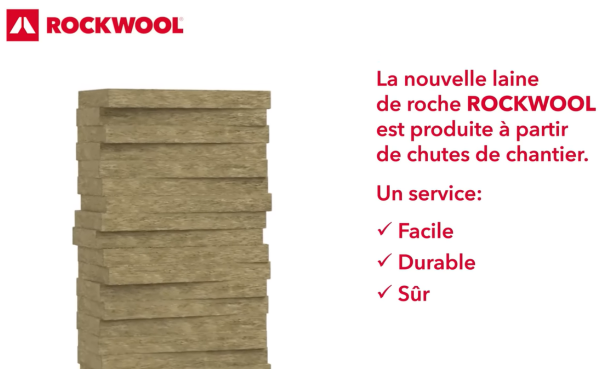
Rock wool is mainly made from volcanic rocks, such as basalt, as well as other minerals such as dolomite, to which are added secondary raw materials from recycling, such as rock wool cutting scraps, used insulation or even steelworks slag. Its production is based on a multi-step industrial process, perfected over more than 80 years of expertise. The raw materials are first heated to around 1,500°C in an electric oven. The molten material is then transformed into fibers by bursting, forming a mineral wool which is homogenized, then fired at around 200°C before being cut into panels. Depending on the applications, certain additional operations, such as sanding, can be carried out depending on the characteristics of the finished products. © Rockwool
Rockcycle: more than 5,000 tonnes collected in 2025: an increase of 25%
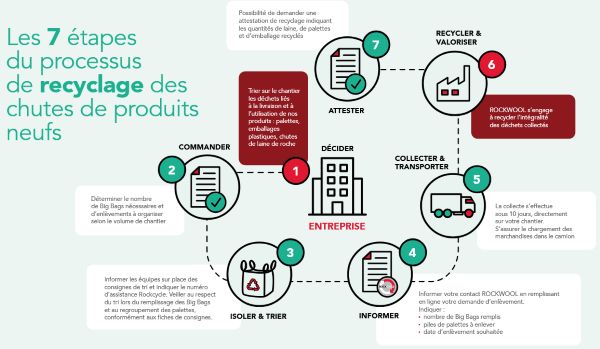
Pioneer of recycling of materials, Rockwool launched in 2012 in France the Rockcycle program, a system dedicated to the collection and recovery of rock wool products from construction sites. In 2025, this service, now extended to renovation and demolition operations, made it possible to recycle more than 5,000 tonnes of rock wool in the regionan increase of 25% compared to 2024.
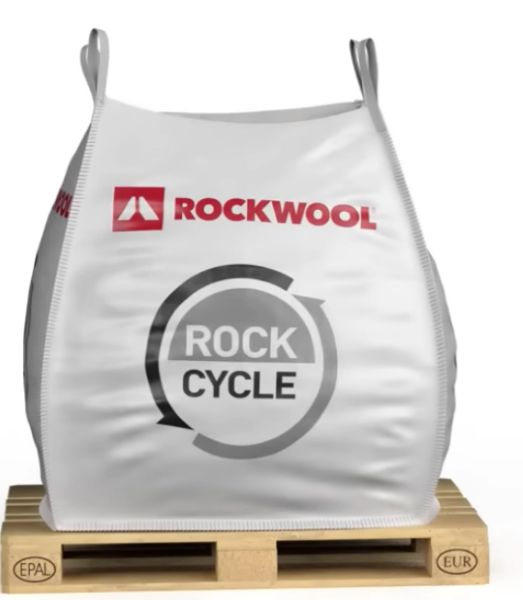
Recycling constitutes a major strategic axis for the group. In 2025, Rockwool continued the deployment of Rockcycle internationally, with the ambition of extending this program to 30 countries by 2030, in particular thanks to its establishment in an additional new market. © Rockwool YouTube video screen capture
Beyond simple production, Rockwool wishes to defend a circular approach to its value chain:
– products that are easy to disassemble and infinitely recyclable;
– A closed loop recyclingfrom construction to end of life;
– A valorization of secondary raw materials in the recycling process ;
– An absence of landfilling of waste from production on certain sites, with a significant reduction planned on other sites.
2026: Rockcycle expands its solutions to adapt to all construction sites
In 2026, the Rockcycle program takes a new step by diversifying its collection methods in order to better respond to the diversity of building operations. So far mainly organized around “Big Bag” type collection bagsthe system is now evolving towards solutions sized according to the size of the construction sitesmaking the service accessible including small interventions carried out by craftsmen. In addition, collection points are gradually being deployed at certain partner businesses.
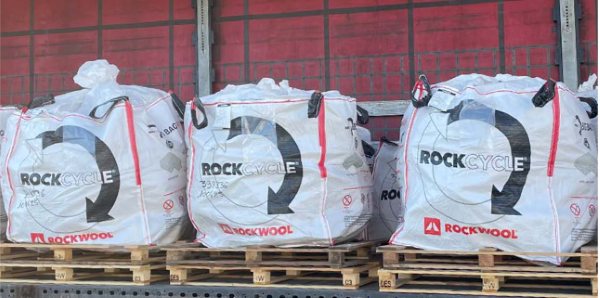
There rock wool thus recovered is then reintroduced into the production cyclen, participating in a logic of reuse of raw materials. Rockwool is also able to integrate materials from both the market and other industries into its processes, opening the way to new recovery sectors.
“Rock wool is infinitely recyclable. It is therefore legitimate for Rockwool to position itself as a key player in the circular economy. Through the expansion of our Rockcycle program, we want to facilitate the collection and recycling of rock wool and construction waste directly on construction sites. By multiplying the solutions, we support craftsmen and building professionals so that they contribute to making rock wool an infinite resource,” emphasizes François Hababou, product manager at Rockwool France. © Rockwool
In this same low-carbon transition dynamic, the group also provides professionals with a “CO calculator2 x Rockcycle”. This tool makes it possible to estimate the volumes of scrap generated on site as well as the carbon footprint of the solutions implemented. It thus offers an operational vision of waste flows, while facilitating logistical anticipation – from the number of skips to the necessary rotations – and theaccess to the Rockcycle device.
© Rockwool