
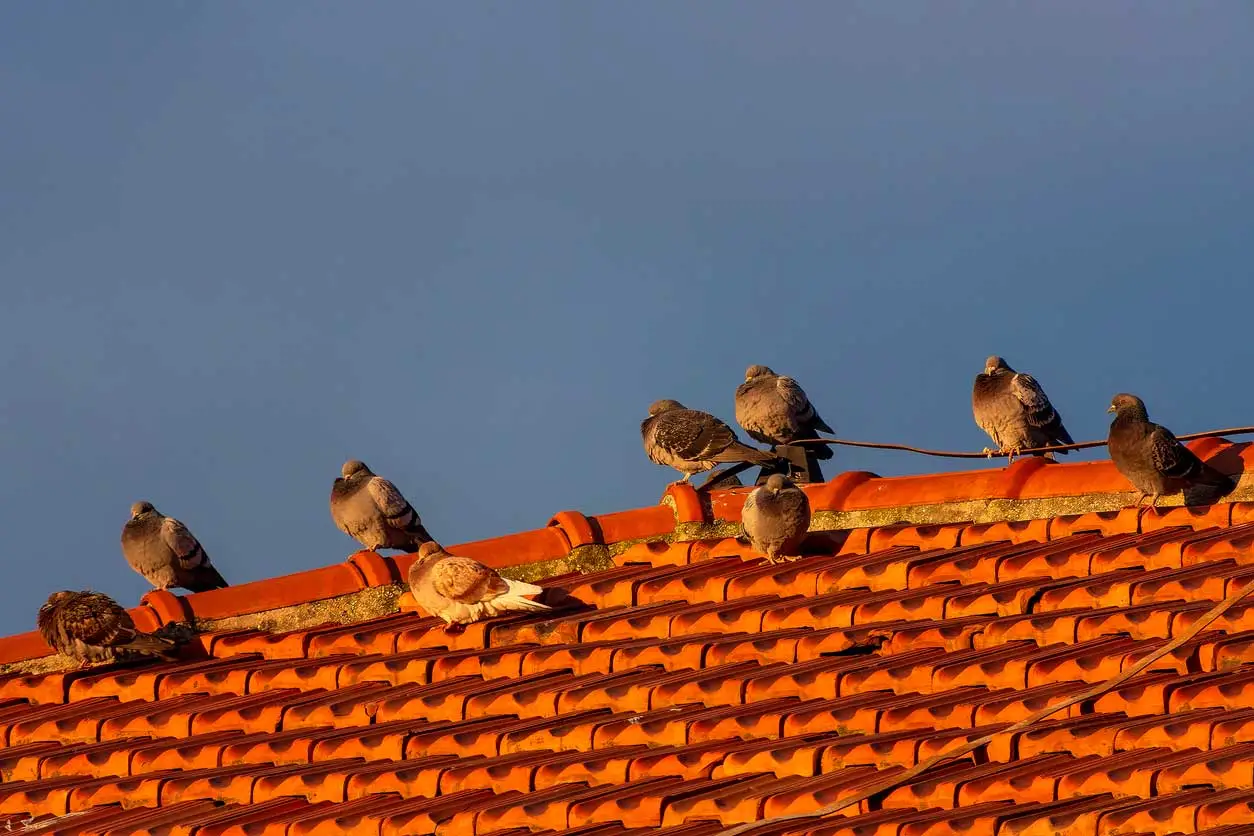
The assembly’s decisions to combat the presence of pigeons
The assembly’s decision must be motivated and clearly reported in the minutes, because it is an intervention aimed at protecting parapets, railings, cornices and other common parts.
The installation of anti-bird nets to keep pigeons away from the common parts of the building can be considered an innovation aimed at improving the safety and healthiness of the entire building and systems (1120 cc, paragraph 2); consequently the resolution that takes this decision is valid and effective if approved with a number of votes that represents the majority of those present and at least half of the value of the building (Trib. Bolzano 13 February 2018, n. 198).
Before installing a bird netting it is essential to evaluate the impact it will have on the facade and decoration of the building. It is therefore necessary to find a balance between two needs: on the one hand the individual’s right to protect their space from an infestation; on the other, the need not to compromise the decoration of the building. For this reason it is useful to evaluate solutions that have a minimal aesthetic impact, such as discreet bollards or barely visible systems. In any case, the expense for anti-bird nets or other remedies (electric deterrents, ultrasound, etc.) must be divided into thousandths.
It is important that the assembly decides on the fixing of the net, indicating the common area on which to position it and excluding from the affixing the pavement owned by a condominium owner: otherwise, the resolution would be invalid due to indeterminacy or null for having decided on an asset of exclusive property, outside the competence of the assembly.
The responsibility of the condominium owner
If a condominium owner provides food to pigeons by attracting them into common areas, for example in the courtyard or garden of the building, the administrator has the power to warn the culprit not to continue this illicit behavior. Feeding pigeons, in fact, can damage common areas and create risks for the hygiene and health of other residents. Before proceeding, it is however advisable to check whether a clause in the condominium regulation already provides for an express prohibition.
In any case, if pigeons stay in exclusive properties it will be the individual condominium owner who will have to take action with the installation of anti-bird netting (or other remedies).
Even more so, prevention activities should concern, in particular, condominiums that own apartments left uninhabited for long periods and, therefore, exposed to the risk of nesting. These owners must be particularly careful to implement the measures indicated above to prevent pigeons from finding shelter or nesting in their spaces.
Finally, it is underlined that this is an intervention visible from the outside, and for this very reason it is advisable for the condominium owner to present a project or at least a description of the work to the administrator, so as to allow the checks required by the art. 1122 cc, paragraph 2.
The reaction towards the inert condominium
In the absence of adequate initiatives on the part of the owner of an apartment, conflicts with the condominium or with other condominiums cannot be ruled out. The condominium or a single condominium owner can propose an application former art. 700 cpc, obtaining the conviction of the guilty person to remove pigeon excrement from balconies, terraces or windowsills, to sanitize/disinfest all open spaces of the housing unit, as well as to affix deterrents and protection nets (Civitavecchia Court ordinance 1 September 2020).
A recent substantive decision authorized the condominium to access the owner’s balcony, even with public force, to remove the serious accumulation of guano which has long created a hygienic-sanitary risk. The ASL had ascertained the presence of “numerous excrements…and abundant quantities of guano” and the Mayor had already ordered the owner to intervene, to no avail. The judge recognized both the fumus and the periculum and ordered the cleanup at the expense of the non-compliant condominium owner, also condemning him to pay the costs of the litigation (Teramo Court 3 February 2026).
In any case, it is remembered that according to a judge of merit, in the event of a state of abandonment of the apartment above, the infections caused by pigeon excrement, deposited on the balconies of the lower floor, legitimizes the condominiums below to request compensation for the damage to health suffered (Justice of the Peace Piazza Armerina 14 April 2020, n. 22).
Thank you for subscribing to the newsletter.