
What the decree is for: recovering compromised ecosystems
The Legislative Decree 80/2026 serves to define how Italy will organize the implementation of the European Regulation on nature restoration. The underlying principle is simple: it is no longer enough to conserve what is still in good condition, but it is also necessary to intervene on degraded ecosystems to restore them to better conditions.
In practical terms, this means encouraging interventions such as the reconstruction of natural habitats, the strengthening of biodiversity, the improvement of the ecological quality of soils, the protection of pollinators, the recovery of the natural functions of waterways and the increase in the presence of greenery in urban settlements.
The decree does not go into the planning details of the individual interventions, but establishes the administrative architecture: it identifies the competent authorities, the subjects responsible for implementation, the coordination methods and the monitoring system. The next step will therefore be the definition of the National Plan, which will have to make the measures operational in the territories.
Urban green spaces and tree cover
One of the areas closest to local planning concerns urban ecosystems. The European Regulation aims to avoid the net loss of urban green spaces and urban tree cover and, subsequently, to promote their increase.
Translated into concrete terms, the theme concerns the ecological quality of cities: more permeable surfaces, more trees, greater continuity between parks and open spaces, recovery of degraded areas, renaturalization of squares and public spaces, green roofs, green walls, sustainable urban drainage systems and green and blue infrastructures.
The Legislative Decree 80/2026 attributes to Municipalities, Metropolitan Cities and Provinces the responsibility for the implementation of the National Plan for obligations relating to urban ecosystems, without prejudice to their responsibilities in the field of urban planning.
This aspect may progressively impact the way in which urban planning tools, greenery plans, climate adaptation plans, urban regeneration programs and interventions on public spaces are read and updated. The objective is not only to increase greenery as an ornamental element, but to strengthen its environmental function: shading, mitigation of heat islands, absorption of rainwater, ecological continuity and improvement of urban liveability.
Rivers, agriculture and forests: what will need to be restored
The decree also concerns ecosystems outside urban areas, with particular attention to rivers, floodplains, agricultural environments and forests.
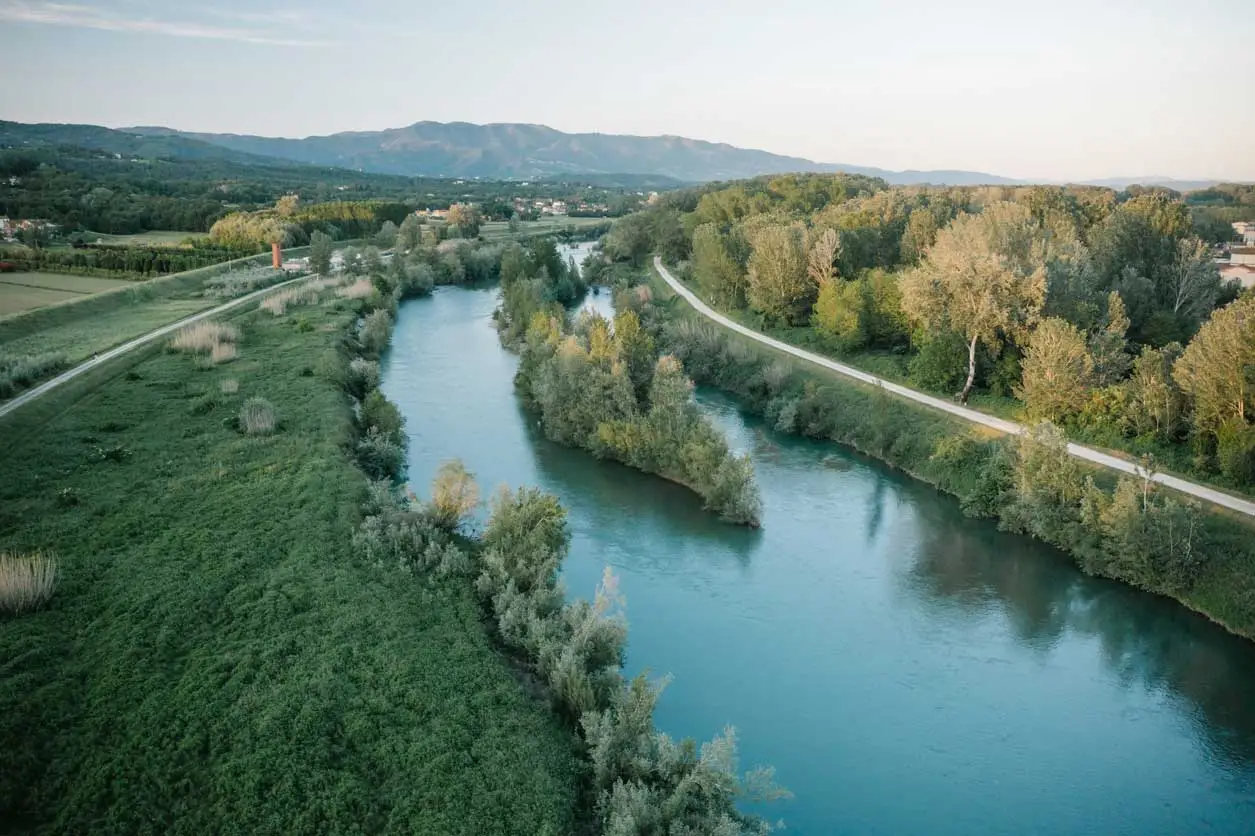
For watercourses, the reference is to the restoration of the natural connectivity of rivers and the natural functions of their floodplains. In practical terms, this can concern the removal or overcoming of artificial barriers, the recovery of ecological continuity, the renaturalisation of banks and the improvement of the capacity of river territories to absorb and regulate floods.
For agricultural ecosystems, the focus is on biodiversity, pollinators, landscape features and soils. Bees, butterflies and other pollinating insects are important indicators of the health of ecosystems: their decline also affects agricultural productivity and the balance of habitats. The restoration measures may therefore concern hedges, rows, buffer strips, meadows, minor wetlands, less intensive management of some surfaces and protection of organic matter in the soil.
For forest ecosystems, the goal is to strengthen biodiversity, resilience and capacity to adapt to climate change. It is not just about planting new trees, but about improving the ecological quality of the forests, the variety of species, the presence of dead wood useful for biodiversity, forest connectivity and the ability of forests to absorb carbon and protect the territory.
Competent authorities and implementing entities
The decree identifies the Ministry of the Environment and Energy Security MASE and the Ministry of Agriculture, Food Sovereignty and Forestry MASAF as the competent national authorities, each for the matters of their respective competence. MASE coordinates activities related to terrestrial, coastal and freshwater ecosystems, urban ecosystems, natural river connectivity and pollinators. MASAF is responsible for agricultural and forestry ecosystems, in coordination with Regions and autonomous Provinces.
The implementation of the Plan will then involve various territorial levels. Municipalities, metropolitan cities and provinces will be responsible for urban ecosystems. For terrestrial, coastal, freshwater ecosystems, Natura 2000 areas, pollinators and agricultural ecosystems, Regions, autonomous Provinces, managing bodies of protected natural areas and district basin authorities will be involved. For river connectivity, land reclamation and land improvement consortia may also be involved.
A strategic steering and coordination table has also been established at MASE, with representatives of the Ministries involved, the Presidency of the Council, the Regions and the ANCI. The Table will have to promote coordination between administrations and the involvement of interested parties.
National plan, consultation and available resources
The National Recovery Plan will be the instrument through which the aims of the decree must be transformed into programmable actions. It must indicate measures, priorities, data, monitoring and implementation methods, also for the purposes of transmitting information to the European Commission.
A point to consider concerns resources: the decree contains a financial invariance clause. The administrations concerned will therefore have to fulfill the obligations with the human, instrumental and financial resources available under current legislation, without new or greater burdens on public finances. The ability to implement interventions will therefore also depend on coordination with programs, funds and planning tools that already exist or are subsequently activated.
In the meantime, MASE, in concert with MASAF and with the support of ISPRA, has started the public consultation on the draft of the National Nature Restoration Plan. The consultation is open until 9 June 2026 on the platform Participa and allows citizens, local authorities, institutions, the scientific community and stakeholders to send contributions.
>> If you want to receive news like this directly on your smartphone, subscribe to our new Telegram channel!
Thank you for subscribing to the newsletter.