
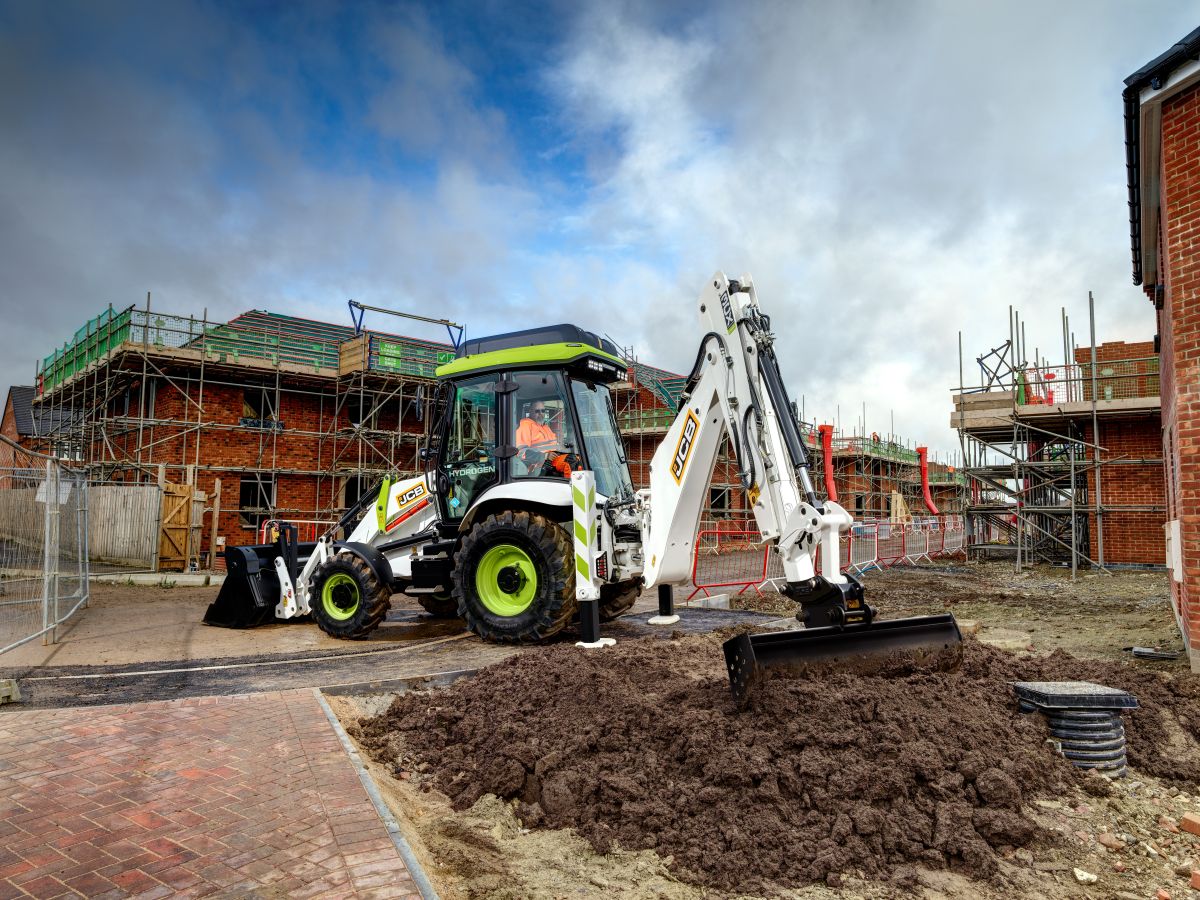
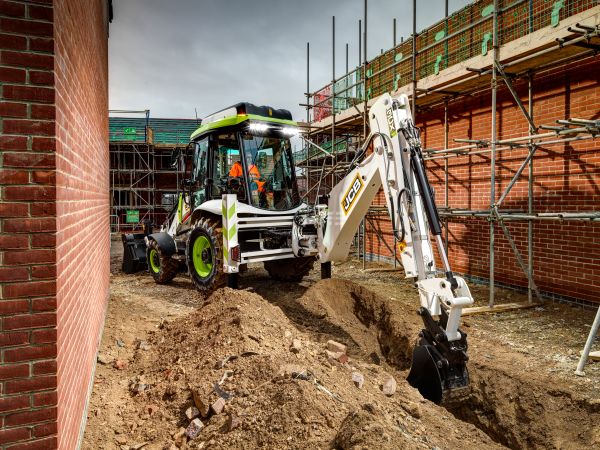
With the 3CX Hydrogen, JCB becomes the first manufacturer to market a production backhoe loader running on hydrogen, focusing on an alternative to diesel designed for intensive use on construction sites.

As the construction equipment industry seeks to reduce its reliance on diesel without compromising operational performance, the British manufacturer JCB reveals the first production backhoe loader equipped with a hydrogen combustion enginea technology in which the group has been investing for several years and which it presents as a credible alternative to electrical solutions for intensive uses in construction.
JCB relies on hydrogen to transform the backhoe loader
The world’s leading manufacturer of backhoe loaders, JCB formalizes the launch of the first production backhoe loader powered by hydrogenthere 3CX Hydrogen. With this zero-emission machine, the British group is continuing its energy diversification strategy and intends to offer an alternative to traditional diesel engines in the construction equipment sector.
The machine has a hydrogen engine developed in-house by JCBwith an output of 55 kW (74 hp), displaying power and torque levels comparable to those of a conventional diesel engine. Powered by a fuel presented as 100% renewable and carbon-freethis engine has obtained its full European approval for non-road mobile machinery.
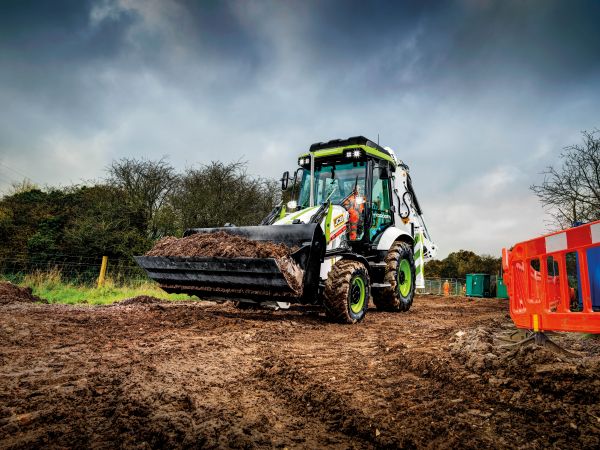
The manufacturer says it has invested more than £100 million in the development of this technology, on which it has been working for more than five years. The tests carried out in real conditions concerned several types of equipment, including generators, telescopic forklifts and the 3CX backhoe loader. © JCB
A technology designed to limit disruptions in use on construction sites
According to JCBthe objective is to offer a solution compatible with the current uses of construction companies, without disrupting the habits of operators. Users involved in the test phases would have found performance close to that of diesel models, both in terms of power and machine behavior.
One of the British companies taking part in the trials explains that “the use on site which was made is typical of the use of this type of machine. It was used to load trucks, handle pallets using forks, level the ground… all common applications! Our operator said it felt the same as a diesel machine. He really didn’t see the difference“.
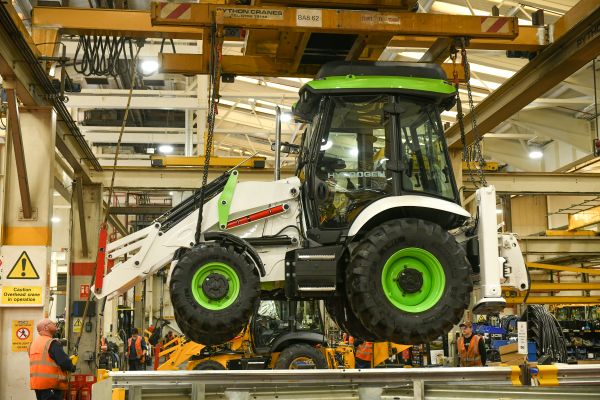
The 3CX Hydrogen has three composite hydrogen tanks installed on the cabin roof. Operating under a pressure of 350 bars, they offer an autonomy announced as sufficient for a full day of work. Apart from the storage system and fuel lines, the machine maintains an architecture close to conventional models, with similar maintenance intervals. © JCB
In order to answer the question of refueling, JCB also developed, in partnership with HyKita mobile system allowing you to refuel directly on sitein order to avoid recharge times associated with battery-powered electrical equipment.
An assumed industrial strategy around the hydrogen combustion engine
In contrast to a part of the market oriented towards electrification, JCB defends the development of the hydrogen combustion engine as a solution adapted to construction machinery and agricultural. Its president, Anthony Bamfordconsiders that this technology makes it possible to maintain the operational advantages of thermal engines while eliminating carbon emissions during use. “The unique combustion properties of hydrogen enable the JCB hydrogen engine to deliver the same power, torque and efficiency found in JCB machines today, but without emitting carbon.“, he says.
The manager also emphasizes that this technology is largely based on mechanical architectures already used in diesel engines, limiting the use of rare earths and relying on technologies already mastered in the construction and agriculture sectors.
In order to support the commercial deployment of this new engine, JCB plans to offer, via JCB Finance and its financial partners, contracts of leasing integrating insurance and complete maintenance.
The manufacturer claims to have already produced more than 150 hydrogen engines as part of its development program. This technology was notably presented to the king Charles III during the celebrations of the 80th anniversary of JCB. © JCB