
Faced with the intensification of heat episodes, insulation is becoming the main lever for summer comfort. A recent study quantifies the combined impact of insulation, inertia and thermal phase shift.

While heatwave episodes are increasing and the overheating of homes is becoming a major concern for individuals and building professionals alikeTHE summer comfort is now establishing itself as a central subject of energy renovation. According to the latest Qualitel Barometer, 66% of French people say they suffer from the heat in their homea phenomenon particularly marked in apartments and densely built urban areas.
Faced with this development, a study carried out by Tipee, technological platform specializing in sustainable buildingset out to measure the real impact of the different summer comfort levers. Its conclusions put certain preconceived ideas into perspective: theinsulation remains by far the most effective factor in limiting overheatingin front of the inertia of materials and thermal phase shift.
Instructions for use, with Isover and Placo solutions.
Insulation, inertia and phase shift
If the notions of phase shift and inertia occupy an increasing place in the debates around summer comforttheir real contribution often remains difficult to assess in the field. However, simulations carried out on typical houses show that these parameters do not all play the same role: theinsulation of the envelope constitutes the first defense against heat gainwhile the inertia helps dampen temperature peaks and the phase shift delays their appearance.
THE gains measured in converted attics can achieve:
– up to 7°C reduction of interior temperature thanks to efficient insulation of the ramps ;
– Up to 2°C additional thanks to the provision of inertia via heavy materials;
– Up to 1°C additional thanks to materials promoting thermal phase shift;
– And up to 10°C of cumulative gain by combining all of these levers with appropriate management of solar input.
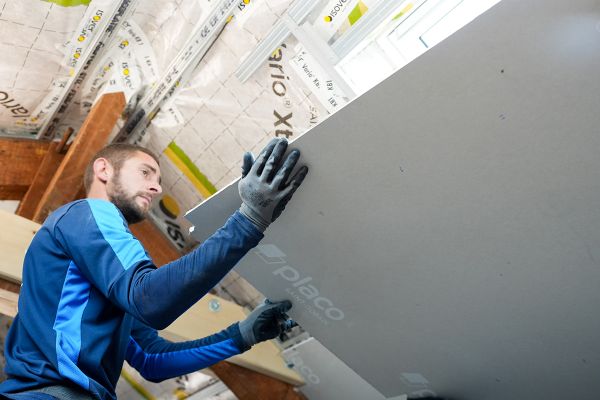
“We must first think about the overall design of the building, then its management. Insulation, nighttime over-ventilation, reduction of solar gain, good management of electrical appliances, all these elements are absolutely necessary for summer comfort. Then, inertia is a very effective lever: the addition of heavy materials inside, such as plasterboard, makes it possible to limit heat peaks, particularly during the day”, explains Manon Rendu, from Tipee. © Placo
A poorly insulated roof can provide the equivalent of several radiators
For a roof slope of 50 m2 equipped with two roof windows, one uninsulated roof can allow more than 3,000 W of heat to penetratethe equivalent of… two powerful radiators operating simultaneously! Conversely, with a insulation with a thermal resistance of 10 m2.K/Wthis thermal flow is reduced to around 100 W, i.e. a power comparable to that naturally released by an occupant.
Glass surfaces also remain a major point of vigilance since two south-facing roof windows can generate up to 800 W of solar gain, the equivalent of an electric towel dryer operating at full power. © Magnific
“Summer comfort in renovation is still perceived as secondary, while it is becoming a central issue in housing. By combining the right levers, including efficient insulation and inertia, it is possible to significantly improve comfort, in a sustainable manner and without systematically depending on air conditioning. Studies also show that efficient insulation can save up to 7°C in the attic compared to a non-insulated space”, underlines Marie Jeffroy, the Supply and Solutions Division Manager at Isover and Placo. © Isover
The five levers that really determine summer comfort
L’sustainable improvement of the thermal behavior of a building requires above all a global reflection on its envelope: roof, walls, joinery, solar protection and characteristics of the materials must be considered as a coherent whole. This approach not only allows limit indoor temperatures during extreme heatbut also to reduce the use of air conditioning as well as the associated energy consumption. The study therefore recalls thatno isolated solution can, on its own, address the challenges of summer overheating. The best results are obtained by combining several complementary actions.
L’insulation of opaque wallsparticularly of the roof, remains the priority lever since it directly limits heat transfer to the interior of the building.
There control of solar gain also constitutes a determining factor: shutters, external protection, adapted glazing, vegetation or pergolas make it possible to significantly reduce heat gain through glass surfaces.
There nocturnal overventilation can then contribute to cooling the home when outside temperatures drop. However, its effectiveness remains limited during prolonged heatwaves or in urban environments subject, among other things, to noise.
L’inertia of materials plays a role comparable to that of an “ice block” placed in a cooler: it absorbs part of the heat accumulated during the day and helps to stabilize the interior temperature.
Finally, the thermal phase shift aims to delay the penetration of heat into the building so that the thermal peak occurs when outside temperatures begin to decrease.
Up to -7°C in the attic
Roof insulation remains the most effective lever against summer overheating
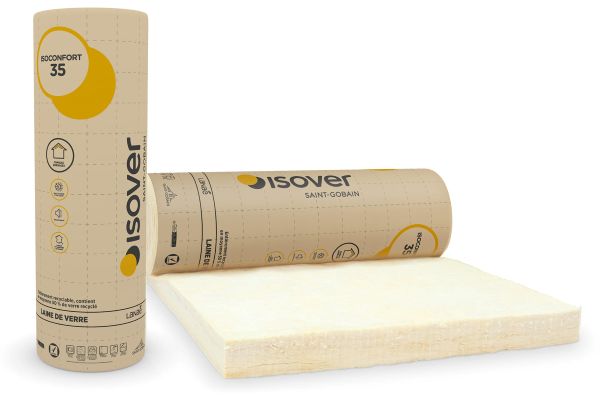 |
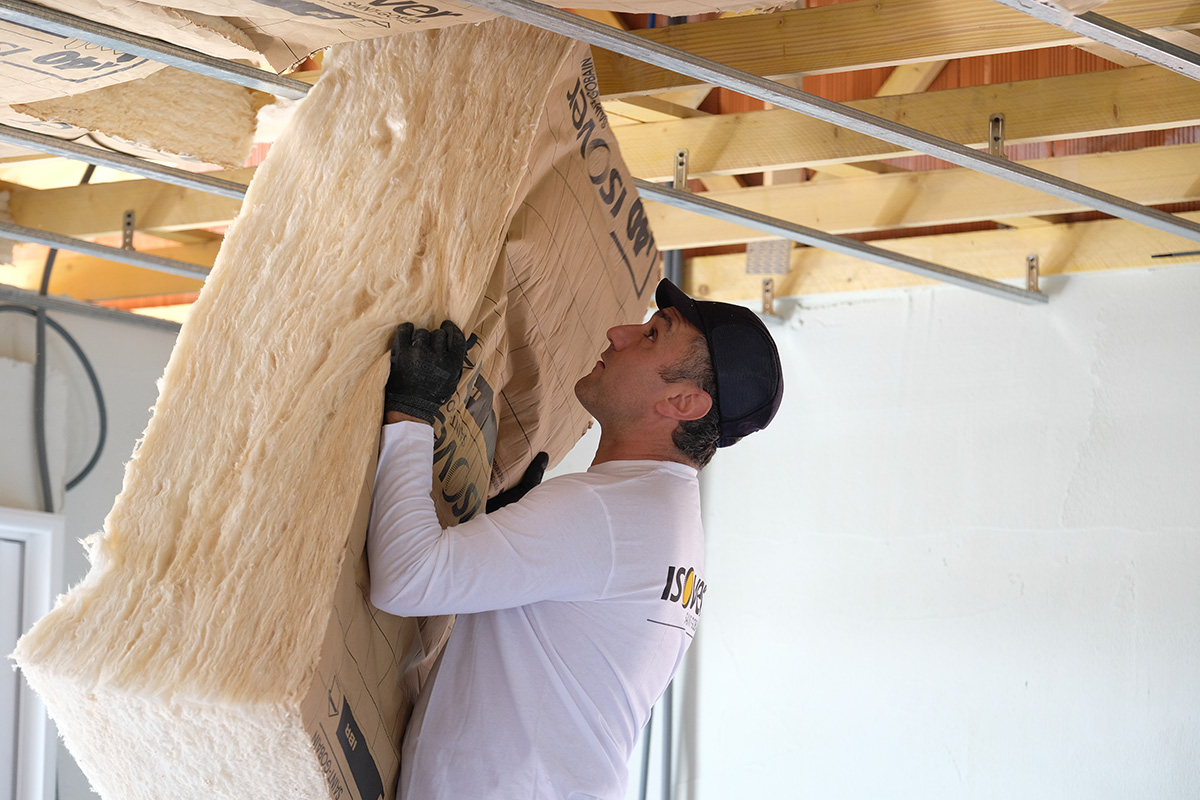
Insulating the attic: the priority actionThe roof constitutes the main source of heat gain in summer. High-performance insulation significantly limits heat penetration and sustainably improves indoor comfort.
|
Bring additional inertia
Stabilize the indoor temperature
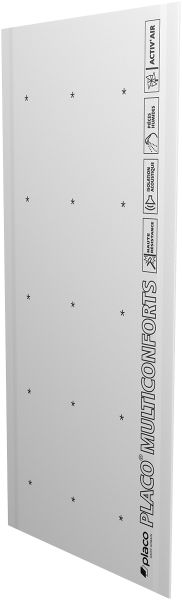 |
Strengthen the inner massesBy doubling the plasterboard and choosing heavier boards, the walls absorb more heat and slow down the rise in temperature inside the home. This additional inertia improves summer comfort and limits thermal variations.
|
Add phase shift
Delay the heat
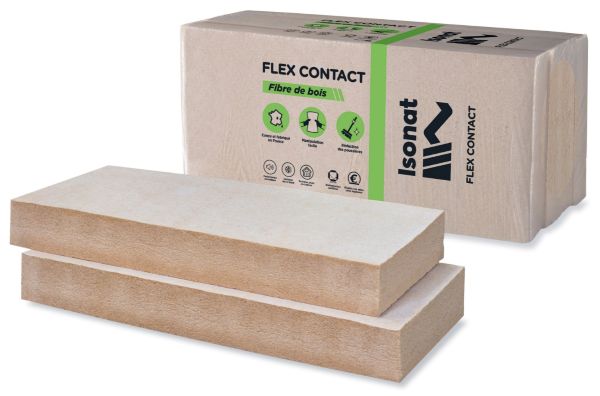 |
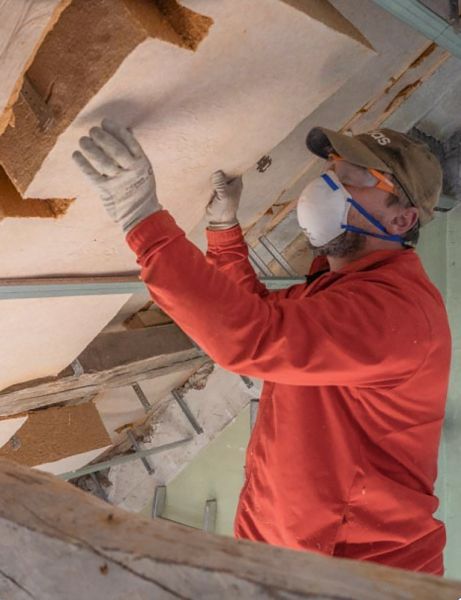
Use materials with a strong phase shiftBiosourced insulation such as wood fiber slows the transmission of heat through walls. They allow temperature peaks to be shifted to the end of the day and significantly improve summer comfort.
|