
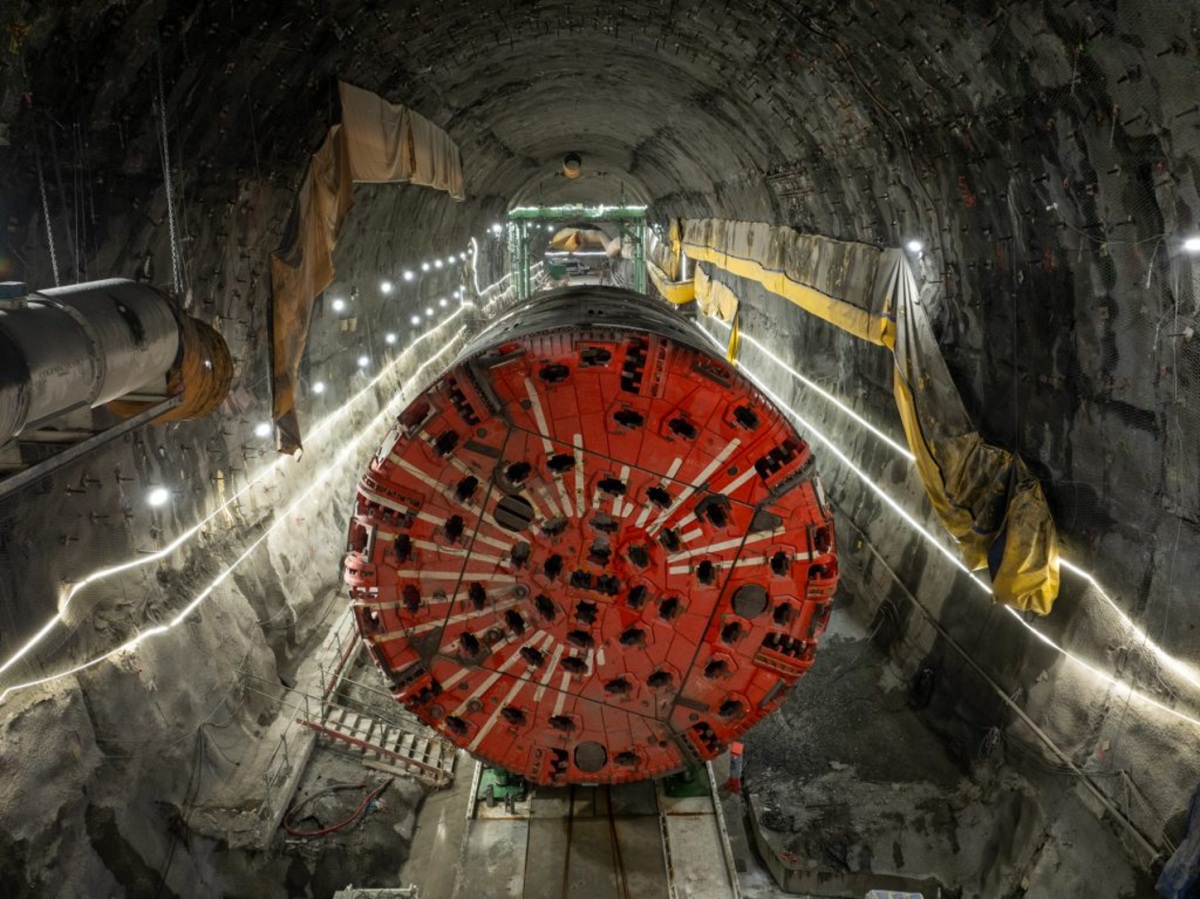
Giga-construction site Lyon-Turin: deputies from La France insoumise affirm that a tunnel boring machine is progressing at a rate much lower than forecast and denounce an opacity surrounding the progress of the work.

THE giga-construction site for the Lyon-Turin rail link is it crossing a new zone of turbulence? Of the MPs from La France insoumise affirm that a tunnel boring machine is progressing at a rate much lower than forecast and denounce an opacity around the progress of the work. There TELT company, project owneron the contrary, ensures that the situation is perfectly under control.
The elected officials leave without having been able to visit the site
This Wednesday, July 22, 2026, the deputies Jean-François Coulomme and Bérenger Cernon (La France insoumise)accompanied by their Italian counterpart Antonino Iaria, of the 5 Star Movementwent to the Saint-Martin-de-la-Porte construction site, in Savoie. On the ground, the challenge was to measure the progress of the tunnel boring machine responsible for drilling nine kilometers of the future base tunnel, buried nearly 600 meters under the mountain. But parliamentarians were refused access to the site. A decision which fuels their questions, especially since they had already made a first visit at the beginning of July to this site as well as to that of Chiomonte, on the Italian side.
For TELT, the Franco-Italian public company responsible for piloting the project, this refusal is not exceptional. She explains that she proposed a new visit at the beginning of September so that it could take place in safety conditions in accordance with the procedures in force.
A tunnel boring machine far from the expected performance
The questions mainly relate to the tunnel boring machine performance. Because, according to technical documents revealed by The Worldthere machine of almost 3,000 tonnes would currently advance by less than one meter per day on average, while the initial objectives were based on a progression of up to a dozen meters daily.
TELT, however, contests the idea of a stopped construction site. The company assures that the machine is currently crossing a particularly complex geological zone, long identified as one of the most delicate sectors of the route. According to the project owner, this is therefore neither a breakdown nor an unforeseen incident, but a technical phase requiring much more careful progress.
The elected Insoumis believe, however, that the difficulties go far beyond the tunnel boring machine alone. According to Jean-François Coulomme, several industrial installations linked to the site are currently inactive, in particular concrete plants, spoil crushing platforms as well as a factory manufacturing the concrete segments which will constitute the tunnel vault. For the MP, this situation leads to additional costs, with subcontracting companies continuing to receive compensation while their production tools are idling.
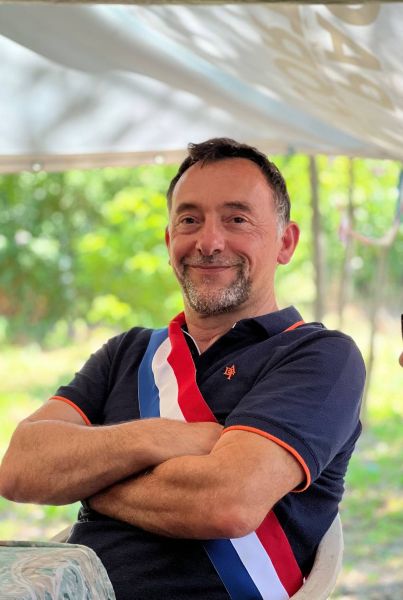
LFIste deputy Jean-François Coulomme, here in photo, also denounces a lack of transparency around the real progress of the work. © Sisyphe73
A project still controversial
Beyond these difficulties, the opponents of Lyon-Turin see in this episode a new illustration of the limits of a project that they consider outdated. Imagined in the early 1990s, this future high-speed rail link between France and Italy is presented by its defenders as a major lever for developing rail freight and reducing road traffic across the Alps.
Its detractors, on the contrary, denounce a project with colossal costs, significant environmental impacts and whose timetable has continued to slip. Originally planned much earlier, commissioning is now announced for 2033, almost eighteen years behind the initial schedule.
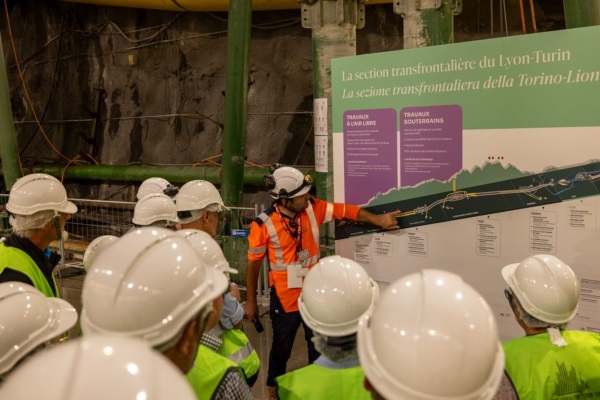
Faithful to its commitment to openness and transparency, TELT regularly opens its sites to the public in order to share the progress and challenges of this exceptional European project. Here, in 2025, the public was able to descend into the heart of the mountain to approach Viviana, the first of seven new tunnel boring machines to continue digging the base tunnel, and to learn about the methods, techniques and materials used. A specific tour route on the open-air platform also provided a better understanding of the management of water resources and excavation materials on the site. © TELT