
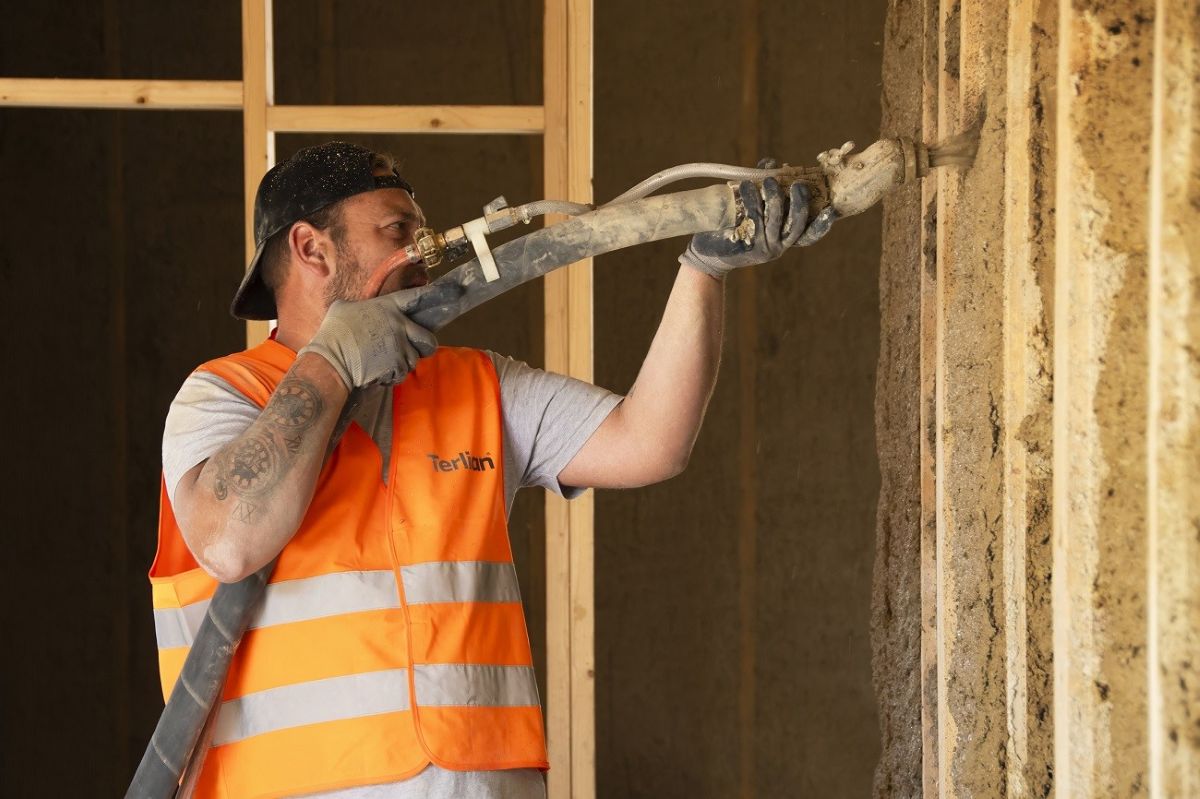
POINT.P industrializes Terlian and relies on Trecobat to accelerate the deployment of this earth construction solution from excavated soil.

Raw earth is no longer just a heritage material or reserved for a few experimental operations. By announcing theindustrialization of Terlian Carreaux on its Ancenis site (Loire-Atlantique), POINT.P intends to demonstrate that this resource can now find its place in large-scale construction, both new and renovated.
Developed by Saint-Gobain, Terlian technology is based on a simple principle: recover excavated soil from construction sites to make a construction material. THE material combines selected and calibrated soil, biosourced plant fibers and a low-carbon mineral bindera formulation allowing the intrinsic qualities of the earth to be preserved while meeting the technical requirements of contemporary construction. Geosourced and biosourced, the solution is part of a logic of circularity which aims to limit the use of virgin raw materials while reducing the impacts linked to transport.
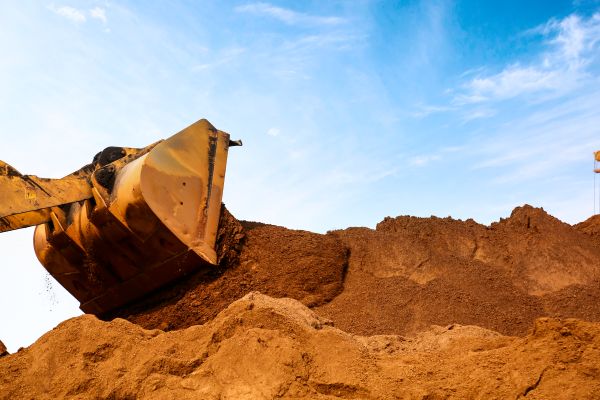
Each year, nearly 115 million tonnes of land are extracted in France, of which around 30 million remain today without a real outlet. The ambition now consists of transforming this deposit into a local resource capable of supplying an industrial sector. © Magnific
Focus on summer comfort as much as energy performance
If the environmental dimension constitutes one of the main Terlian’s argumentsits usage performance also occupies a central place in POINT.P’s strategy. Thanks to thenatural inertia of the earththe walls slow down the penetration of heat during heatwaves, while gradually releasing the accumulated energy when temperatures drop. This phenomenon of thermal phase shift helps to limit summer overheating, an issue that has become major in the context of climate change.
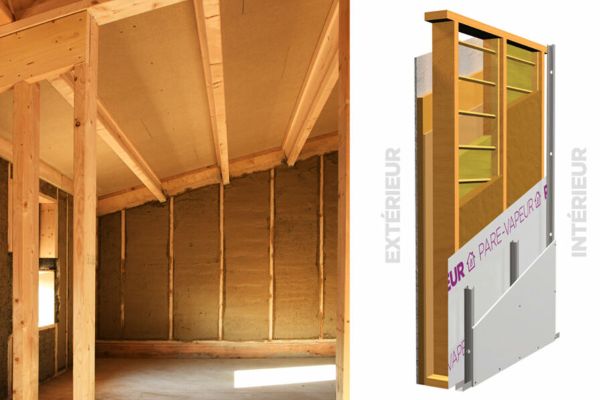
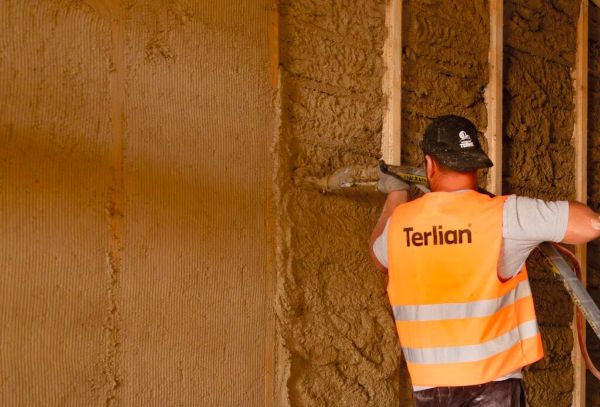
The material also helps regulate indoor humidity. It absorbs excess humidity when the air is loaded with water vapor before gradually releasing it when the atmosphere dries, thus improving the hygrothermal comfort of buildings. © Terlian
Compatible with RE2020 and certified by the CSTB, the technology is now available in several forms to meet various configurations:
– projection of earth on wooden frame;
– Construction systems combining earth and straw ;
– Wood-earth walls prefabricated;
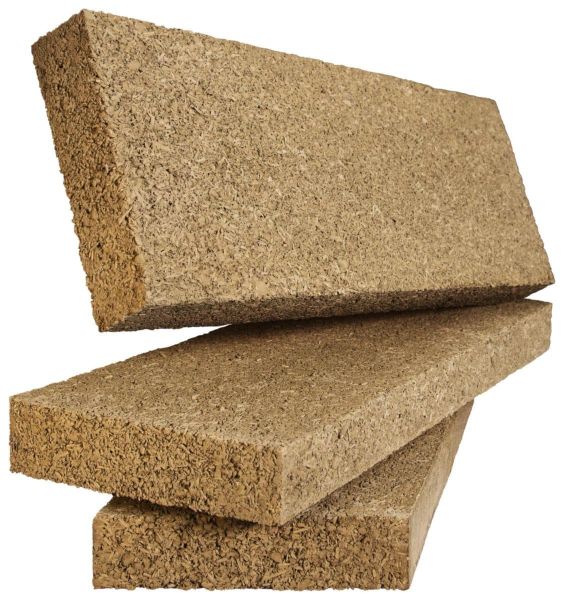
– Earth Tiles intended for interior partitions and linings.
This diversification allows the solution to target individual homes as well as collective housing or tertiary buildings.
A factory capable of producing 500,000 m2 of tiles per year
The change in scale now relies on industrial tools. Entering service in July 2025, theAncenis plant is able to produce up to 500,000 m2 of Terlian tiles each year. Ready-to-install elements, designed to integrate with companies’ usual working methods, with controlled construction deadlines and consistent manufacturing quality.
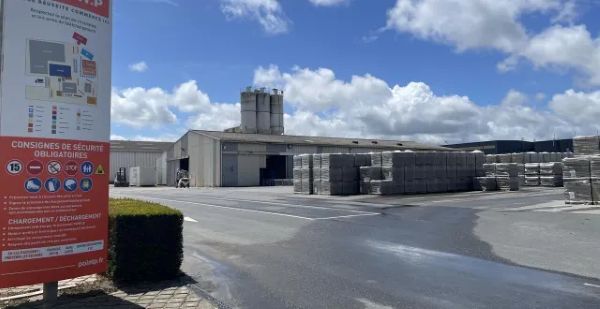
The first Terlian Carreaux factory, operational since July 2025, is located in Ancenis-Saint-Géréon (Loire-Atlantique). © South West
After more than 200 projects already delivered, POINT.P displays particularly ambitious objectives : reach 500 projects in the medium term, then 5,000 by 2030. To support this increase in power, the brand plans to gradually increase its industrial capacities, secure thesupply of excavated soil through new partnerships and, ultimately, to replicate this model in other territories.
Trecobat wants to integrate Terlian into 100 prefabricated housing units
This industrial strategy finds a first concrete outlet with Trecobat. The Breton builder, specialist in off-site constructionannounces its intention tointegrate Terlian tiles in 100 homes, both individual and collective. For Trecobat, the interest of the solution also lies in its ability to respond to new climatic constraints while remaining compatible with prefabrication methods. “The Trecobat group offers a wide range of offers related to the construction of low-carbon wooden frame walls, intended for housing and the tertiary sector. Particularly suitable in terms of quality, manufacturing time and low environmental footprint, this off-site construction method must be subject to adaptations specific to hot climatic zones. The Terlian innovation meets this requirement for all-season comfort, and fits with the industrial prefabrication process for perfect integration upstream of the construction site.” explains Régis Croguennoc, the technical director of Trecobat.
The arrival of Terlian in the prefabrication processes constitutes an important step for POINT.P because it confirms that the earth construction can now be integrated into industrialized methods without calling into question the quality, deadlines or performance requirements sought by manufacturers. This dynamic has already resulted in the achievement of a prefabricated living center for Eiffage using the Terlian Mur 2D solution.
Beyond industrial partnerships, POINT.P wishes to bring together a broader ecosystem bringing together craftsmen, architects, industrialists, farmers, construction majors and individuals in order to support the development of this new sector.
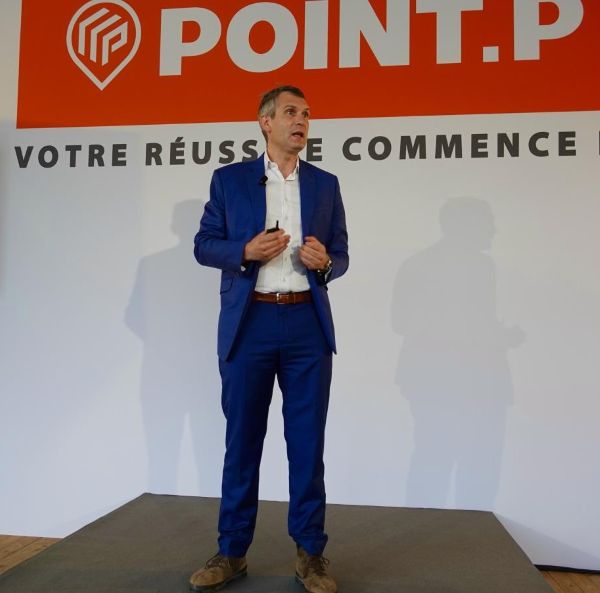
For Nicolas Godet, here in photo, the General Director of POINT.P, “the decarbonization of buildings will involve concrete, industrialized solutions compatible with the realities on the ground. With the industrialization of earth construction, it is now possible to build differently, by combining circularity and maximizing comfort. By promoting the resources present in our territories while meeting the expectations of craftsmen, communities and residents, Terlian offers a solution with exceptional performance. The partnership engaged with Trecobat demonstrates the confidence placed in this innovation and the importance of collective approaches to bring about the emergence of tomorrow’s constructive solutions on a large scale.” © Point.P