
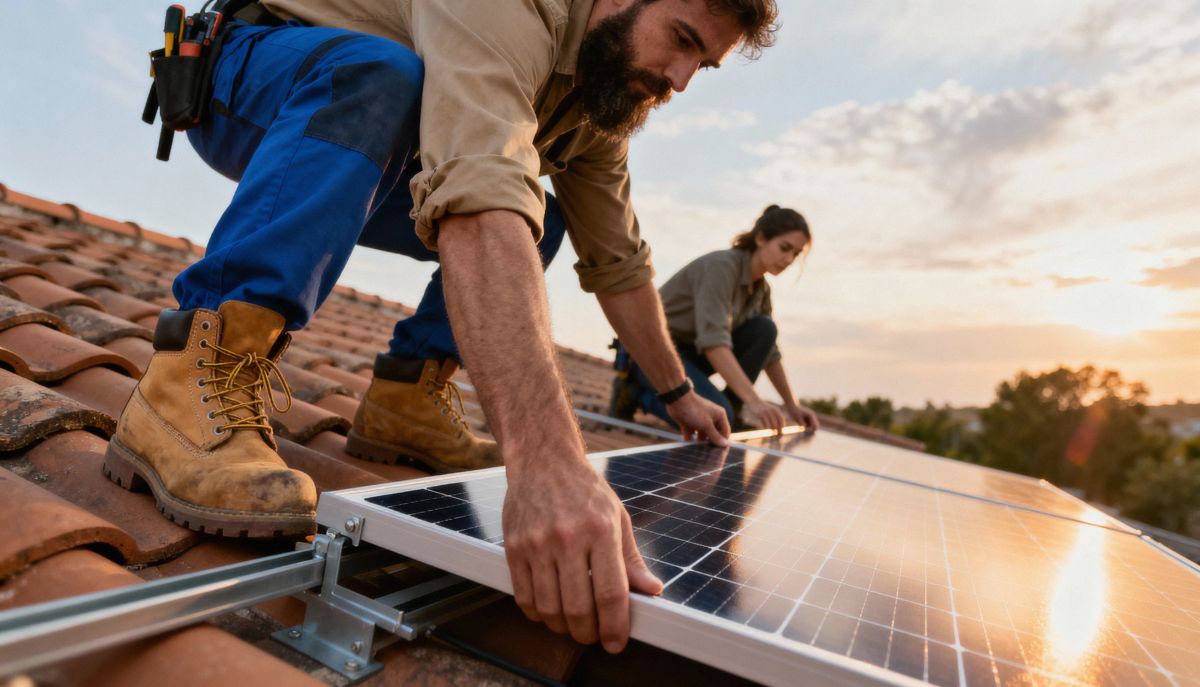
According to a Hello Watt study based on Enedis data, residential solar is gaining ground in France, including in departments less renowned for their sunshine – Creuse, Ain and Vosges.

THE residential photovoltaic no longer develops only in sunniest departments. In one year, Creuse, Ain, Vosges, Vaucluse and Meuse recorded the greatest increases in the rate of equipment with solar panels. The observation is therefore surprising to say the least: the solar power is now spreading well beyond the territories traditionally associated with photovoltaics.
The study published in July 2026 by Hello Watt is based on data from 112,000 users equipped with solar panels having declared their installation in the company application and compares the evolution of equipment rate of individual houses between July 2025 and July 2026. To measure the residential stock, Hello Watt also relies on Enedis data concerning photovoltaic installations with a power less than or equal to 36 kWp.
As a reminder, Hello Watt, specialist in energy renovation and electrification of homessupports individuals in particular in monitoring their consumption and installing solar panels, batteries, heat pumps and charging stations. Its application boasts more than three million downloads.
Creuse, champion of progression
Between July 2025 and July 2026, the equipment rate of homes increased by 0.82 points in Creuse, placing the department at the top of the national ranking. Ain follows with an increase of 0.71 points, ahead of Vosges (+ 0.68), Vaucluse (+ 0.59) and Meuse (+ 0.58).
The phenomenon is particularly interesting in the departments of the north-east of France, where the residential photovoltaic progresses even though these territories do not benefit from the same level of sunshine as the Mediterranean rim. And the dynamic is far from marginal since the average increase in the equipment rate reaches 0.28 points in one year on a national scale. Gironde, for example, gained 0.45 points and ranks 19th among the departments with the most progress.
1.24 million solar installations in France
This progression results in a significant increase in the residential stock. As of June 30, 2026, 1,242,435 photovoltaic installations with a power less than or equal to 36 kWp were listed by Enedis. Compared to the number of individual houses, this represents 6% of equipped housing, compared to 5.41% a year previously. The equipment rate thus increased by 10.9% in one year. In three years, the proportion has almost doubled: it stood at only 3.26% at the end of June 2023.
Demand also seems to be accelerating. Hello Watt indicates that it recorded, in June 2026, twice as many requests for installation of solar panels until June 2025.
Landes remains the best equipped department
If the most spectacular progression is now located in departments like Creuse or Vosges, the Southern territories maintain a lead in terms of equipment rates :
– Landes comes first with 12.75% of equipped houses,
– then Drôme (12.14%) and Gard (11.87%),
– follow Haute-Garonne (11.61%),
– Isère (11.44%),
– the Loire (10.89%),
– the Pyrénées-Orientales (10.78%),
– and the Rhône (10.61%).
The ranking, however, shows that thesunshine is not enough to explain the spread of photovoltaics because Isère, Loire and Rhône are among the eight most equipped departments, despite a solar potential less significant than that of Mediterranean territories. In reality, several parameters come into play, including the proportion of individual houses, the level of household income and electricity consumption needs during the day.
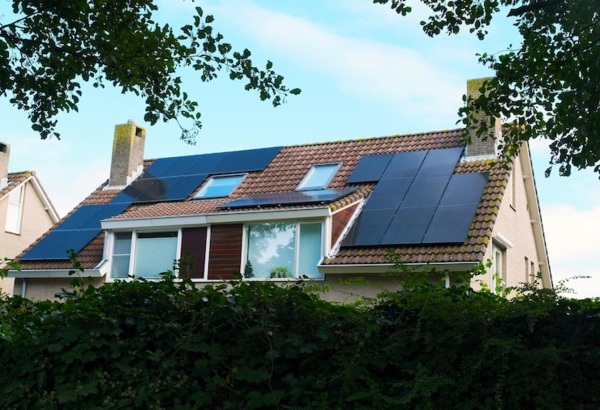
Sunshine alone does not explain the development of photovoltaics. The presence of Isère, Loire and Rhône among the best equipped departments shows that the number of individual houses, the level of income and electricity needs also influence the use of solar power. © Magnific
Sunshine doesn’t explain everything
This is one of the main lessons of the study: the geography of residential solar depends as much on economic conditions as on the weather. On a European scale, France remains very far behind some of its neighbors. According to data cited by Hello Watt, 58% of homes are equipped in the Netherlands, 39% in Belgium and 33% in Germany, compared to only 6% in France.
A situation which shows that the level of sunshine is not the main driver of residential photovoltaics. The price of electricity, public support systems and the maturity of the sectors also play a determining role.
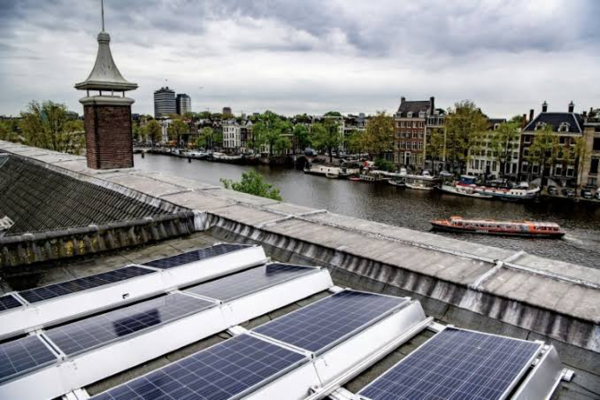
In the Netherlands, for example, the combination of high electricity prices and a particularly favorable net metering system allowed the residential market to take off quickly – and in Germany, feed-in tariffs guaranteed for 20 years also helped to greatly accelerate installations. © Sciences et Avenir
France is still trying to catch up
With only 6% of houses equipped, France therefore remains well behind. Hello Watt believes that several factors have slowed the development of residential solar: less generous aid than in pioneer countries, complex administrative procedures and, until the energy crisis of 2022, historically relatively inexpensive nuclear electricity.
However, the study puts forward two avenues to accelerate the movement. The first would consist of integrate residential photovoltaics into the zero-rate eco-loanin order to facilitate the financing of installations for households that do not have the necessary savings. The second would aim to extend the benefit of reduced VAT to batteries. According to Hello Watt, the addition of a storage system can today result in the application of a 20% VAT to the entire project, even though the battery makes it possible to increase the self-consumption rate and therefore the profitability of the installation.