
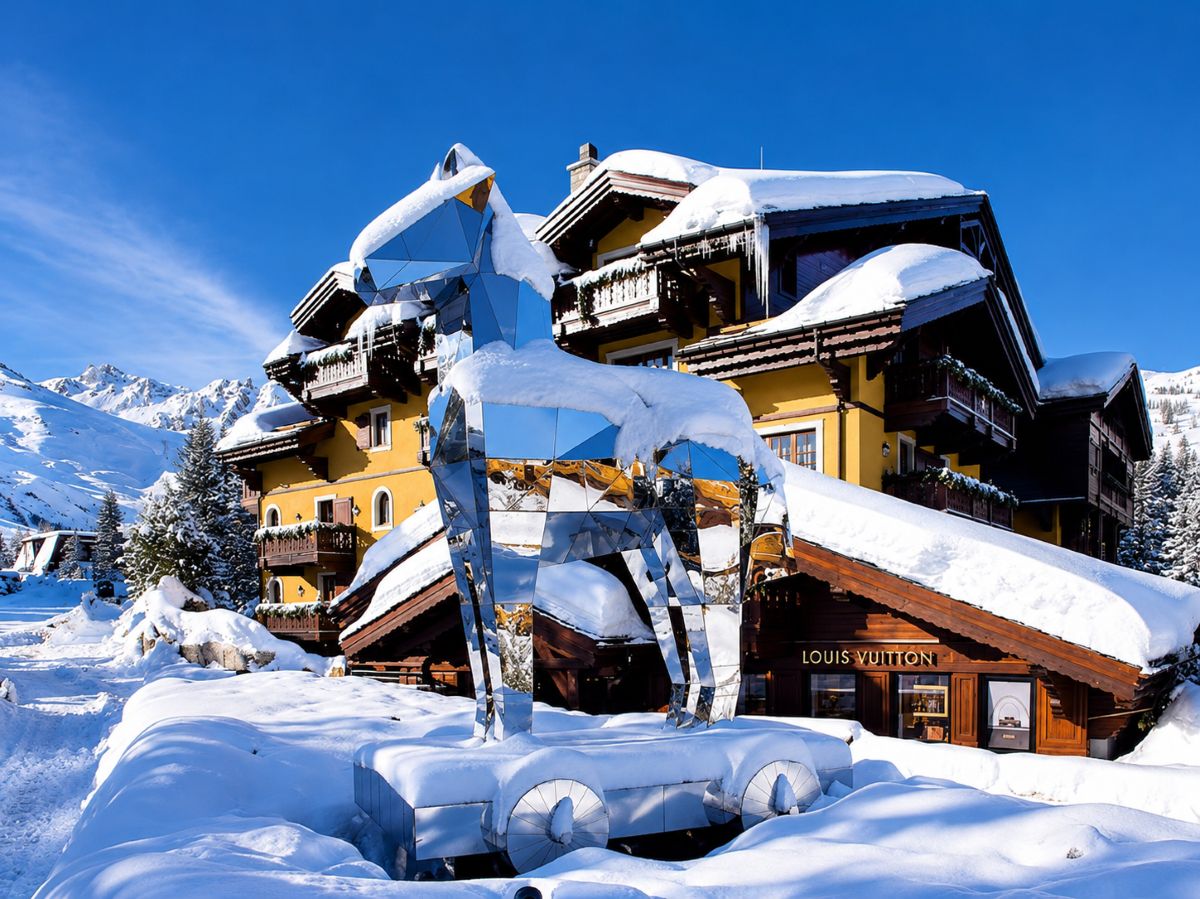
As the 2030 Winter Olympics approach, the internationalization of customers, the transmission of heritage and the growth of summer tourism are reshaping the high-end residential Alpine real estate market.

L’high-end residential real estate in the French Alps has increased by 12% in five yearsaccording to Knight Frank. Driven by a more diversified international clientele, the transmission of heritage and the growth of summer tourism, the market is evolving towards a four-season model. At the2030 Olympic and Paralympic Winter Games approachinginvestments in infrastructure should reinforce this dynamic, even if performances vary greatly from one station to another.
This is at least one of the main conclusions of the2026-2027 edition of Knight Frank’s Alpine Report. According to this study, prime residential values have increased by 12% in five years in the French Alps, compared to 29% in Switzerland, a gap not necessarily reflecting a lack of dynamism in the French market, but rather the characteristics of a larger territory, offering a more diversified range of resorts and properties, and widely open to foreign buyers.
Founded more than 125 years ago in the United Kingdom, Knight Frank is an international real estate consultancy group with more than 20,000 employees, spread across more than 600 offices in 50 countries. Created more than 50 years ago in Paris, its French branch operates in the corporate and residential real estate markets. Knight Frank France employs 120 people and is organized around seven service lines.
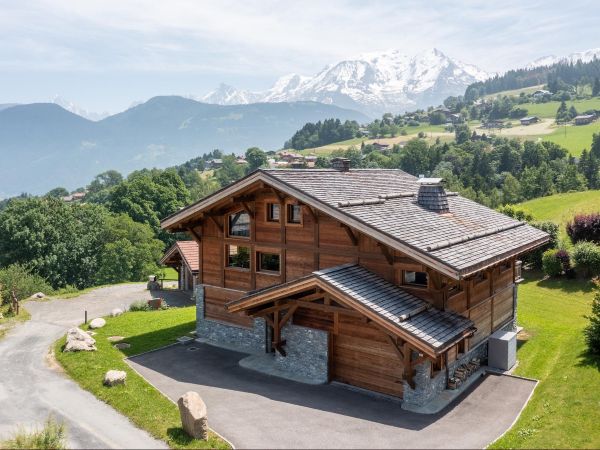
The Alpine real estate market is no longer just about a few weeks of skiing and soaring prices for the most coveted chalets. Mountain residences are now part of long-term heritage strategies, while buyers are looking for properties that can be used all year round, with services and likely to be passed on to subsequent generations. © weeks-off.com
A more accessible and diversified French market
The Swiss Alps have recorded the strongest price increases over the last five years. However, French resorts have other arguments to attract wealthy buyers:
– an extensive real estate offering;
– Destinations with very different profiles;
– And the absence of specific restrictions comparable to those governing the acquisition of real estate by foreigners in Switzerland.
This diversity makes it possible to respond to very different projects, frompurchase of a family residence intended to be kept for several decades to the acquisition of an exceptional property in a residence offering hotel services. The international clientele is also diversifying. To European buyers, historically well established in French stationsare added American buyers, Gulf countries, Scandinavia and, increasingly, Asia.
Roddy Aris, Partner and Alpine market specialist at Knight Frankunderlines this singularity of the French market: “Lhe French Alps market today benefits from a particularly favorable combination: a deep and mature offering, complete openness to international buyers and a great diversity of resorts and property types. Although the increase in prices has been less rapid than in Switzerland, the French market appears more accessible and more balanced. It thus retains strong long-term potential, both as a vacation destination and as a heritage market.“.
Financing indicators also reflect market activity. Over one year, the finalization of real estate loans in the French Alps increased by 89%, while total amounts borrowed increased by 160%. Around 80% of buyers use credit, including when they have the cash necessary to purchase cash; A behavior which reflects a heritage strategy in which themountain real estate is not necessarily financed by the full mobilization of available capital. The use of borrowing makes it possible to preserve liquidity and to distribute investments within a larger portfolio.
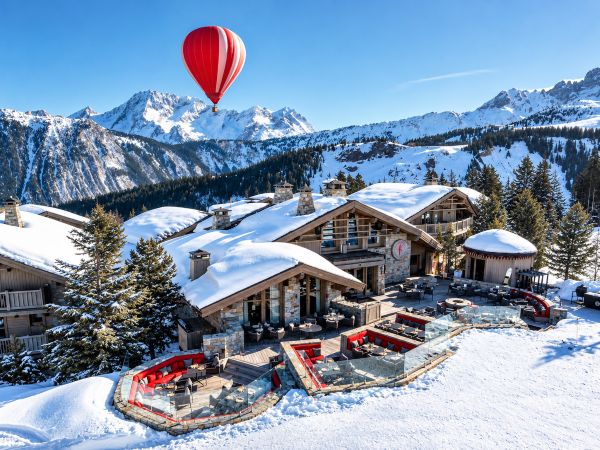
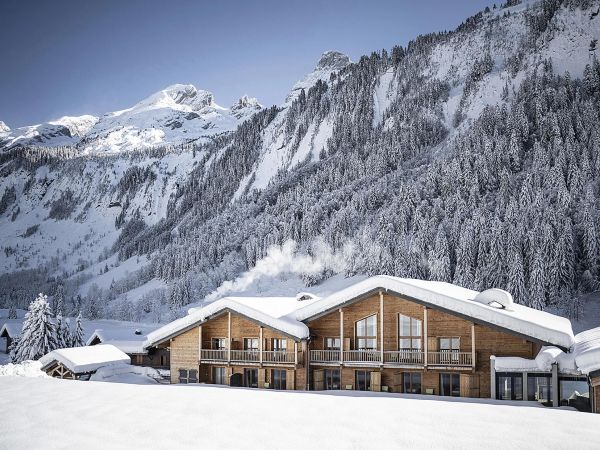
High-end real estate in the French Alps is changing in size, driven by a more diversified international clientele, the generational renewal of owners and the rise of serviced residences. The lengthening of the tourist season and the nearly one billion euros of investments expected in infrastructure in the run-up to the 2030 Olympic and Paralympic Winter Games are reinforcing this dynamic. © K2 Palace / SP / © legrandbornand.com
Transfer of assets: a new generation of buyers
Owner renewal is another driver of transformation. Part of the property held by baby boomers gradually passes to subsequent generations, who do not always share the same habits or the same expectations in terms of real estate. Younger buyers place more importance on flexibility of use, simplicity of management and the services associated with their residence. They are also looking for properties suitable for more frequent, sometimes longer stays, and which are no longer reserved solely for winter holidays.
In this context, branded residences, or branded residencesare gaining in attractiveness among large international fortunes. These programs combine private ownership, simplified management and hotel services, meeting the expectations of a clientele who wishes to benefit from a high-end property without having to carry out all of the daily management themselves. This development contributes to theexpansion of the Alpine market.
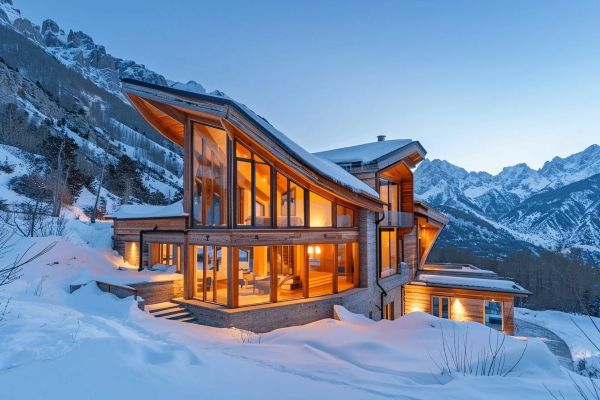
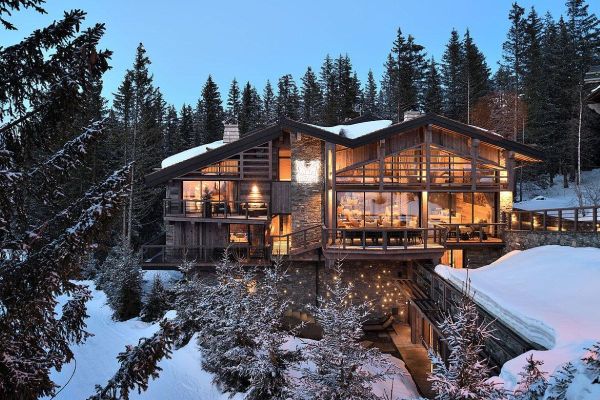
From now on,n the Alps, buyers of high-end properties are paying increasing attention to the services offered, to the flexibility of use of their residence and to the services that make their daily lives in the mountains easier. © lovenspa.fr / © shk–journalde
Summer tourism is reshaping mountain real estate
THE Alps are no longer just a winter destination : outdoor activities, well-being and family stays help to establish more regular attendance throughout the year. In the French Alps, summer rental demand increases by about 10% per year, according to Knight Frank. At the Alpine level, the summer flight programs of the airports serving the main resorts now represent 92% of the volumes scheduled during the winter.
This development modifies the acquisition criteria. A residence likely to be occupied for several months a year, or even used as a teleworking location, is of different interest from a pied-à-terre intended exclusively for ski holidays. For owners who wish to rent their property when they are not occupying it, the lengthening of the season can also broaden the possibilities of rental exploitation.
Liam Bailey, Research Director at Knight Frank, observes this development in the context of climate transformation: “the Alpine real estate market has largely exceeded its historical positioning centered on skiing. Buyers are increasingly sensitive to the scarcity of supply, stability, quality of life and the preservation of assets over the long term. Climate change is undoubtedly transforming the mountain environment. However, it has not reduced the appeal of the main Alpine destinations. The strongest resorts continue to attract investment, adapt their infrastructure and expand their offering in order to become real places to live, work and play all year round.“.
The 2030 Games are part of this perspective: the investments announced in infrastructure could improve the accessibility of certain territories and strengthen their attractiveness. However, their effect on real estate values will depend on the ability of resorts to transform these developments into lasting benefits, beyond the sporting event. © Getty images
Climate change: price differences are widening between stations
While theAlpine snowfall has decreased by 34% since 1920according to the data included in the report, the differences in real estate performance between stations are accentuated. Indeed, for the year ending in June 2026, thegap between the most dynamic and least efficient stations reached almost 18 points, compared to 11 points the previous year. Altitude helps explain these differences, without being sufficient on its own to determine the value of a market.
In resorts whose main village is located below 1,200 m, the average annual growth in prime prices fell from 8% in 2022 to -1% over the last year studied. Stations located between 1,200 and 1,499 m recorded an average increase of 4.7%, while those above 1,500 m increased by 5%.
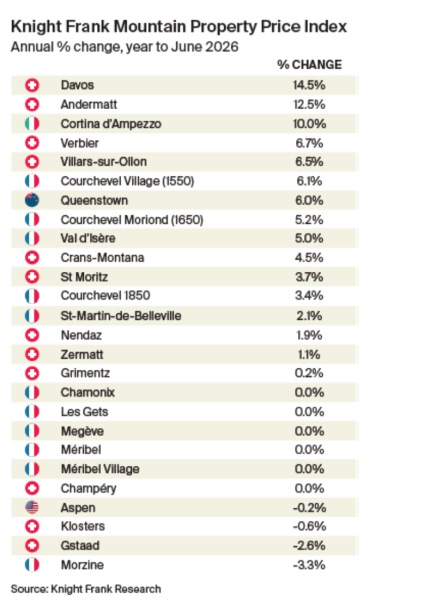
French data illustrate these contrasting trajectories. © Knight Frank
In Morzine, prices fell by 3.3%, to between €9,000 and €9,900/m2. Méribel, Megève, Les Gets and Chamonix show stable values over one year, between 9,500 and 19,200 €/m2. In Saint-Martin-de-Belleville, the increase reached 2.1 to 3.4%, with prices between 13,400 and 14,800 €/m2when Courchevel 1850 recorded a comparable increase, from 2.1 to 3.4%, for values between 31,700 and 35,000 €/m2. Courchevel Moriond (1650) is also among the sectors on the rise, as well as Courchevel Village, which particularly stands out with an increase of 6.1% over one year, the strongest in the French Alps according to the report, and prices between 17,300 and 19,200 €/m2.
Finally, Val-d’Isère shows an increase of 5% or more, with prices between 23,600 and 26,100 €/m2.
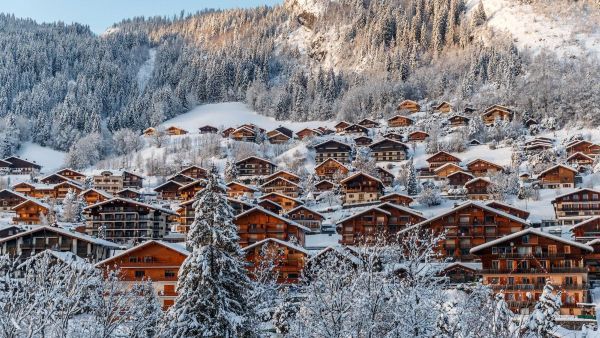
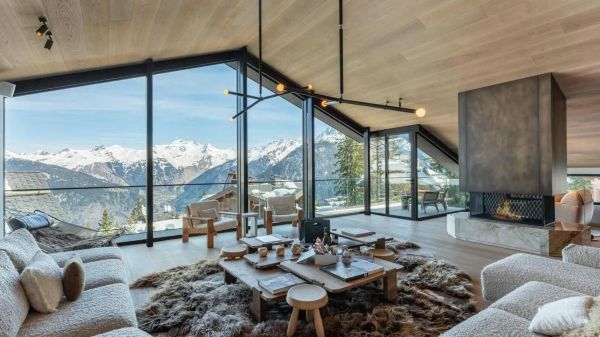
Wooden chalets nestled in the snow, fir forests as far as the eye can see and immaculate peaks: the Alpine setting is always a dream for wealthy buyers. But behind this postcard, the real estate market is transforming. High-end residences now lend themselves to year-round stays, while the quality of infrastructure, services and the ability of resorts to adapt to climate change increasingly weigh into purchasing decisions. Not to mention that as the 2030 Games approach, the expected investments could strengthen the attractiveness of certain territories, without erasing the performance gaps between resorts. © zjtmath / shutterstock / © lvhglobal.com
© Jacques Pierre / Hemis.fr