

The Heritage Foundation is launching its Heritage Pass: members will be able to visit more than 500 sites in France and part of the proceeds will contribute directly to their maintenance and restoration.

Visit more monuments while contributing to their maintenance : this is the principle of Heritage Pass launched by the Heritage Foundation. From September 18, people who join the Foundation will be able to choose between four packages and access, for one year, more than 500 sites – monuments, castles, museums, gardens and other heritage sites – spread across France.
The offer covers both iconic monuments and more confidential places. The Château de Versailles, the national domain of Chambord, the Château de Fontainebleau, Vaux-le-Vicomte, the Hospices de Beaune, the Abbey of Fontevraud, the Villa Ephrussi de Rothschild and the ancient theater of Orange are among the sites announced.
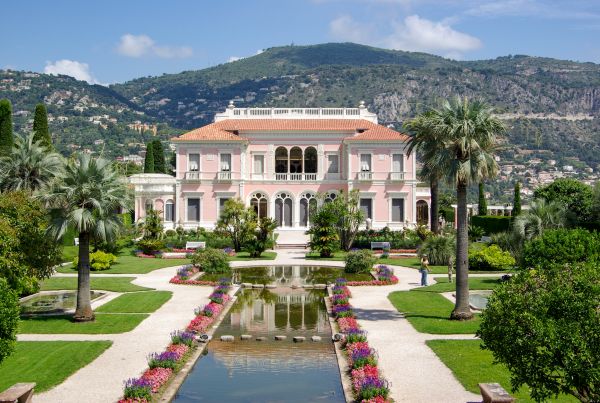
The Ephrussi de Rothschild villa, in Saint-Jean-Cap-Ferrat: built between 1907 and 1912 at the request of Baroness Béatrice Ephrussi de Rothschild, this Belle Époque residence combines Italian and Spanish Renaissance influences. Its seven-hectare estate is punctuated with gardens in varied styles. © Berthold Werner – CC BY-SA 3.0
Next to these very popular monuments, the Foundation also wants to direct visitors towards a lesser known heritage : the House of Ernest Renan in Côtes-d’Armor, the castle of Villandraut in Gironde, the Textile Ecomuseum – Wesserling Park in Haut-Rhin, the castle of Javarzay in Deux-Sèvres, the Saint-André de Valmagne abbey in Hérault or the Four des Casseaux in Haute-Vienne.
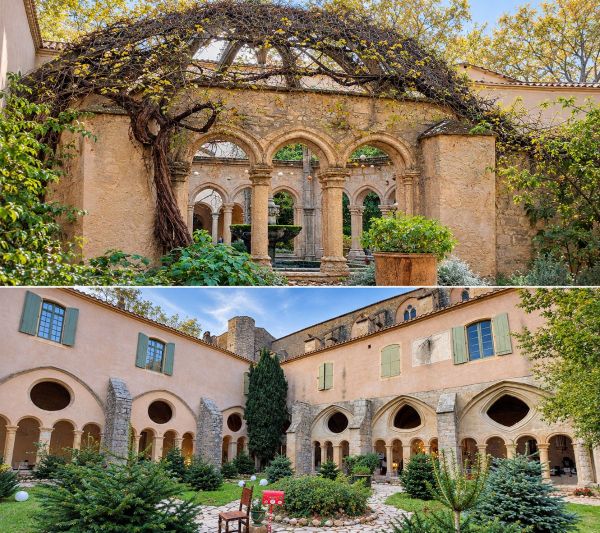
Founded in 1139, this former Cistercian abbey – Valmagne Abbey, in Villeveyrac (34) – combines Gothic architecture and Romanesque heritage. Its church, built from 1257, today houses an astonishing wine cellar, testimony to the turbulent history of the monument. © Laure Pophillat
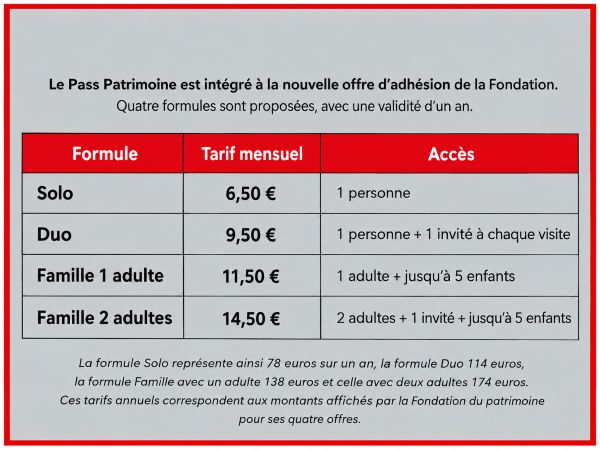
The operation is designed to allow repeated visits: the Heritage Pass website indicates that the subscription can be profitable from one visit every two months, depending on the entry prices of the sites visited. © Laure Pophillat
80% of revenues donated to sites visited
The originality of the system, however, lies in its economic model, because the Pass is not only intended to increase visits to monuments. There Heritage Foundation also wants to transform these visitors into a source of additional income for partner sites. Thus, for each validated entry, the visited site will receive on average 80% of the full price of its ticket. The income generated can then contribute to financing various expenses: catering, building maintenance, mediation, welcoming the public or even developing activities.
The Foundation also indicates that any surpluses generated by the operation will be primarily dedicated to supporting partner sites. The principle is therefore different from a simple reduction card: the more Pass holders visit partner sites, the more likely they are to benefit from additional revenue.
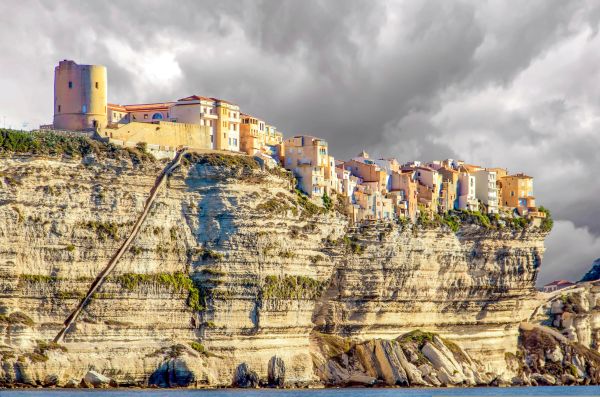
Carved directly into the cliff, this impressive staircase of the King of Aragon, in Bonifacio (Corsica) has 187 steps and descends towards the sea for nearly 65 meters. According to tradition, it was dug in a single night by the troops of the King of Aragon during the siege of Bonifacio in 1420. © XtianDuGard
Discover small heritage
The other stated objective is to make better known places which have less visibility than major tourist monuments. The list of partners thus brings together national institutions as well as owners of private or public monuments. The system was notably built with La Demeure historique, the Center des monuments nationaux, the Grand Palais-RMN, the Institut de France, the Union REMPART, the association of Petites Cités de Caractère de France and the association Les Plus Beaux Villages de France. The Federation of Conservatories of Natural Spaces is also one of the announced partners.
This desire to expand tourist flows to lesser-known sites was already presented as one of the goals of the project when it was announced in June. THE system is inspired in particular by the model of the British National Trustwhich is also based on a community of members contributing to heritage conservation while benefiting from access to the sites.
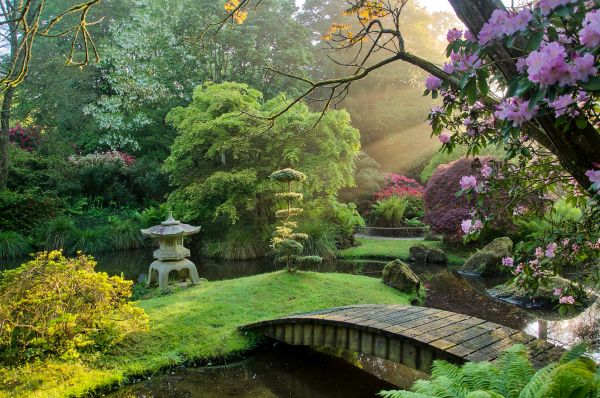
Created in 1994 around the Château de la Foltière, the Haute-Bretagne botanical park, in Le Châtellier, in Ille-et-Vilaine, extends over nearly 25 hectares and brings together around thirty thematic gardens, inspired by different eras and regions of the world. A place where botany is discovered as much as it is contemplated. © Alain Jouno
A model that must create new resources to restore
THE Pass is not limited to access to monuments since members may also be invited to ephemeral visits, conferences and concerts organized in sites supported or saved by the Heritage Foundation. Certain partners also provide specific advantages, such as simplified or skip-the-line access, and the Foundation announces “exclusive advantages” in certain prestigious sites.
There Heritage Foundation justifies this new formula by the increase in maintenance and restoration costswhile public funding is constrained. The idea is to seek a new source of funding directly linked to site attendance. “For 30 years, the Heritage Foundation has been the leading partner of private and public heritage owners. Today, she is writing a new page in this shared history. With the Heritage Pass, members of the Heritage Foundation will promote a large community of heritage lovers. It is this community which will create great popular support allowing us to save, discover, share and transmit heritage.“, explain Guillaume Poitrinal, president of the Heritage Foundation.
For Catherine Pgard, Minister of Culture, the aim is to bring the public closer to heritage places: “our heritage is everywhere, within reach and sight. It is our common good and what brings us together. In this regard, it is up to us to promote and take care of it. This is the objective of the Heritage Pass: to allow access to more than 500 heritage sites throughout France, and at the same time contribute to their maintenance.
The launch of the Pass took place on the occasion of European Heritage Days on September 19 and 20, 2026for which several sites had announced their participation: in Provins, for example, the Tour César, the Grange aux Dîmes, the Souterrains and the Saint-Ayoul priory joined the system from September 18. The Château de Vayres, in Gironde, also joined the network during the European Heritage Days.
The Foundation specifies that the network can continue to evolve and that the sites wishing to join the Heritage Pass can get closer to the association that supports the device. For future members, subscription is offered online. THE Foundation website also specifies that a classic membership without Heritage Pass remains possible for people wishing to support its action without benefiting from the site access system. “Like me, join the Heritage Foundation and receive your Heritage Pass from €6.50 per month to enter 500 prestigious sites. Treat yourself to an open year“, summarizes Stéphane Bern, in charge of the Heritage Mission.
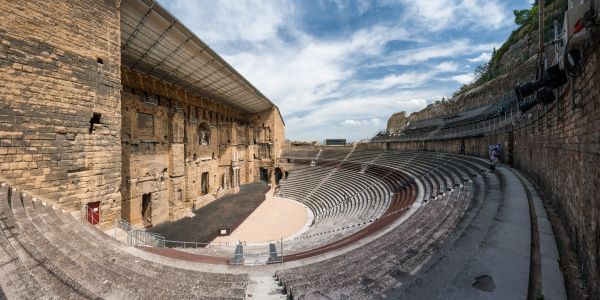
Built at the beginning of the 1st century during the reign of Augustus, the ancient theater of Orange, in Vaucluse, is one of the best preserved Roman theaters in the world. Its immense stage wall, 37 meters high, remains the emblematic element of the monument, still used today for shows. © Benh LIEU SONG – CC BY-SA 2.0