
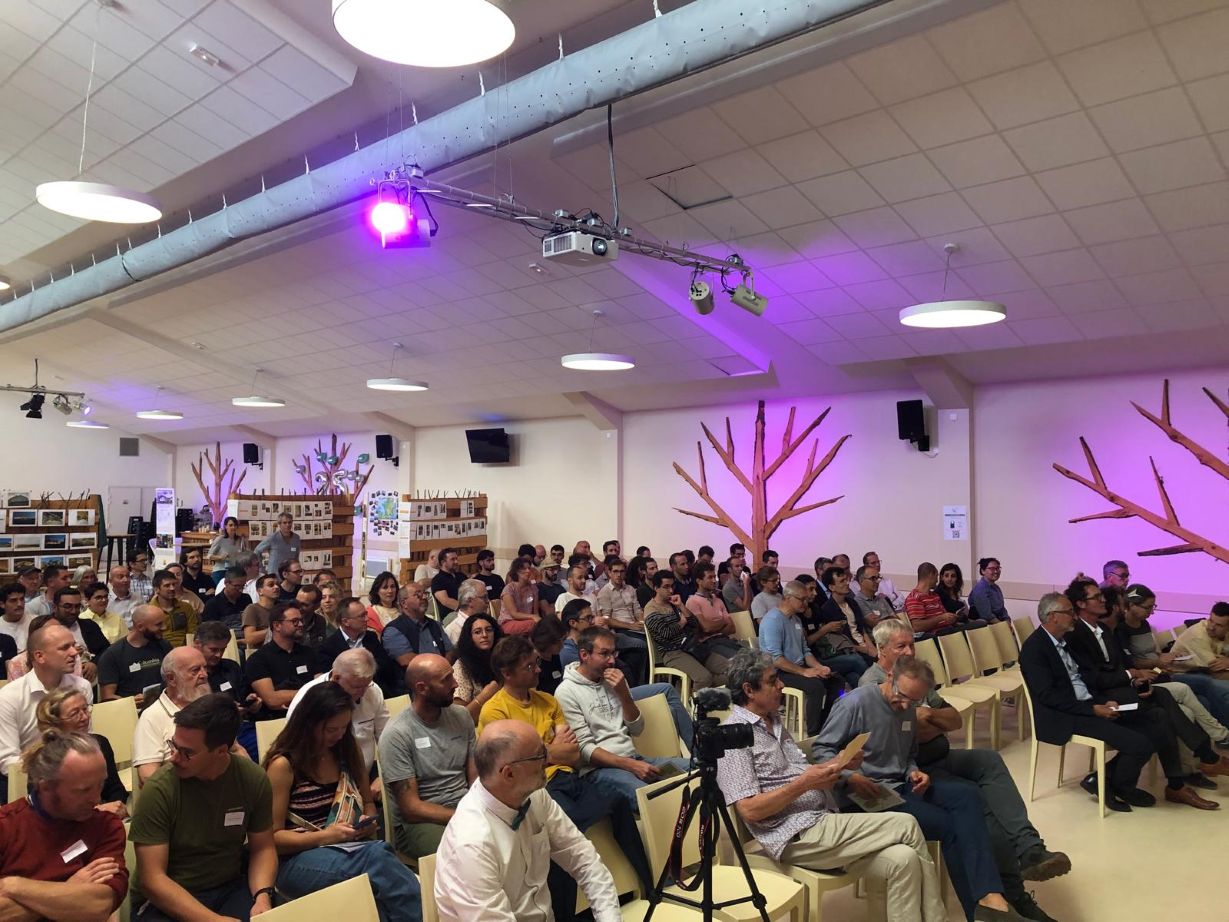
At the Domaine de Dienné near Poitiers, the Association Ingénierie Bois Construction has combined its statutory AGM with a conference program commensurate with the association’s 25th anniversary.
Publi-Information 

There strength of French wooden construction is measured by the health of associations like IBC, which brings together independent consulting engineers specializing in wood structural calculations. 70 structures whose size varies from single-company to a few dozen employees.
Since the arrival of the 4th president, Gaëtan Genès, in 2023, the association has taken the plunge and acquired a general delegate, the engineer Florence Grandchamp, making it possible to commemorate the 25th anniversary of the association in good conditions. There is no equivalent in Europe.
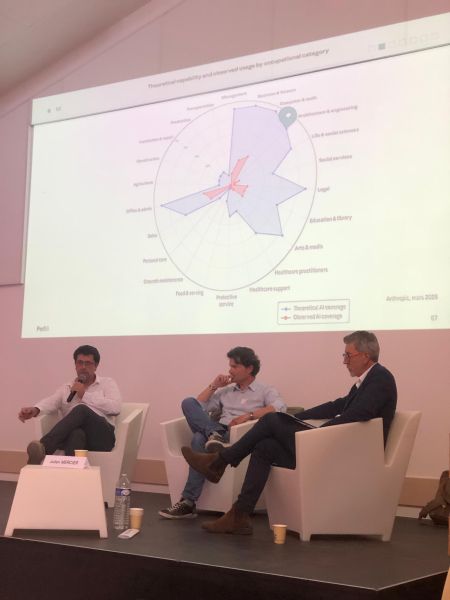
Building engineering potentially very impacted by AI. © Jonas Tophoven
A complete commemorative program
On the program for Thursday, September 24, there was a host, Antoine Lebeau, a 5-hour program crowned by a long conference by Arthur Keller on what awaits us, preceded by a representative presentation from five members – QSB, VIMEN, Etic Bois, Arborescence and BA Bois –, then a comparison between ways of working in Europe, before tackling the now essential theme of‘AI.
Ten concrete and current themes are discussed the next day in small collaborative groups.
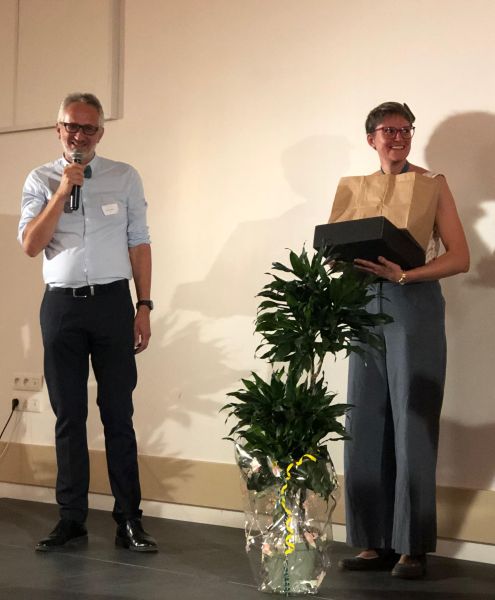
Good work: Gaëtan Genès and Florence Grandchamp. © Jonas Tophoven
Presence of the founders
In a vacation spot centered on wood and therefore symbolically charged just like its geographical centering, the commemorative program open to colleagues (Expert Bois, France Bois Forêt, FCBA, industry representatives, press, etc.) almost masked the moving side of a profession whose major players are still there: the Austrian Michael Flach (founder of Arborescence) still active in Bhutan, and Dominique Calvi who plays, in France, the role of founder that Julius Natterer played for the entire profession of structural engineers in Europe, then the three successive presidents (Dominique Calvi, Yves-Marie Ligot, Sylvain Rochet and Gaëtan Genès), all gathered to blow out the candles on the birthday cake. A highlight.
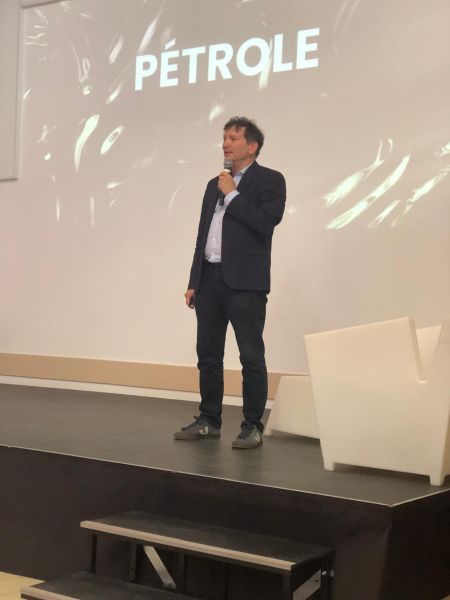
Arthur Keller explains the ongoing systemic breakdown. © Jonas Tophoven
Feminized engineering
The memory of the profession was also personified by the presence of the founder of the Breton firm QSB and other bald heads full of projects that made the wooden construction in France over the last 25 years. In return, the assembly bore witness to the presence of young people and women. The supplier MITEK, present, reports that its last two hires are women trained at ENSTIB. The IBC family is well oriented.
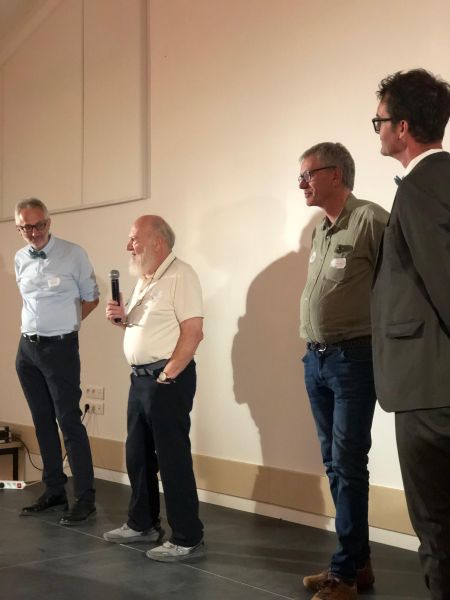
Four presidents. © Jonas Tophoven
Past and future
It was therefore possible for young people to retrace the hesitant beginnings and the evolution of means, to go back to the sources of the profession, when we calculated without software. On the wall, images evoked the achievements which were the milestones of the profession. But rather than returning to the precise technical stages of this history, such as the Allianz Arena in Nice or the reconstruction of the framework of Notre-Dame de Paris, IBC preferred to look forward. First, by confronting AI, a tool which could also become a replacement. The use of AI is progressing and we see that engineers like to delegate administrative tasks to it and not the core of their activity.
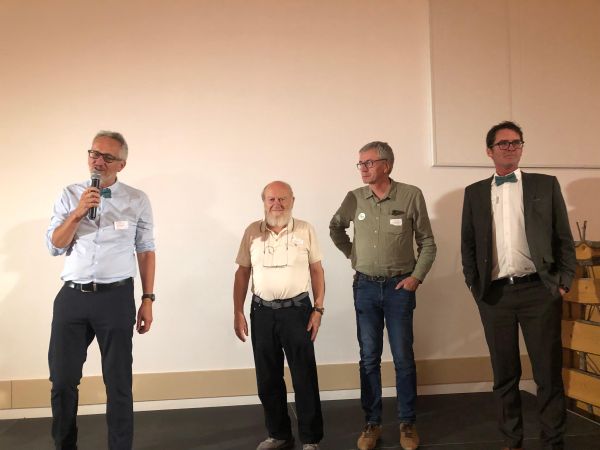
Four presidents. © Jonas Tophoven
Develop AI agents
Will IBC resist AI? Will IBC become IABC? Will the jubilee take place between humans or between robots? The debates point to a form of contradiction between a technical activity centered on biosourced materials and a technology that is powerfully destructive of the environment. Quip by Dominique Calvi: the “current computing possibilities have multiplied to infinity, but at the same time, regulations have become so complex that we actually need AI to navigate them“. Currently, for the profession, AI is in the agent development phase, and for some, managing agents provides the same professional pleasure as handling the latest generation of Cadwork.
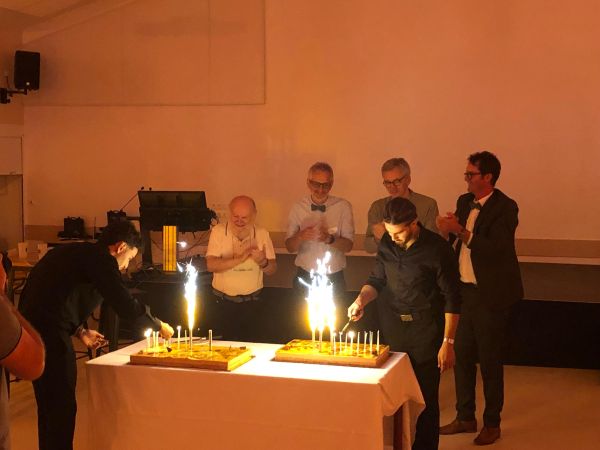
Candles and breath. © Jonas Tophoven
Systemic breakdown
However, it seems that the next 25 years of IBC will not be smooth sailing. In two full hours, Arthur Keller, specialist in systemic risks and resilience strategies, adds this audience of 200 people to his list of some 100,000 already aware of the ongoing systemic rupture. We must wake up now, asks the collapsologist, recommending a method, while insisting on the importance of a meat-free diet and biogeosourced construction. A speech not yet in phase with the cocktail dinner but when it comes to construction, Arthur Keller is preaching to the convinced.
For human nature
The prospects evoked by the imminence of a systemic rupture have not weighed down the mood of engineers for whom the annual AGM is a breath of fresh air allowing them to often break a certain solitude of work to find themselves in something which resembles a large family reunion.
As for the ongoing collapse, a profession that knows how to build with materials still locally available has a bright future ahead of it.
Jonas Tophoven / © Jonas Tophoven