
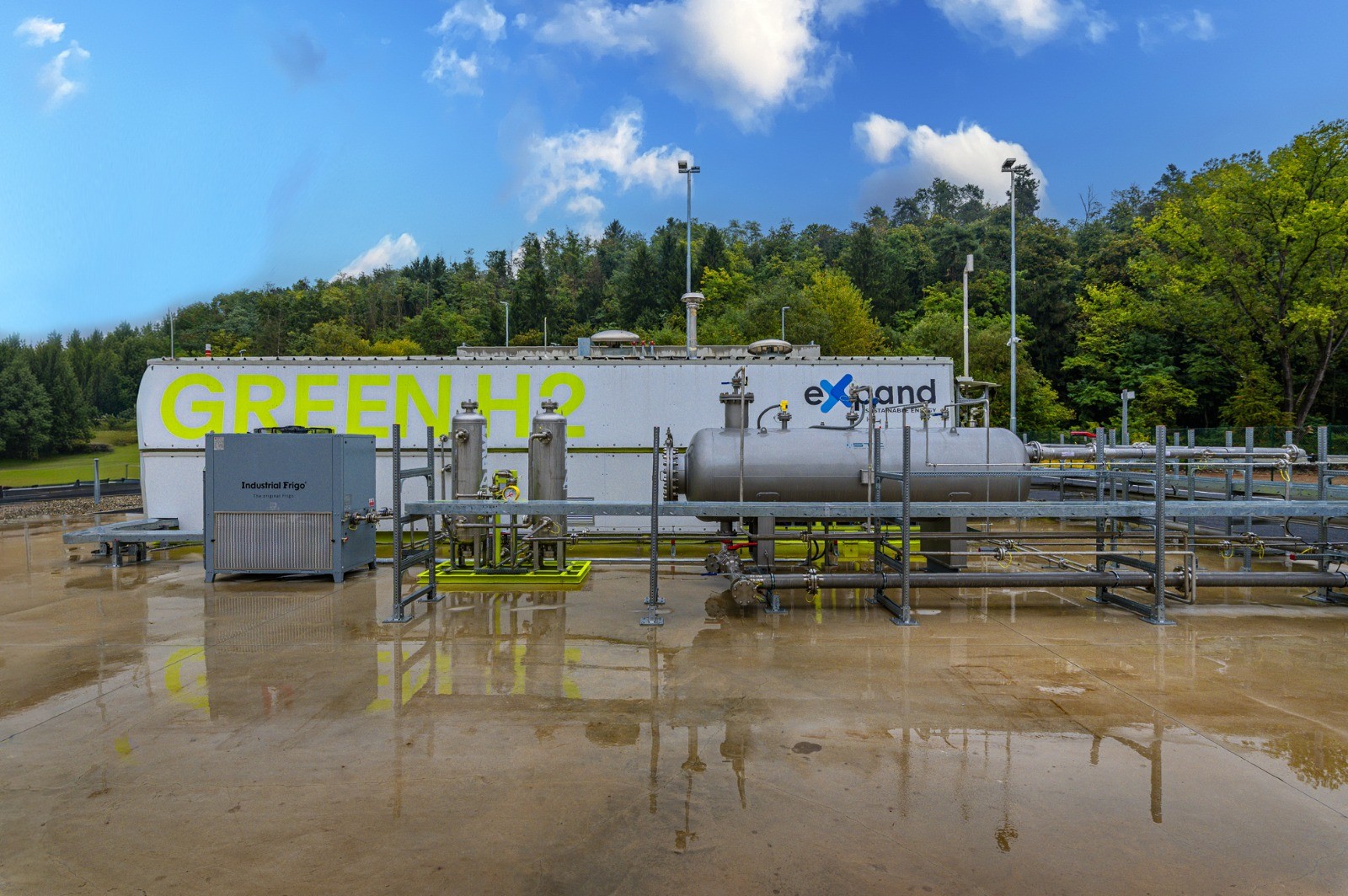
A strategic investment for the energy transition
With a total investment of 23 million euros – of which, as we have mentioned, 11.5 million financed by MASE (Ministry of the Environment and Energy Security) through the PNRR – H2Olona Hydrogen Valley was built in compliance with the timescales established by the PNRR as part of the measure dedicated to the production of hydrogen in disused industrial areas.
The intervention today represents a concrete model of integration between environmental sustainability, land recovery and economic development. The intervention is part of an area of over 550 thousand square meters and is consistent with the aims and strategies of the European Community in the field of energy transition and regeneration of abandoned industrial sites through the production of renewable energy and the creation of new sustainable industrial ecosystems.
«The challenge of H2 Olona Hydrogen Valley was courageous from an entrepreneurial point of view. Driven by firm determination and concreteness, and thanks to the enlightened commitment of the institutions, it has managed to demonstrate in practice how it is possible to recover and reconvert an abandoned industrial area, transforming it into a new strategic node at the service of the energy transition” said Maurizio Ragusa, CEO of Expand.
«Through Expand’s working methodology, which brings together public and private, environment and business, past and future, replicable projects can be created, capable of becoming an example for other territories, and of transforming regeneration into a real opportunity for socio-economic development for the territory. Not only that. H2Olona Hydrogen Valley was also created with the aim of giving a concrete response to the challenges posed by climate change, promoting sustainable solutions and encouraging behaviors aimed at mitigating and reducing impacts on the environment, cities and ecosystems. The project represents another contribution to the country’s energy transition roadmap, which expects to reach the 3GW target, with a CAGR of 34%, for the production of green hydrogen in 2030» continues Ragusa.
«In particular, the technological figure of the project and the quality of the systems indicate a new direction of work considered very interesting by the participants in the hydrogen supply chain. We also believe that the success of the transition depends on the commitment of all players (from producers to distributors and consumers) to create a system to streamline efforts and spread green hydrogen use cases more quickly in the Italian industry. Likewise, for the community, the project will act as a driving force to give rise to pride in belonging to a place which, thanks to its innovative mission, will be able to bring value to citizens and businesses, healing a socio-economic wound which for fifty years has rendered a large area of the Olona Valley unusable, making it unsafe and full of environmental risk” Ragusa concluded.
The first Hydrogen Valley in Lombardy is operational
The heart of the project is the plant for the production of green hydrogen powered exclusively by renewable energy. The Hydrogen Valley has a 4.5 MW photovoltaic system and a 2 MW electrolyser, capable of producing approximately 107 tonnes of green hydrogen per year in this first phase, which can be increased to 220 tonnes per year by 2028 and 500 tonnes per year by 2030.
An innovative energy platform that contributes to the diffusion of low-emission energy carriers and the decarbonisation of industrial processes and mobility services, laying the foundations for the development of a Lombardy hydrogen supply chain.
A sustainable, integrated and replicable model
More than a single production plant, H2Olona Hydrogen Valley is therefore configured as a territorial regeneration and development intervention that integrates renewable energy, circular economy, industrial innovation and attraction of new businesses. The project was born as a sustainable and replicable ecosystem, capable of linking energy production, research, technological infrastructures and environmental sustainability, offering a concrete example of how disused industrial areas can become drivers of the energy transition and industrial competitiveness.
The possibility of replicating a model of this type obviously depends on the presence of favorable territorial, infrastructural and industrial conditions, as well as on the ability to relate energy production, local demand and the development of new supply chains. It is precisely on this integration between energy infrastructure and production fabric that H2Olona Hydrogen Valley aims to build its role as a laboratory for the adoption of solutions related to hydrogen, storage, digital infrastructures and the circular economy. From this perspective, the value of the intervention can also be measured in its ability to generate operational impacts on the local production fabric, encouraging the adoption of hydrogen in industrial processes and the growth of skills, services and infrastructures connected to decarbonisation.
For further information
expand-eu.it/hydrogen-valley