
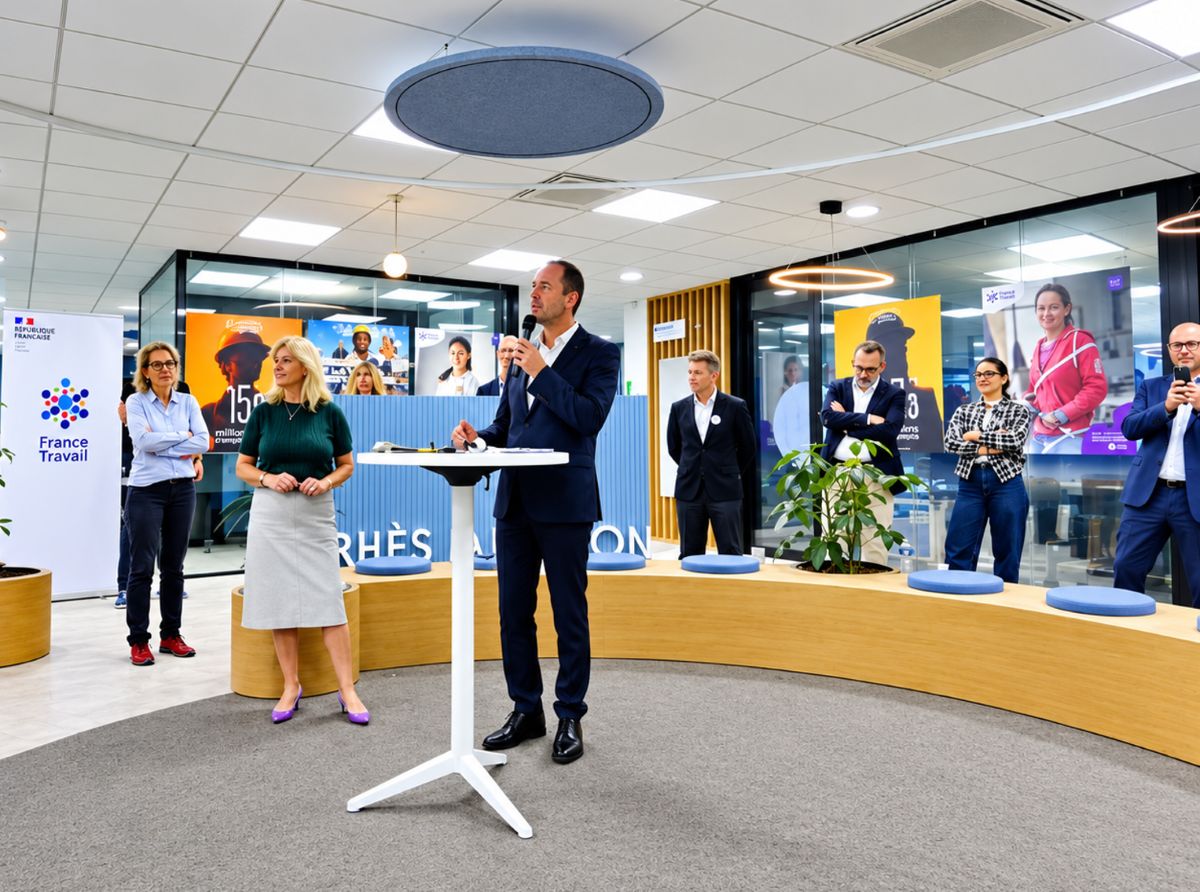
The 6th edition of the National Building and Public Works (BTP) Trades Week took place from October 12 to 16, 2026 and attracted more than 1,700 events throughout the country.
Publi-Information 


October 13 in the France Travail premises in MontreuilThibault Guilluy, the general director of France Travail, launched the sixth edition of the national Building and Public Works week in presence of representatives of CAPEB, FNB, FNTP and several associations. This week and its more than 1,700 events across France were aimed at both young people looking for their first job and people in retraining.
On this occasion, France Travail recalled that, despite a poor economic situation in 2026, the building trades are recruiting, training and supporting every year thousands of young people, job seekers and people in retraining. “With concrete training, numerous opportunities and strong values, this sector constitutes a real professional opportunity, accessible and sustainable“, explains France Travail.

Before the construction week, the FFB had organized behind the scenes of the building on October 8 and 9 and opened more than 250 construction sites, workshops and CFA to the public to allow young people, job seekers and people in retraining to concretely discover the construction professions, the know-how and the training that leads to them. Created in 2003, this operation constitutes a highlight of discovery and attractiveness of professions in the sector. © FFB
CAPEB bets on feminization
According to CAPEB, the objectives of energy renovation and adaptation of housing, which involve 700,000 to 1 million housing units to be renovated each year, could generate nearly 200,000 jobs by 2030. THE craft businesses are already having difficulty recruiting. In the first quarter of 2026, 10% of craft construction companies declared having sought to recruit and only about half of them succeeded. The national CAPEB and its network of 93 departmental CAPEBs therefore joined in this mobilization to introduce people to building tradesencourage vocations and bringing craft businesses closer to people looking for a job, retraining or thinking about their professional future.
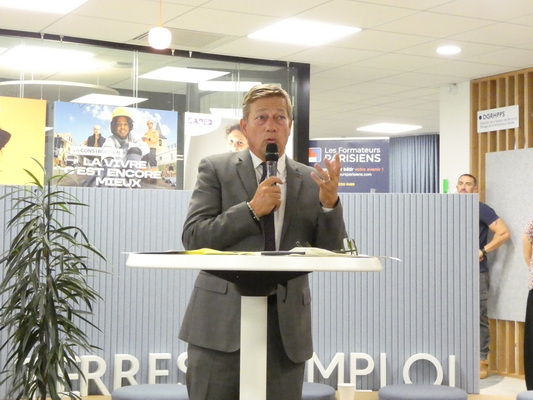
As Jean-Christophe Repon, president of CAPEB, indicates, “introducing the construction professions means giving everyone the opportunity to project themselves into useful, concrete professions that have a future. Our sector is evolving profoundly, particularly under the effect of energy renovation and ecological transition, and these transformations are creating new skills needs. To respond to this, we must make the richness of our professions known, encourage vocations and open the doors of craftsmanship more widely construction, in particular to women and to all those who wish to train, retrain or undertake business. © PP
The big idea that CAPEB is pursuing is the feminization of professions. THE women now represent 13% of business leaders and employees in the building trades. For CAPEB, this low representation constitutes significant potential for expand recruitment pools and meet future needs. Especially since 20% of CAPEB member business leaders are now over 60 years old. This represents in the short term a potential of 14,000 businesses to be taken over.
CAPEB acts in this way to change representations, deconstruct preconceived ideas and make women aware of the opportunities offered by the construction professions, from apprenticeship to entrepreneurship. The “Dare to enter the female construction professions” approach contributes to this dynamic by giving more visibility to women’s careers in the sector. It was illustrated on October 13 in Montreuil, by the organization of a presentation and a debate during which business leaders spoke with around fifteen participants interested in creating or taking over a craft construction businessbut also through the discovery of construction professions.
On this occasion, the CAPEB Grand Paris presented its new system “Dare to work on your success”which offers immersions in member craft companies, particularly in locksmithing, roofing and masonry.
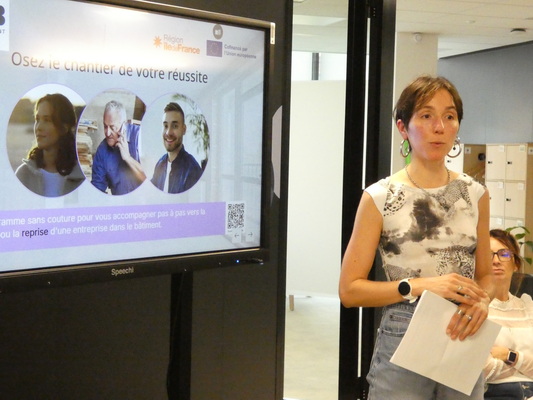
Solène Verot, economic mission manager at CAPEB Grand Paris – reachable by email at [email protected] – presented the course, funded by Europe from June 2026 to December 2028, entitled “Manager of artisanal building business”. This is complete training for business leaders, lasting 2 days per month, with additional workshops with business leaders from CAPEB on very concrete subjects: what legal status to choose when creating the business, financing plan, negotiating with a banker, etc. The current course involves nine participants, including five women. © PP
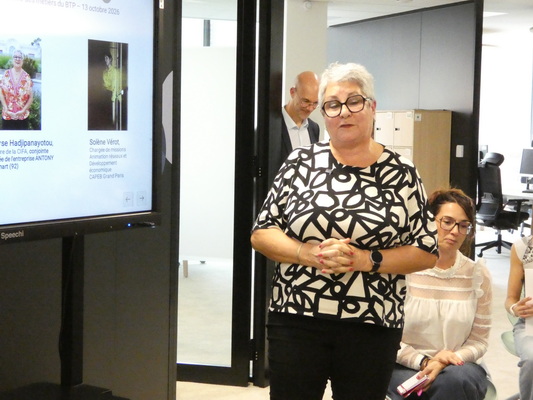
Maryse Hadjipanayotou created a plumbing, heating and roofing business at the age of 24, with her husband who was then 25. His company has trained numerous apprentices, who have become employees; some left to create their own craft businesses and became business leaders themselves. His two children work in the company and will ensure the succession. One of his first apprentices, who became an employee, has a son who is now an apprentice in his company. Maryse recounts the development of her personal and professional life and, clearly, wins the support of the participants in this workshop. © PP
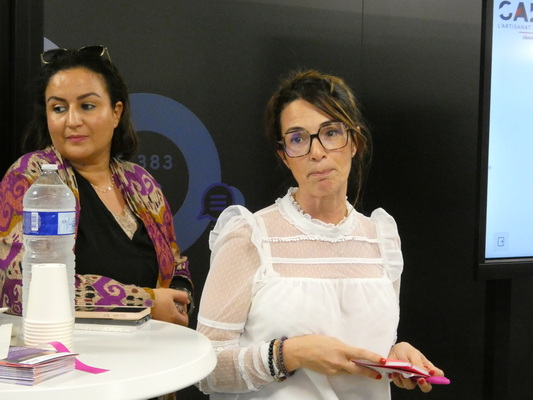
Another participant in the workshop led by Solène Vero, Marie Pereira – on the right in the image – is a joint employee of the Alain Riffaut company, her husband whom she joined when he took over a small-scale electricity company. She emphasizes the need to be versatile. Her husband is on construction sites, but she manages the company, HR, and relations with suppliers. She is the one who responds to customers, etc. She became president of CIFA, the Interdepartmental Commission for Women in the Craft Industry, and administrator of CAPEB Grand Paris. © PP
In conclusion of theworkshop on the feminization of construction professionsKarima Ziani, the deputy director of France Travail, recalled that France Travail offers multiple services to candidates, in particular immersion sessions in partner companies, so that they can discover in a concrete way the reality of artisanal building companies. She also explained to CAPEB members that France Travail helps them with their recruitment projects, reviewing CVs and selecting candidates to present to companies those who will suit them best.
Women. Jobs. Possibilities
On the occasion of the National Construction Careers WeekCAPEB launched “Women. Jobs. Possibilities.”, a site dedicated to feminization of construction professions. “Today they are building a more open, fairer, stronger sector. What if it was also your story?” : THE site gives a voice to women who work in these professions and offers content to better discover them. It notably brings together eight portraits of women and eight career paths, a section “What profession for you?”, key figures on the place of women in the sector and a “Stop the clichés!” space.
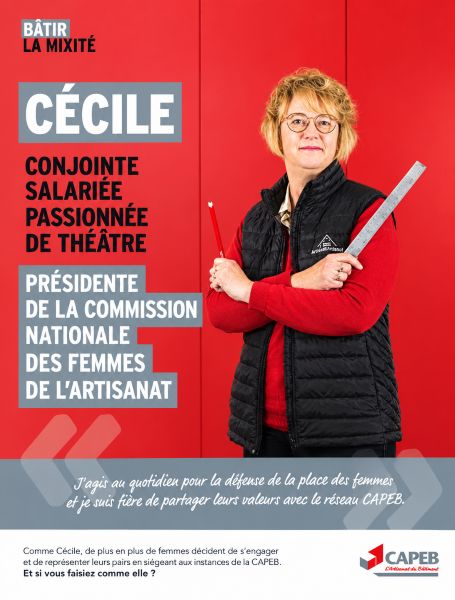
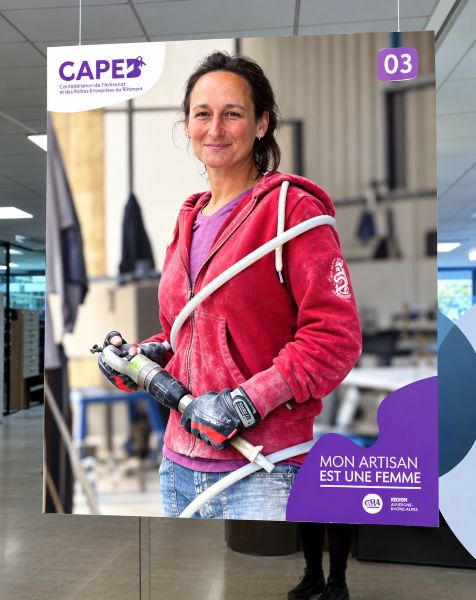
For several years, CAPEB has been leading a sustained campaign to accelerate the feminization of construction professions. © CAPEB