
What is Multi-Image Blend?
Until now, transferring the “atmosphere” of one image onto the “structure” of another was a nightmare of continuous attempts. Multi-Image Blend essentially acts as your digital art director.
It allows you to load two distinct reference images and merge them consistently. You can extract the spatial volumes and silhouette from the first image, and apply the exact material palette, lighting style and mood of the second.
The case study: material transformation
Let’s look at a practical example to show the true potential of this tool. We will transform a midcentury space with warm tones into a more modern environment with exposed steel.
First, we need to understand what we are supplying to the model and the role of each input:
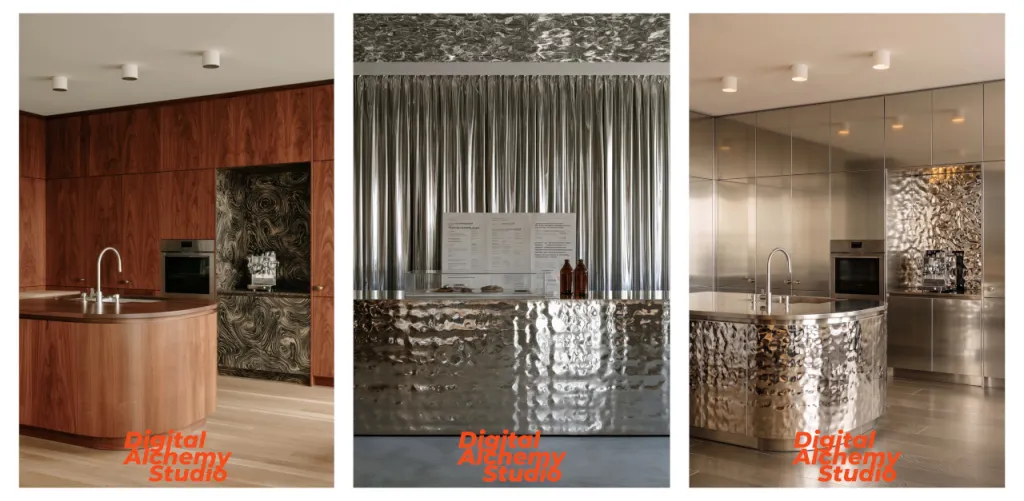
- Image A (the structure): Our starting concept. An elegant kitchen with warm walnut paneling, a curved island and a veined marble backsplash. Objective: We want to rigorously maintain this perspective, the proportions of the island, the niche and the arrangement of the wall units.
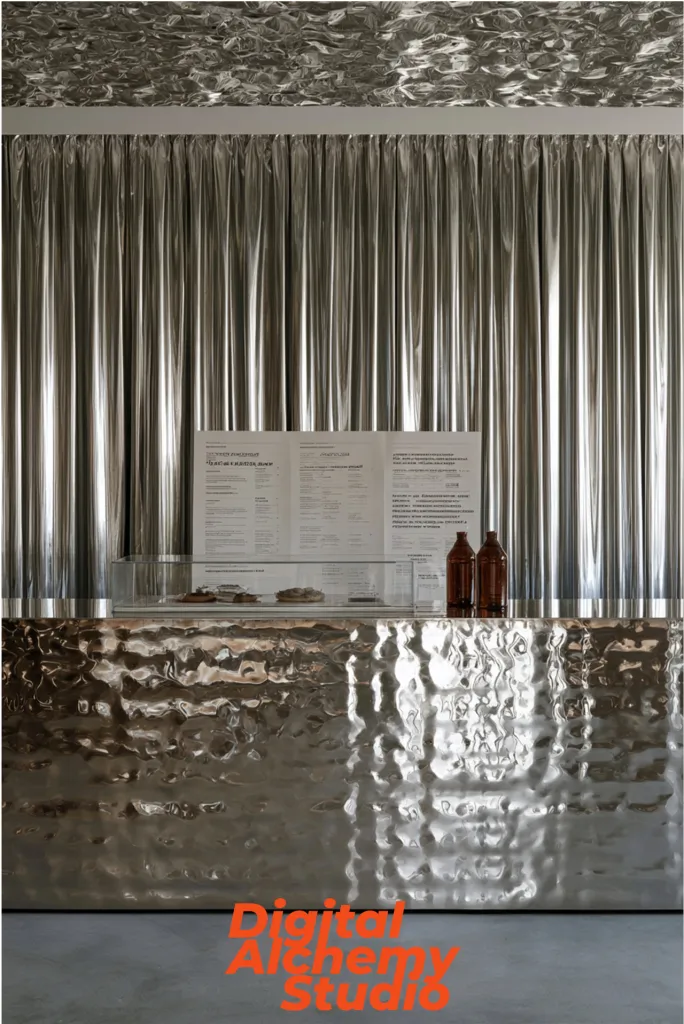
- Image B (the mood and materials): Our stylistic reference. The interior of an extremely contemporary café, dominated by hammered stainless steel, cool reflections and metallic curtains. Objective: We want to extract this exact textural palette and reflective lighting.
Beyond attempts: Multi-Image Blend
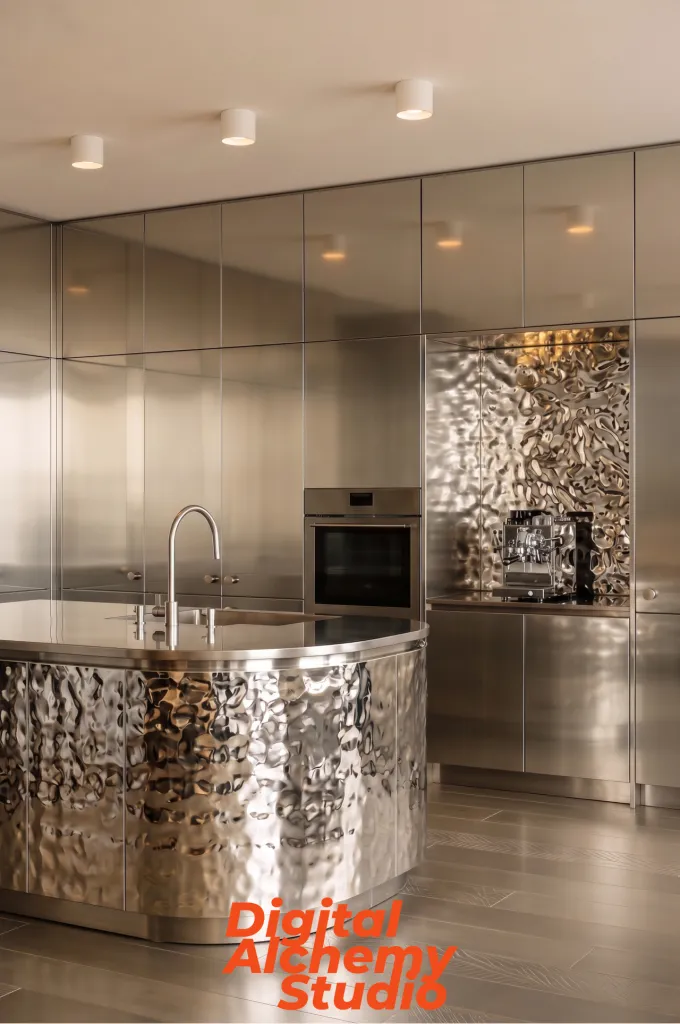
As you can see, the qualitative leap is astounding. The model did not limit itself to “greying”. He understood the 3D nature of the original scene. The island retains its iconic soft curve, but is now swathed in that rippled, hammered coffee shop metal, reflecting light in a physically correct way. The walnut upper cabinets have become smooth sheets of stainless steel and the marble niche has exchanged its grain for a mirrored aesthetic.
The entire color temperature has changed from warm wood to a cold, sharp and editorial light that perfectly enhances the new contemporary space.
In conclusion
Having this level of control over materials and lighting is an incredible help to our studies. It allows us to explore different directions and present world-class visual options with previously unthinkable speed and precision. It is a tool that eliminates hours wasted in continuous adjustments and gives us back precious time to dedicate to the true heart of our work: the design of space.
As always, behind the scenes we will continue to experiment and push these new updates to the limit for you to understand how to make the most of them in our daily professional lives. Until the next release and the next viewings!
The weekly column “Architectural Prompting” is edited by experts Luciana Mastrolia, Giovanna Panucci and Andrea Tinazzo
>> If you are interested in these topics, also sign up to the free Linkedin Newsletter AI & Design for Technicians, we’ll talk about it here!