Steelmakers and recycling companies want to accelerate the development of low-carbon steel in France. Federrec and A3M have just signed a “Green Steel Pact”.

THE recycling companies and steel producers want to strengthen their cooperation to accelerate the decarbonization of the French steel industry. The professional federation of recyclers Federrec and the Alliance of ores, minerals and metals A3M have thus concluded a “Green Steel Pact”. This agreement formalizes a “strengthened cooperation between recycling companies and steel producers” in order to “to accelerate the development of low-carbon French steel“, as explained by the two organizations.
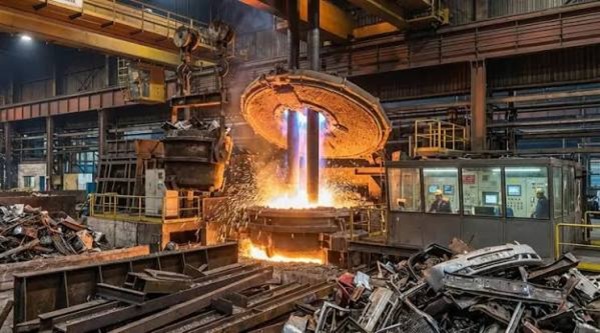
Recycled steel is produced from used steel in electric arc furnaces. This process makes it possible to reduce the use of certain raw materials, notably iron and coal, and therefore to reduce CO emissions.2. The stakes are high for French industry: the steel industry alone represents around a quarter of industrial CO emissions.2 of the country. © Kintech Solutions
France has a large deposit of scrap metal
THE development of recycled steel also meets an objective of industrial sovereignty. Federrec and A3M emphasize that France has both “a national scrap metal deposit and a low-carbon electricity mix“. For both organizations, better secure the supply of French electric steelworks would allow the raw material to be kept on the territory, but also the added value such as associated jobs.
THE “Green Steel Pact” aims thus “to create the conditions to better capture the available material, improve its quality and develop demand” interior.
France behind the United States and Europe
According to the data communicated by Federrec and A3Mnext to 70% of steel produced in the United States comes from recycled steel. This proportion reaches around 45% in Europe, compared to only 37% in France.
The pact must therefore contribute to increase the share of recycled steel in French production. Its signatories wish to bring together the technical, economic and regulatory conditions necessary to increase domestic demand, improve the quality of recycled materials and secure investments.
The gap between the different modes of production is particularly marked in terms of emissions. L’steel produced in electric furnaces represents “an emission of 0.3 to 0.6 tonnes of CO2 per ton of steel, compared to 2.3 tons for a traditional blast furnace“, indicate Federrec and A3M.
A challenge for French steelworks
The decarbonization of steel production also constitutes a challenge for maintaining industrial capacities in France and Europe, while Brussels sets emissions reduction targets for manufacturers.
In Dunkirk, in the North, ArcelorMittal confirmed in February the construction of its largest electric oven in Europe. This decision comes more than two years after the group presented a decarbonization project for the site which included two ovens. ArcelorMittal, however, clarified to AFP that it is not part of A3M, of which the group has no longer been a member since the start of 2026.