
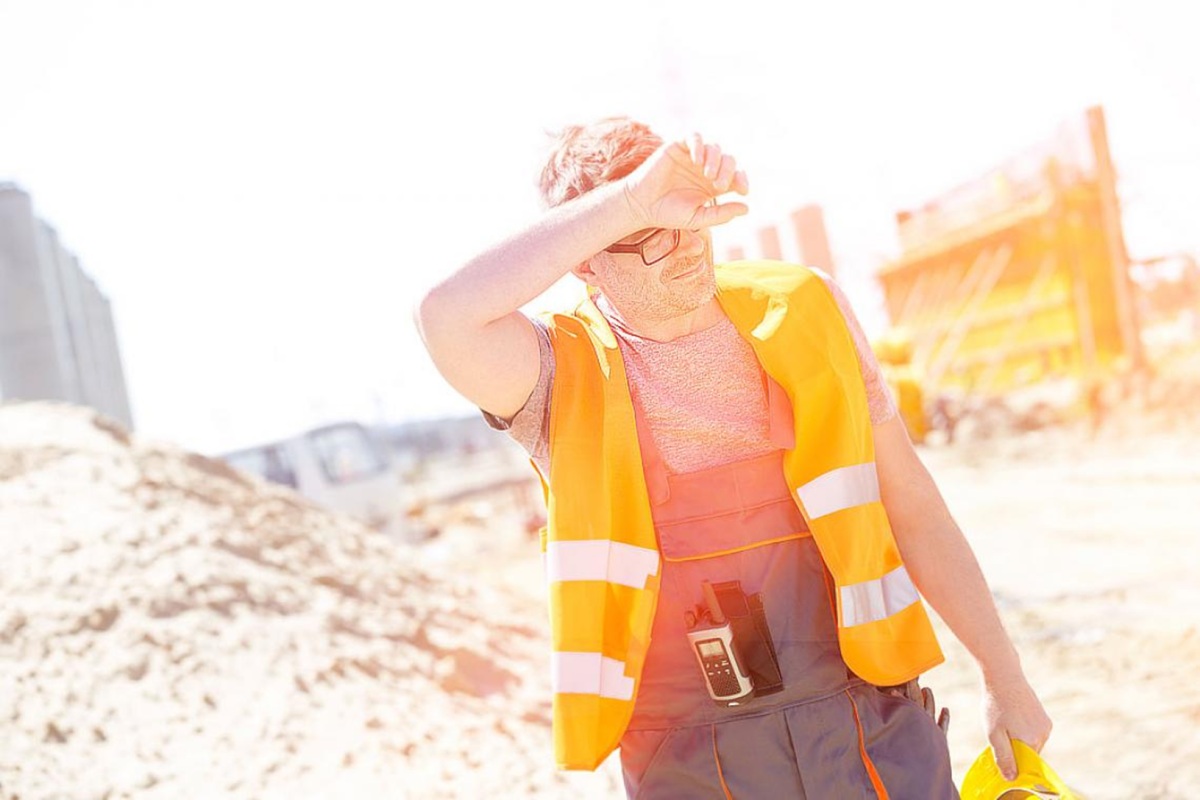
The Minister of Labor said he trusted construction companies to preserve the health of workers during periods of high heat, before the publication of updated recommendations next week.

As France goes through a new episode of extreme heat, the question of protecting workers exposed to extreme temperatures is coming back into the public debate. On the front line, the building and public works sector has to deal with particularly demanding working conditions. Invited to react on this sensitive subject, the Minister of Labor, Jean-Pierre Farandouassured that companies already had the necessary tools to preserve the health of their employeeswhile calling for caution after the death of a young worker in Drôme.
“Companies are doing the right thing“: the minister highlights existing systems
Traveling to a construction site in Châteaufort, in Yvelines, Jean-Pierre Farandou estimated that employers in the construction sector were implementing appropriate measures to protect their teams from episodes of intense heat. “I know that in companies, we do what is necessary so that workers can work while preserving their health in relation to this intense heat.“, he declared on BFMTV.
According to him, the prevention system is based primarily on alerts broadcast by Météo-Francewhich allow professionals to activate a series of measures adapted to the evolution of the meteorological situation. “Météo France broadcasts advisories by department (…) from there, professional structures, particularly construction, have a whole range of measures that they trigger“, he explained.
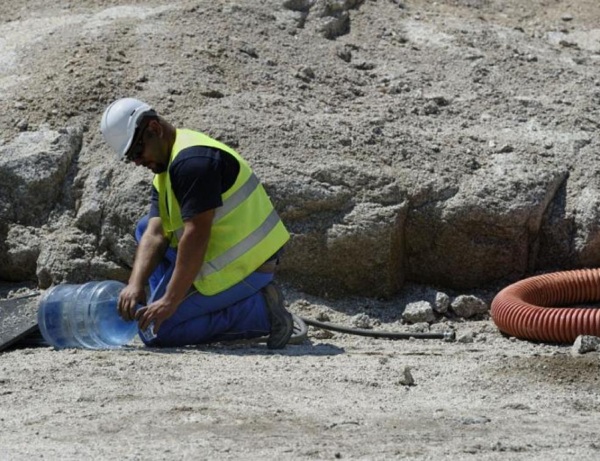
This position by the minister comes as a decree which entered into force in 2025 strengthened the obligations of employers faced with episodes of high heat. Asked about the possibility of a new adaptation of the Labor Code, Jean-Pierre Farandou judged that the current regulatory framework was already particularly demanding. © JC
“There are already many obligations imposed on businesses“, underlined the Minister of Labor, recalling that every business manager remains legally responsible for the health and safety of their employees. As such, it is up to him toidentify the risks linked to professional activityTHE extreme heat is now fully part of the dangers to be anticipated.
Among the measures mentioned are:
– adjusting schedules to avoid the hottest periods of the day;
– Provision of sufficient water;
– Or the organization of regular breaks.
Protection deemed insufficient by certain unions, against a backdrop of drama in Drôme
However, the CGT considers that the means of action of labor inspectors remain too limited when shortcomings are observed on the ground. The union particularly regrets that the latter cannot immediately interrupt a construction site or activity when they consider that the prevention measures are insufficient. As the law currently stands, inspectors can send a formal notice to the employerbut it then has a minimum period of eight days to comply, a procedure that the CGT considers unsuitable given the urgency of situations linked to heat waves.
Jean-Pierre Farandou further indicated that the next workplace health plandeveloped for a period of five years and expected in the coming days, will give an important place to consequences of climate change on working conditions. “It will have a special chapter around ecological transition, climate change“, he announced, specifying that a certain number of recommendations would be updated in order to better respond to the new risks faced by employees.
These declarations come in a particularly tense context after the death of a 19-year-old young man in Drôme. On Tuesday, after working all day on a roof, he felt ill late in the afternoon. Transported by his father to Die hospital, he died shortly after, according to information provided by the gendarmes. The prosecution ordered an autopsy to determine precisely the causes of death. That same day, temperatures had exceeded 32°C in the town.
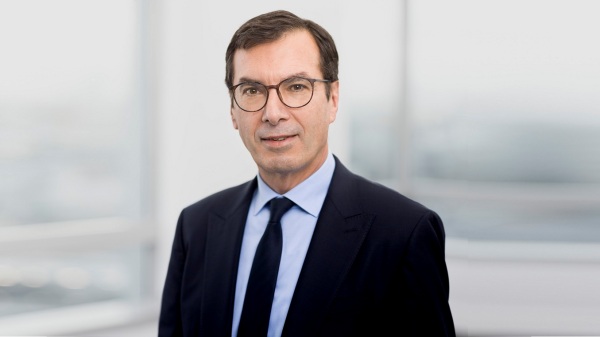
Reacting to the death of the young roofer, the minister, here in the photo, spoke of “a human tragedy” which “deeply saddens” him, while considering that it was appropriate to await the conclusions of the investigation before establishing a possible link between the working conditions and the death of the young man. “We must let the investigation take place to precisely establish the cause of this fatal accident and, then, the evaluation of the measures taken by the company to protect the health of its employees as much as possible,” he declared. © Matthieu Raffard
On a political level, the subject also continues to provoke strong reactions. On Friday, the national secretary of the Ecologists, Marine Tondelier, said she was “very angry” at what she considers to be a lack of ambition from the public authorities. The environmental leader recalled having proposed, on May 1, the creation in France of climatic leave inspired by the Spanish modelallowing the employees to stop their activity during episodes of extreme heat. While she recognizes that some employers are already taking initiatives to protect their teams, she believes that these voluntary steps are not enough to guarantee uniform protection across the entire territory. “This is not the case for everyone. And that’s precisely what laws are made for.“, she affirmed, pleading forestablishment of clearly defined and legally binding heat thresholds in order to better protect exposed workers. An absence of a stricter framework which she describes as “political mistake“.