

Employment in decline, new housing at its lowest, energy renovation weakened: the construction sector is sinking into crisis and fears the consequences of the conflict in the Middle East.

THE construction sector hoped to have hit rock bottom. After three years of almost uninterrupted decline, the first months of 2026 suggested a slight improvement… Alas, this hope was short-lived! Indeed, the rise in geopolitical tensions and the tightening of economic conditions are once again darkening the outlook for the sector. In fact, in its latest situation, the French Building Federation (FFB) – press conference of Tuesday June 23, 2026 – draws a particularly gloomy observation: declining activity, weakened employment, housing market still depressed and cash flow under pressure.
A lasting crisis
The year 2025 had already confirmed the extent of the slowdown since construction turnover stood at 193 billion euros, down 5% excluding the price effect. Above all, the profession lost nearly 19,000 employees over one year and more than 42,000 in three years.
The sector today has 450,000 companies, nearly 95% of which are artisanal structures with fewer than ten employees. Despite their economic and territorial weight – they are present in 88% of French municipalities – they find themselves particularly exposed to the contraction in activity.
There new construction continues to lose ground. It now only represents 39% of overall construction turnover, compared to more than 50% at the start of the 2010s. As for new housing, its contribution has fallen to only 20% of the sector’s total activity.
For the FFB, the situation is starting to remind us of the major difficulties encountered by the building in the early 1990s: the “decline in activity of more than 12% in volume between 2022 and 2025 brings the building sector closer to the violent crisis of the 1990s“, warns the federation.
New housing remains very far from needs
Despite a rebound observed since the end of last year, the figures remain very insufficient to speak of a recovery. The annual rate of construction starts is estimated at 321,000 housing units based on the first four months of the year. This still represents 35,000 housing units less than the average observed over the last forty years.
THE sales of individual houses are barely progressing, while those of promoters are still declining. Even more worrying, the sales of new homes collapse by 31% over one year to barely reach 11,000 units in the first quarter, less than half of their historical average. “We are reaching historic lows in the personal segment“, underlines the FFB.
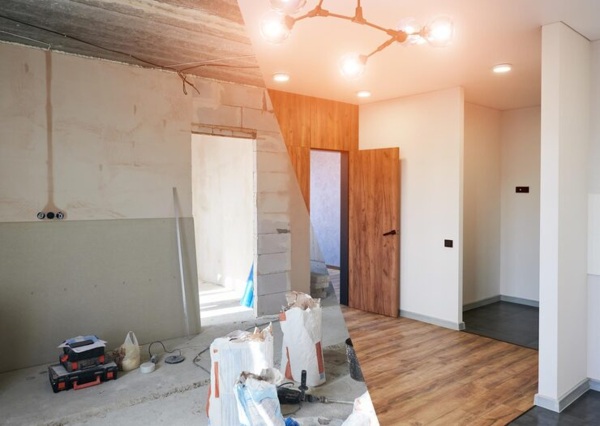
Long considered the main source of growth in the sector, renovation is in turn showing signs of running out of steam. The improvement-maintenance activity recorded its sixth consecutive quarter of decline: over the first three months of 2026, it fell by 2.6% in volume compared to the same period a year earlier. Energy renovation appears even more affected with a drop of 3.4%, even reaching 4.1% in housing. This development comes as the government announced a reduction in the credits allocated to MaPrimeRénov’ and the Green Fund, a decision that does not go down well with professionals. © Magnific
Employment and cash flow under pressure
The consequences of this prolonged crisis have direct repercussions on the production system. In the first quarter of 2026, construction lost another 11,000 salaried jobs over one year, while since the end of 2022, nearly 55,000 positions have disappeared. At the same time, cash flow continues to tighten. Companies with more than ten employees report a deterioration in their financial situation, particularly marked in the finishing work.
This fragility is accentuated by several factors:
– the increase in material costs, including increases of 54% for bitumen and 50% for PVC;
– The rise in energy prices linked to the conflict in the Middle East;
– Payment times still too long, particularly in public procurement;
– Access to real estate credit which remains constrained despite a slight relaxation observed in recent months;
– The gradual reduction of certain employment and apprenticeship support schemes.
Even if business insolvencies decrease slightly over the first five months of the year, they remain at a historically high level with more than 13,000 bankruptcies projected for the whole of 2026.
The conflict in the Middle East is a game changer
One of the main breaking elements identified by professionals concerns theimpact of the geopolitical crisis in the Middle East since inflation rose to 2.4% in May, notably due to a 16.6% increase in energy prices. At the same time, bond rates have started to rise again and real estate credit is once again showing signs of fragility. For the FFB, these developments risk further slowing down the investment decisions of households as well as those of communities and businesses. The non-residential sector is also starting to show signs of weakness. If the areas under construction are still progressing slightly, authorizations have already fallen by 4.4%, particularly in administrative buildings.
Faced with this situation, the French Building Federation calls on the State to act quickly. The organization advocates in particular for the maintenance of the zero-interest loan, the preservation of the solidarity rent reduction, reinforced support for rental investment and the relaunch of energy renovation schemes. It also calls for the maintenance of reductions in charges on low wages, increased support for apprenticeships and a simplification of several regulations considered penalizing for activity.
.jpg)
Beyond the observation and the demands, the federation, here with Frédéric Carré, the brand new president of the FFB, defends a simple idea: without rectifying the building, French growth will remain lastingly penalized. A conviction that she sums up with two shocking phrases: “nothing will be done without the building” and “construction is a remedy for France’s ills” because when the building falters, a whole part of the French economy slows down with it. © Laure Pophillat