
In Saint-Geours-de-Maremne, Les Chanvres de l’Atlantique is preparing the construction of two production units by 2028, including a factory capable of manufacturing 30,000 prefabricated hemp concrete blocks per year.
Publi-Information 

HAS Saint-Geours-de-Maremne, in the LandesLes Chanvres de l’Atlantique is preparing to change dimension. Founded in 2015 by Vincent Lartizienthe company is preparing the construction of two new industrial units, expected by 2028, one of which will be dedicated to the defibration of the plant and the other to the manufacture of prefabricated hemp concrete blocks. For the building sector, this second installation constitutes the main challenge of the project, given that it must make it possible to produce up to 30,000 blocks per year like providing a constructive solution on a larger scale.
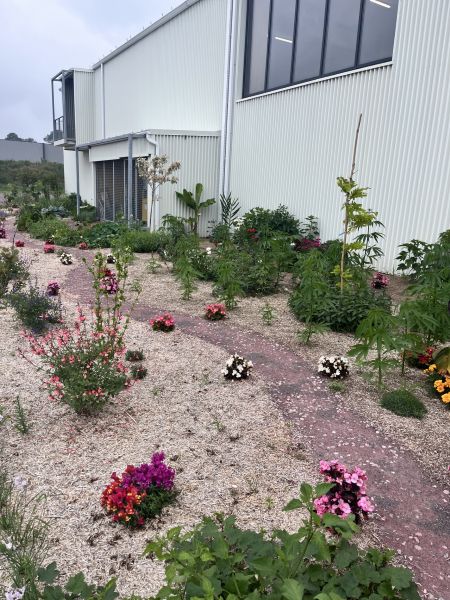
The Landes company, here in the photo, already has its first industrial tool dedicated to the processing of hemp seeds. Commissioned in 2022, this 2,000 m site2 was built from hemp concrete. Until now, its activity was mainly based on the nutritional value of the plant, but the next investment must now also make it possible to exploit the stem, the woody part of which, called hemp, is used in the composition of construction materials. © Les Hemps of the Atlantic
From the field to the factory, a sector to be structured
Atlantic Hemps today work with around twenty partner farmers and transform around 120 tons of hemp per year. The company notably markets oils, hulled seeds and flours under its Nunti-Sunya brand.
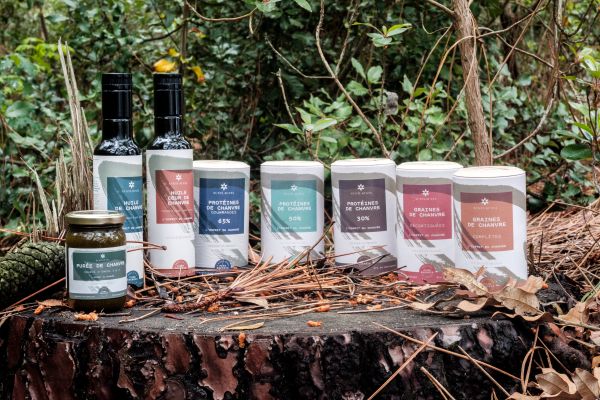
The Nunti-Sunya range. © Les Hemps of the Atlantic
The first of the two new units will be dedicated to defibration, a mechanical operation consisting of separate the fibers from the woody part of the stem. The latter could in particular power textile applications, while the chènevotte will be intended for construction. The company announces a factory designed specifically for processing hempwith equipment developed to meet the characteristics of this raw material; a decisive step in securing the supply of the future prefabrication unit. It must also support the increase in agricultural power of the project: Atlantic Hemps are aiming for 1,000 additional hectares of crops in order to have the volumes necessary for their industrial development.
30,000 hempcrete blocks per year
The second factory will be entirely dedicated to manufacture of prefabricated hemp concrete blockswith the aim of reaching an annual production of 30,000 units, in particular to meet the needs of large buildings. The processes and some of the machines will be developed by the company itself.
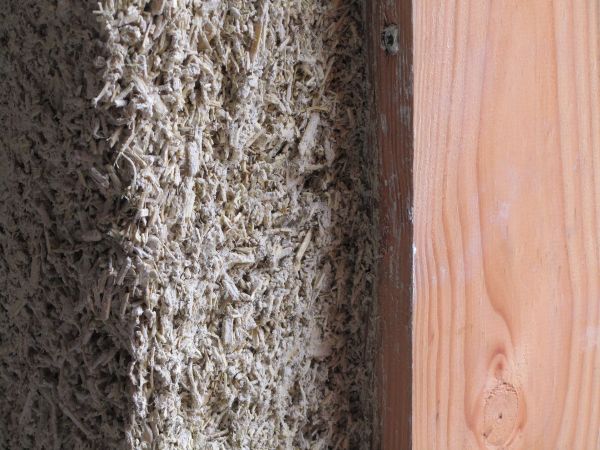
The principle of hemp concrete is based on the combination of hemp, water and a binder, generally based on lime, the plant material providing in particular its insulating properties and its ability to regulate the exchange of water vapor. The material is used to make walls, linings, partitions or even roof and floor applications. It can be implemented by projection, by filling between panels or in the form of prefabricated modules. © Les Hemps of the Atlantic
Prefabrication is of particular interest to construction companies, making it possible to move part of the work off site and to better control the manufacturing of elements. In addition, the professional rules revised in July 2024 by the Construire en Chanvre association govern the execution of vertical walls in hemp concrete, with requirements on aggregates and binder-aggregate couples; but the said rules do not cover prefabricated blocks, the use of which therefore does not automatically fall within this framework.
Energy savings
In order to defend theinterest of hemp concrete in buildingTHE Atlantic hemps are based on a comparative study carried out in July 2026 by the Vertical Sea design office. This concerns two warehouse scenarios of hemp storage and drying of 280 m2. According to the results communicated, the building integrating a hemp concrete solution would present an initial additional cost of 9%, which would be amortized in less than a year thanks to energy savings. Over a period of 40 years, the overall cost would be approximately 15 times lower than in the comparison scenario.

The interest of the material lies in particular in its hygrothermal properties. Its porous structure promotes the exchange of water vapor and contributes to the regulation of indoor humidity; its thermal and acoustic performance, however, depends on the formulation, thicknesses and design of the wall. © Crispin Jones / Unsplash

After a career as a professional surfer, Vincent Lartizien, here in the photo, settled down in the Landes where he is now working to structure a French hemp industry, from its cultivation to its transformation, with his sights set on new outlets in building and construction. © Les Hemps of the Atlantic
Created in 2015, Atlantic Hemps today employ ten people and generate around one million euros in turnover, according to data communicated by the company. With the two new units planned for 2028, it intends to move from a seed processing activity to a more complete industrial valorization of hemp. The project is part of a broader ambition carried by its founder, Vincent Lartizienthat of rebuilding a French sector capable of linking agricultural producers to industrial users. Before creating the company, this former professional surfer had trained in agricultural professions after several years spent in Hawaii. He summarizes the diversity of outlets for the plant as follows: “Hemp meets the four basic needs of humanity: food, health care, shelter and clothing. It is historically said that hemp can produce a thousand different products“.