
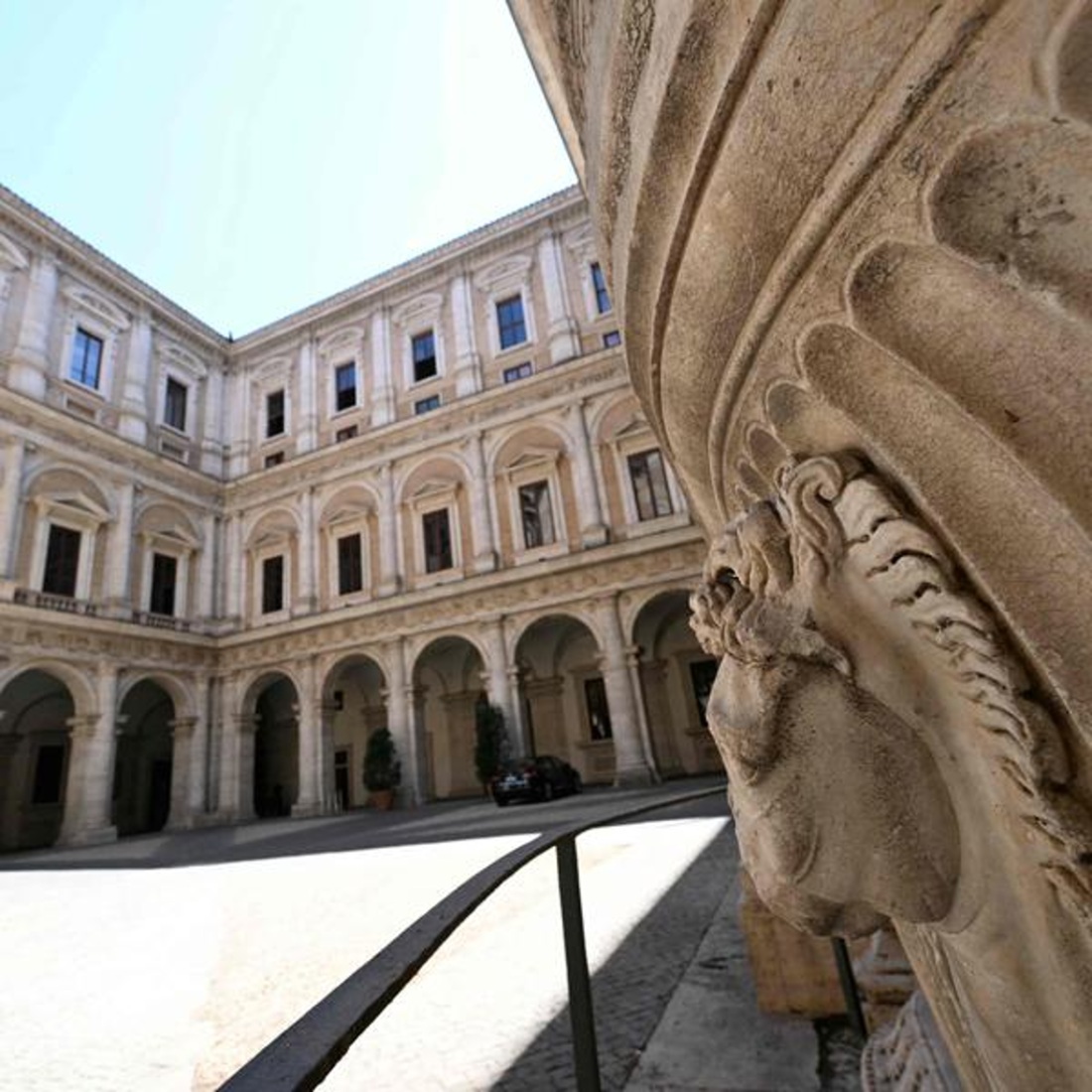
Beyond the heritage feat, the restoration project of the Farnese Palace, at 8.5 million euros, also delivered its share of discoveries, even revealing a lion’s head sculpted by Michelangelo.

The latest scaffolding has just disappeared from the Farnese Palace. Five years after the launch of a consequent restoration program, the emblematic monument of the Roman Renaissance regains its original face. But behind the travertine and brick facades hides a site much richer than a simple conservation operation: the restorers have uncovered unexpected remains, including one lion’s head attributed to Michelangelo and old tennis balls found in the gaps in the facade.
For Pierre-Antoine Gatier, the chief architect of Historic Monuments and project manager of the operation“it was a site of permanent discoveries“.
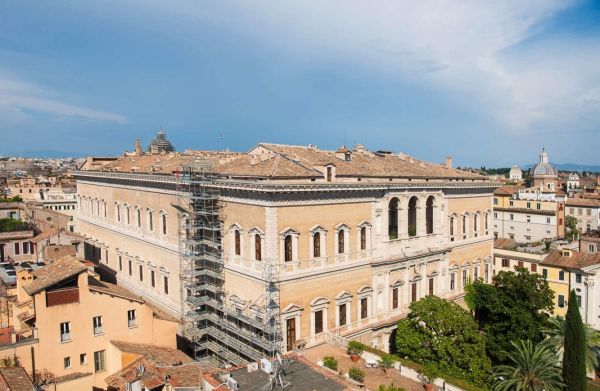
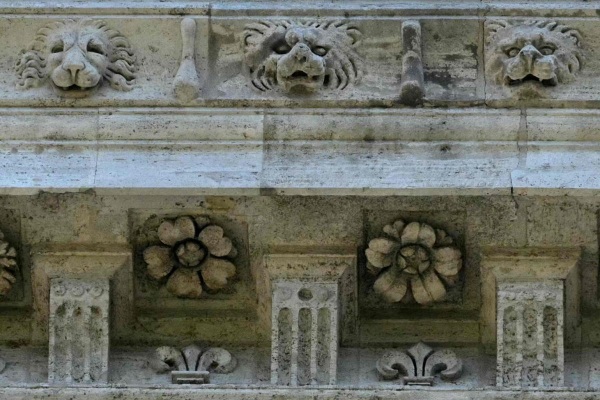
The Farnese Palace regains its Renaissance face. After five years of restoration and an investment of 8.5 million euros, the facades and roofs of the building have regained their splendor, while the construction site has enabled several new discoveries, including a lion’s head attributed to Michelangelo. © Photo 1: Mauro Coen / Photo 2: Andreas Solaro / AFP
An 8.5 million euro project
Launched in 2021 under the project management of the French embassy in Italyof theFrench School of Rome and the French Works and Buildings Service in Italy (STBI), the operation represents an investment of 8.5 million euros, financed by the French ministries of Europe and Foreign Affairs and of Higher Education and Research.
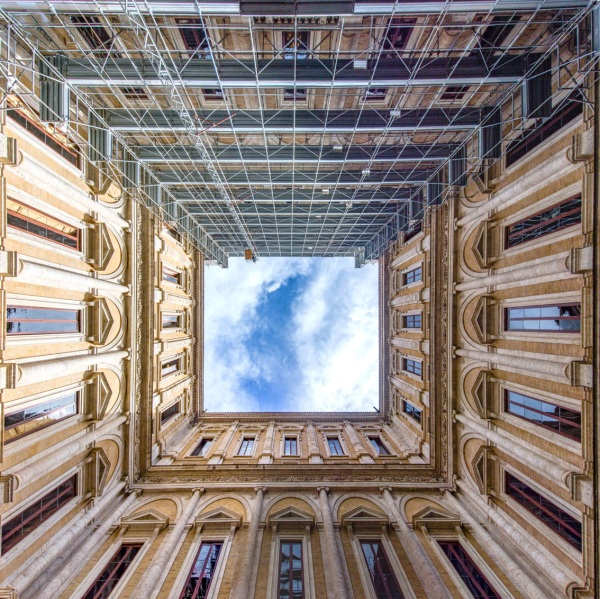
The work was completed this summer, after four major successive phases covering all of the facades, the roofs, the exterior joinery and the surrounding wall on the Tiber side. Here, the courtyard under construction with scaffolding on the west wing (June 2026). © Mauro Coen
THE construction site was carried out under the direction of the agency of Pierre-Antoine Gatierin close collaboration with the Special Superintendence for Archaeology, Fine Arts and Landscape of Rome. A Franco-Italian scientific committee has supported the operation since the first studies began in 2017.
Four great architects of the Renaissance
Built throughout the 16th century, the Farnese Palace is considered one of the masterpieces of the Italian Renaissance. Started by Antonio da Sangallo the Younger, it was continued by Michelangelowho notably designed the imposing cornice and modified the main facade. Vignola then worked on the wing of via del Mascherone, before Giacomo della Porta completed the facade facing the Tiber in 1589.
Since 1874, the palace hosts the French embassy in Italywhile the French School of Rome has been established there since 1875.
“This constant commitment to taking care of it highlights the values shared between France and Italy.“, greeted the French Ambassador to Italy, Anne-Marie Descôtes, paying tribute to the many craftsmen, architects, engineers and restorers mobilized on this extraordinary project.
Restore without betraying
The intervention did not consist of give a new look to the palacebut to preserve the historical material. The teams thus applied the Italian principles of heritage restorationwho consider each material as a document to be preserved: the travertine and brick masonry were cleaned and consolidated, the decorations restored, while the covers have been reproduced while retaining as much as possible the ancient roman tiles.
The new developments have also integrated several solutions intended to improve the performance of the building without distorting its architecture :
– cork attic insulation;
– New wooden joinery offering better thermal comfort;
– Reuse of existing tiles;
– Use of traditional natural materials and regional sourcing.
The Italian companies Ceccaranelli, Lares and Picalarga shared the different lots relating to the scaffolding, masonry, frames, roofing and joinery.
Construction site surprises
Over the course of their interventions, the restorers gradually revealed elements hidden for centuries. The most spectacular discovery concerns a lion head sculpted directly by Michelangelo, identified on the main facade of the palace. Another, more unexpected find: old leather tennis balls, found in the gaps in the facade. They bear witness to a now forgotten use of the place.
The research also made it possible to identify old walled openings, traces of carriage gates, successive reinforcements of the surrounding wall as well as several consolidation campaigns carried out over the centuries. The coat of arms of Cardinal Alessandro Farnese, long difficult to read, has also regained its relief after restoration.
For Daniela Porro, special superintendent of Rome, this intervention made it possible to give back to the city “a universal architectural masterpiece“. She confides that she felt a “strong emotion“climbing onto the scaffolding to”caress” the hundreds of sculptures that crown the palace.
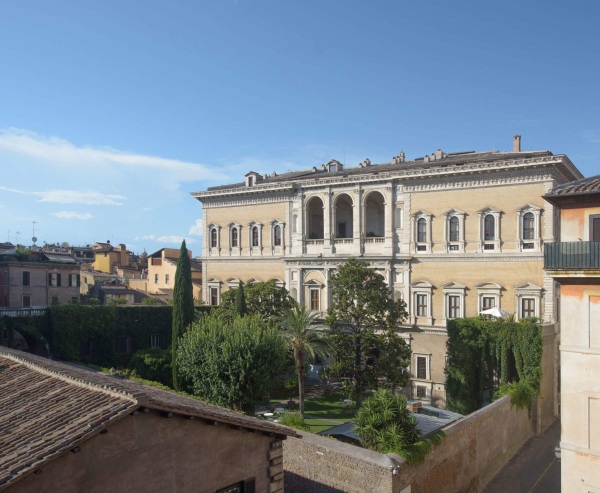
The facade of the Farnese Palace on the garden side at the end of the work. © Mauro Coen
Among the most emblematic elements are the few 300 lion heads which adorn the monumental cornice. All different, they required patient work of cleaning, consolidation and restoration in order to regain their original finesse. Made in the 16th century under the direction of Michelangelothey constitute one of the most remarkable signatures of the palace.
Cleaning the facings also brought back the original shades of the facades, where the white of the travertine, red bricks and ocher bricks alternate.
A scientific laboratory
The construction site does not end with the dismantling of the scaffolding. The numerous surveys, corings and samples taken during the work will now supply a vast research program led by the French School of Rome. “We are delighted to celebrate the completion of this long project and grateful for the opportunity that has been offered to us: to rediscover and study this emblematic monument once again.“, underlines its director, Brigitte Marin.
The analyzes should make it possible to update knowledge on the construction techniques of the palace and on the various restoration campaigns which have taken place over more than four centuries.
Andreas Solaro / AFP