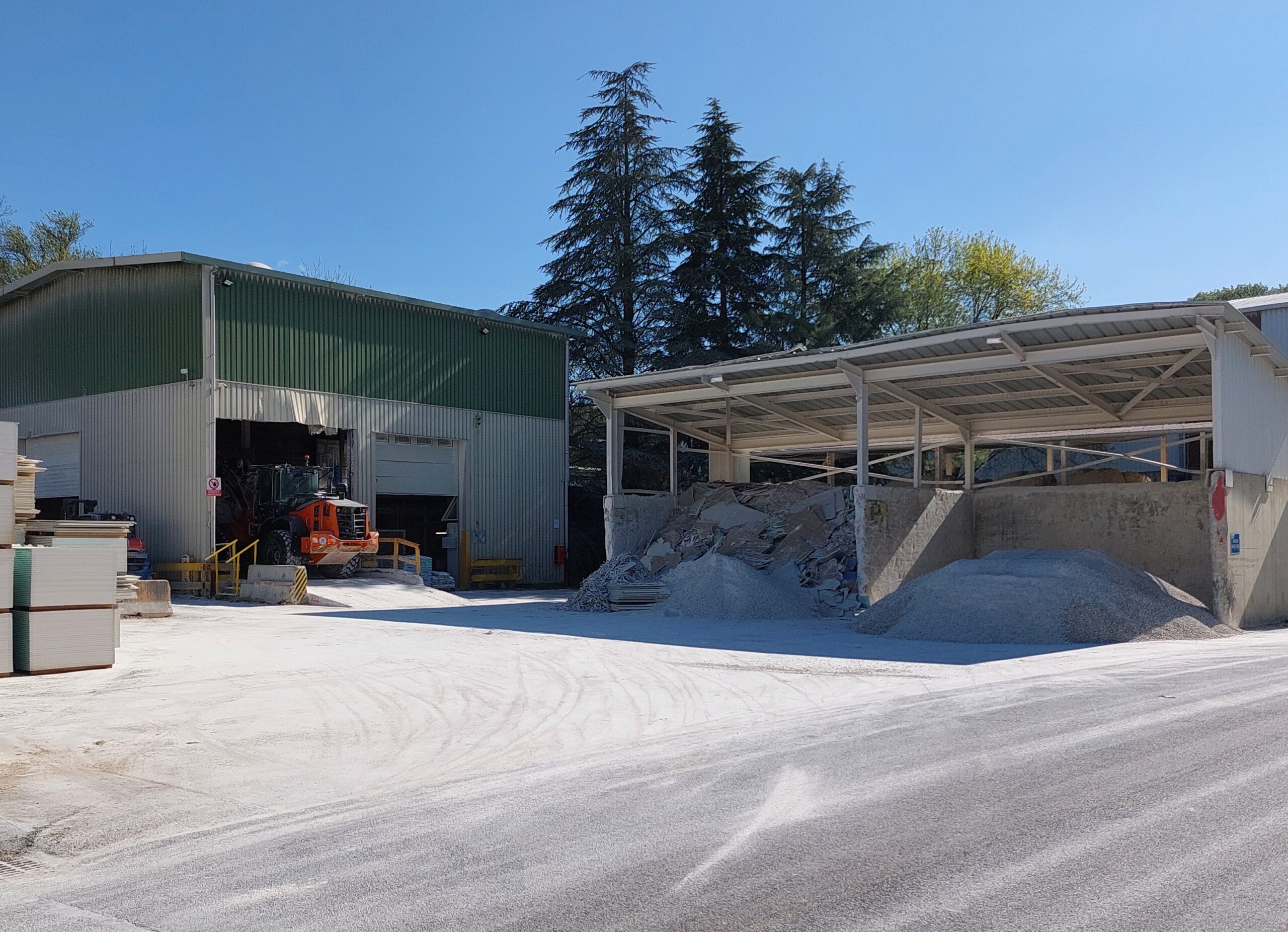
A pioneer in plaster recycling in France, the Placo factory in Chambéry (73) is today establishing itself as an industrial model for the entire construction industry.
Publi-Information 


There drywall has had a profound impact on the global construction industry since its appearance at the beginning of the 20th century: light, simple to install, resistant to humidity, fire and mold, while offering good insulation performance, the plasterboard has established itself as the most used material in the world for interior walls and ceilingsjust after the concrete. The question of recycling is therefore more than relevant.
This is good: the French cradle of plaster recycling is located in Chambéry (73), at the Placo factory – all Placo factories have their recycling workshops –, where 66,000 tonnes of plaster were recycled in 2025. As for the brand, it can boast of having recycled 147,000 in the same year tonnes of plasterboard from construction waste – out of the 237,000 collected in France –, which alone represents 62% of the estimated deposit of plaster waste in France !
Placo could then take up the credo of Saint-Gobain groupto which it belongs: “Making the World a Better Home” – or “make the world a better place”. In other words, in construction language: providing safe, healthy, durable and comfortable building solutions. A slogan certainly marketingbut which is not all words, words, words: 73% of the Group’s turnover – 46.5 billion in 2025 – is generated by sustainable solutions and the group is committed to achieving carbon neutrality by 2050 at the latest.
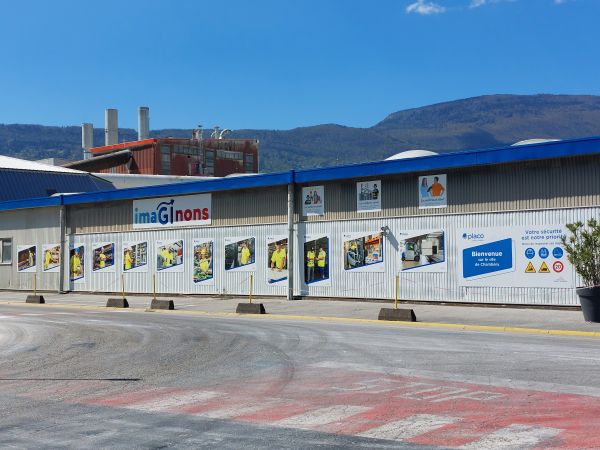
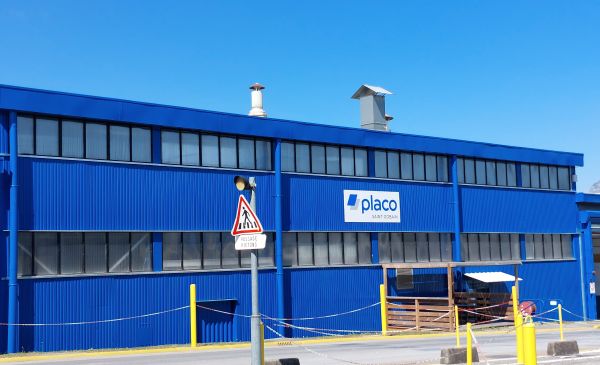
The Placo factory in Chambéry has been firmly established in the local fabric for 60 years, actively participating in local life. It has 160 employees and has no turnover – almost 99% of employees spend their entire career within the factory. This extends over 14 hectares, including 55,000m2 of buildings. It has a plasterboard manufacturing line – including the innovations Placo Infinaé 13 and Placo Infinaé 18 S, Placo Plume 13, the Placoplatre® BA 6 bendable board, etc. –; but also transformation workshops, including the Placo® Duo Tech complex and Rigitone® acoustic ceilings. 100 trucks pass through it daily. The site director is Erwan Allanic. © Laure Pophillat
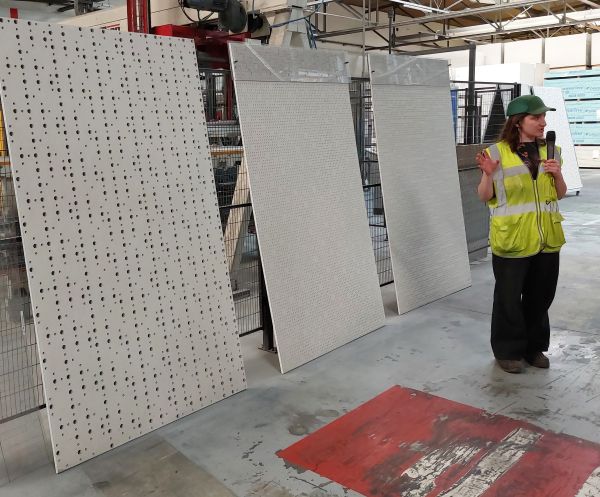
The Rigitone plasterboard developed by Placo, presented here, stands out as a high-end solution for decorative ceilings, often popular in ERP and tertiary buildings. It contains 30% recycled content, like all other ranges, and 50% of Rigitone is exported. Perforated and associated with an acoustic veil, the plate combines sound correction and aesthetic rendering, with a monolithic effect without visible joints that is particularly sought after. Its Activ’Air® technology also helps improve indoor air quality by neutralizing a significant portion of formaldehydes. Easy to install thanks to its beveled edges, the “edge” edge, it meets contemporary requirements for performance, design and user comfort. © Laure Pophillat
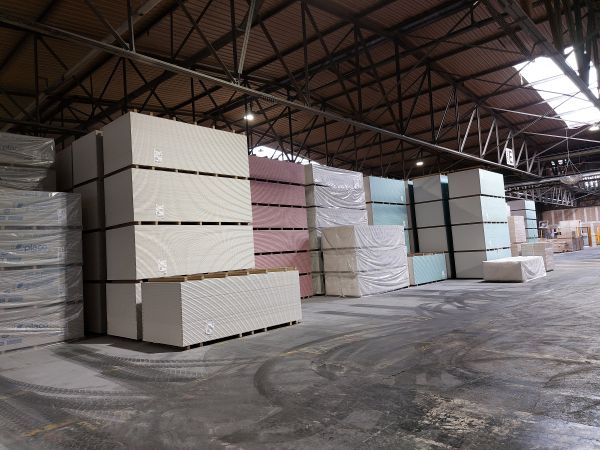
The production capacity is 38 million m2/year for plasterboard and 40% of Rigitone® acoustic ceilings over the last three years. The factory holds ISO 14001 and ISO 50001 certifications. It ships 33% of Placo plasterboard volumes, or 12% of the national market. © Laure Pophillat
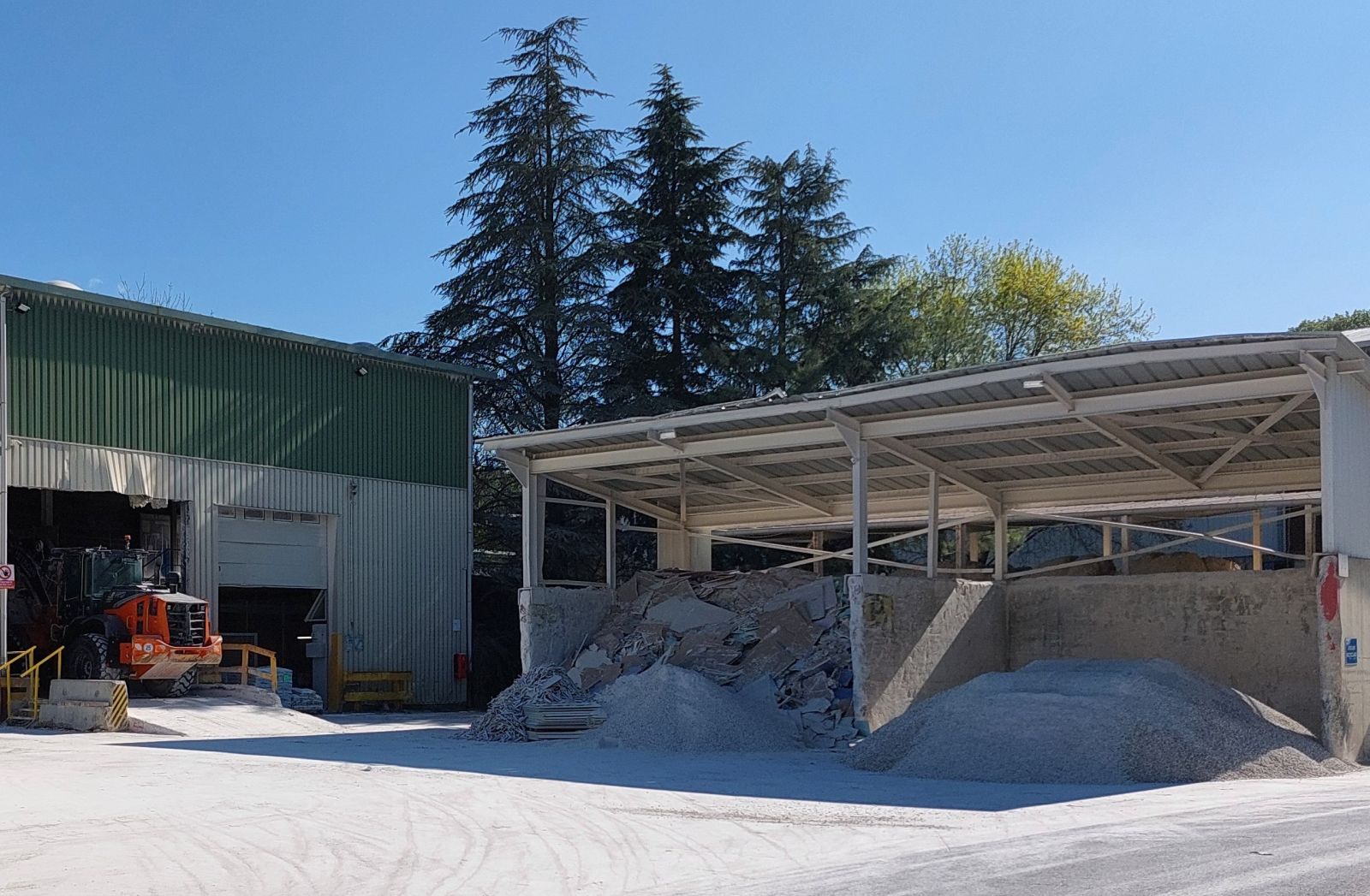
The Chambéry site draws on historical know-how in recycling plaster waste, with the first tests undertaken at the end of the 1980s. In 1994, it integrated a workshop dedicated to the recycling of its internal waste. This dynamic continued in 2008 with the launch, by Placo, of the first plaster recycling sector in France, Placo Recycling. A pioneer on this subject, the site has maintained a lead in the field. While the brand is aiming for an average of 30% recycled plaster in all of its boards by 2030, the Chambéry factory is quickly approaching this goal. In the space of two years, the share of recycled materials in its products has almost doubled, from 13% to 28% – internal and external recycling combined. © Laure Pophillat
Onward to decarbonization
Stories of gypsum and “flour”
Placo, in Francethere are seven gypsum quarries, four plaster industrial complexes, three plaster recycling workshops and, of course, a seat. THE gypsum used in the factory of the city of the Dukes of Savoy comes from the Saint-Jean-de-Maurienne gypsum quarryalso in Savoie. The idea for the factory is to also limit the carbon impact by optimizing the transport of gypsumtransported by train from said quarry, thus avoiding 45,000 trucks on the roads per year.
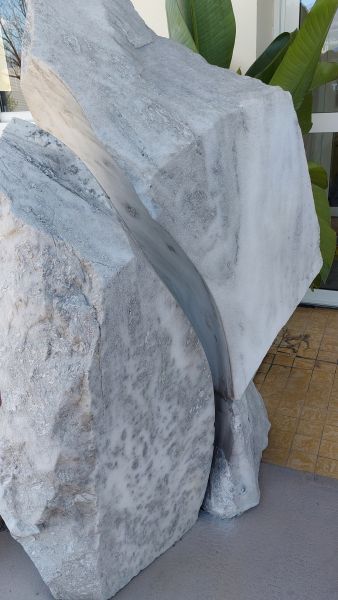
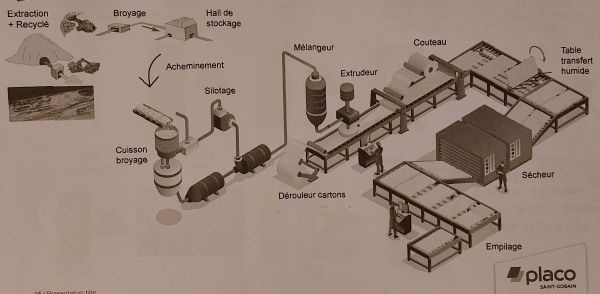
Gypsum (gypsum rock, in photo 1), a natural rock composed of hydrated calcium sulfate, is extracted in a quarry, then finely crushed before being heated during the operation called calcination, which eliminates part of its water and transforms it into plaster. This “flour” – powdered plaster – is then mixed with water and various additives in order to improve its properties. The paste obtained is poured continuously between two sheets of cardboard, thus forming a strip which is dried, cut and calibrated to produce plasterboards packaged in packs of 50. © Laure Pophillat / © Placo
THE plasterboard are manufactured in pouring a slurry of plaster onto cardboard paper packaged in reelsthen letting this layer dry before adding a second sheet of paper to form a “sandwich” structure. The plaster is then hardened, cut into panels, and then sent to drying ovens to reach the required humidity level. The entire drying process can take at least an hour, depending on how much water is still present in the plates.
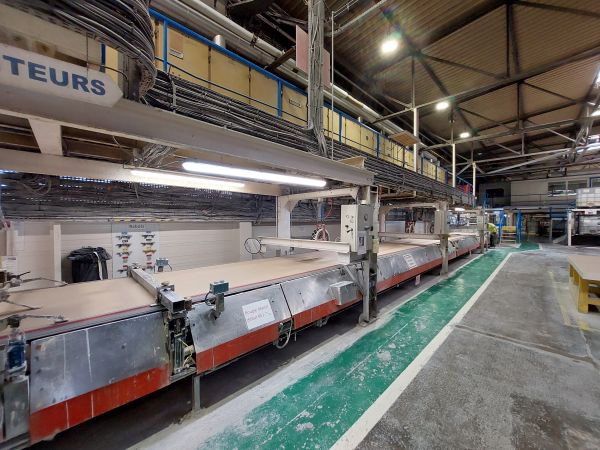
The drying line is a 200 m long chain on which the plasterboards dry in 3 m30. © Laure Pophillat
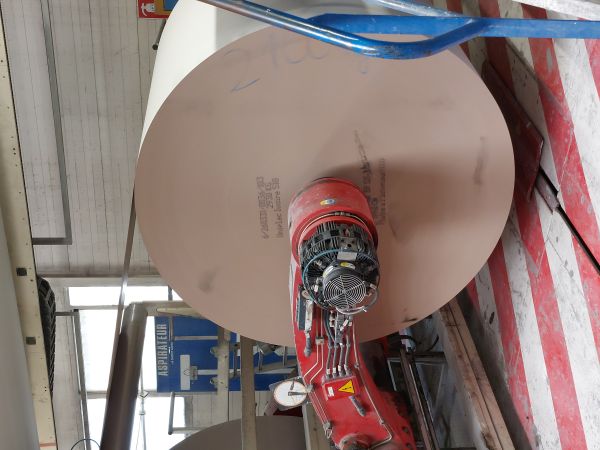
Cardboard reels. © Laure Pophillat
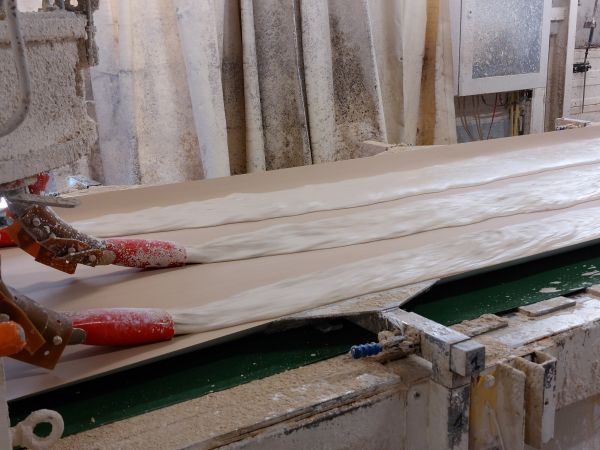
Pouring the “plaster paste”. © Laure Pophillat
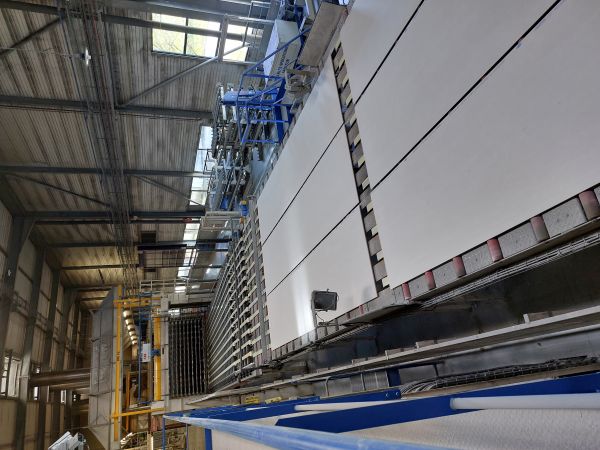
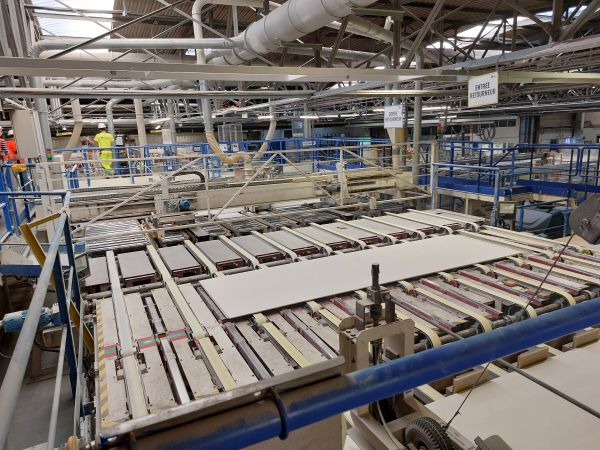
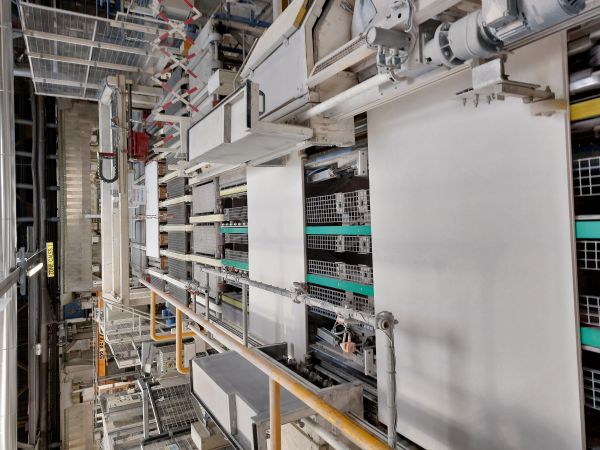
The plaster is then hardened, cut into panels, and then sent to drying ovens to reach the required humidity level. © Laure Pophillat
Save water
At the house of Placo, the desire to limit the use of resources as much as possible is not limited to the gypsum raw material alone, knowing that a plasterboard is produced from natural gypsum, recycled plaster and water… the Placo factory in Chambéry is therefore increasing initiatives to reduce its water consumption.
Since 2019, it has recovered 20,000 m each year3 of water from the condensates generated during the plate drying process, which represents a saving of approximately 15%. Furthermore, it also reduced the mixing rate – the mixing of water and gypsum – in the manufacturing of plasterboardallowing an additional saving of around 5% of water per year.
An accelerated industrial trajectory towards decarbonization
2030 objective: reduce carbon emissions by 50%
Ahead of industry standards, the Chambéry site has been capitalizing on waste heat recovery for 25 years. Thanks to an Air/Air circuit, the calories from processes exceeding 100°C are used to preheat the fresh and combustion air to around 75°C, whereas they were previously at ambient temperature. The key: a significant reduction in energy consumption and CO emissions2 and water samples.
Between 2017 and 2025, the factory has already reduced its carbon emissions by 10.5%. The objective is clear: exceed 50% reduction by 2030. To achieve this, the site is deploying a structuring investment program in three stages.
First lever: the installation of an exchanger on the chimney of the cooker grinder. Commissioned in March 2026, this equipment makes it possible to reuse waste heat in order to bring fresh air from the dryer to 110°C. The operation, costed at 3.5 million euros – including €880,000 in subsidies from ADEME – should generate a saving of 1,500 tonnes of CO2 per year.
Second axis: the recovery of waste heat for the benefit of the urban heating network, with commissioning targeted for 2027. Ultimately, the plant could cover 4% of the energy needs of the local network.
Finally, a 15 MW biomass boiler project is underway, with delivery expected in 2029. Powered by forest co-products – wood chips –, it will provide the crusher and dryer, making it possible to replace 51% of the natural gas currently used. The expected impact is major: nearly 19,000 tonnes of CO2 avoided each year.
And tomorrow?
The factory is also working on other projects in order to go further:
– the recovery of waste heat on the district heating circuit which will generate condensate, with an objective of reducing water withdrawals by an additional 12%;
– Recovery of rainwater from the roof, then reintroduced into the manufacturing process;
– The reuse of wastewater treated at the treatment plant in partnership with Grand Chambéry in order to make plasterboard.