
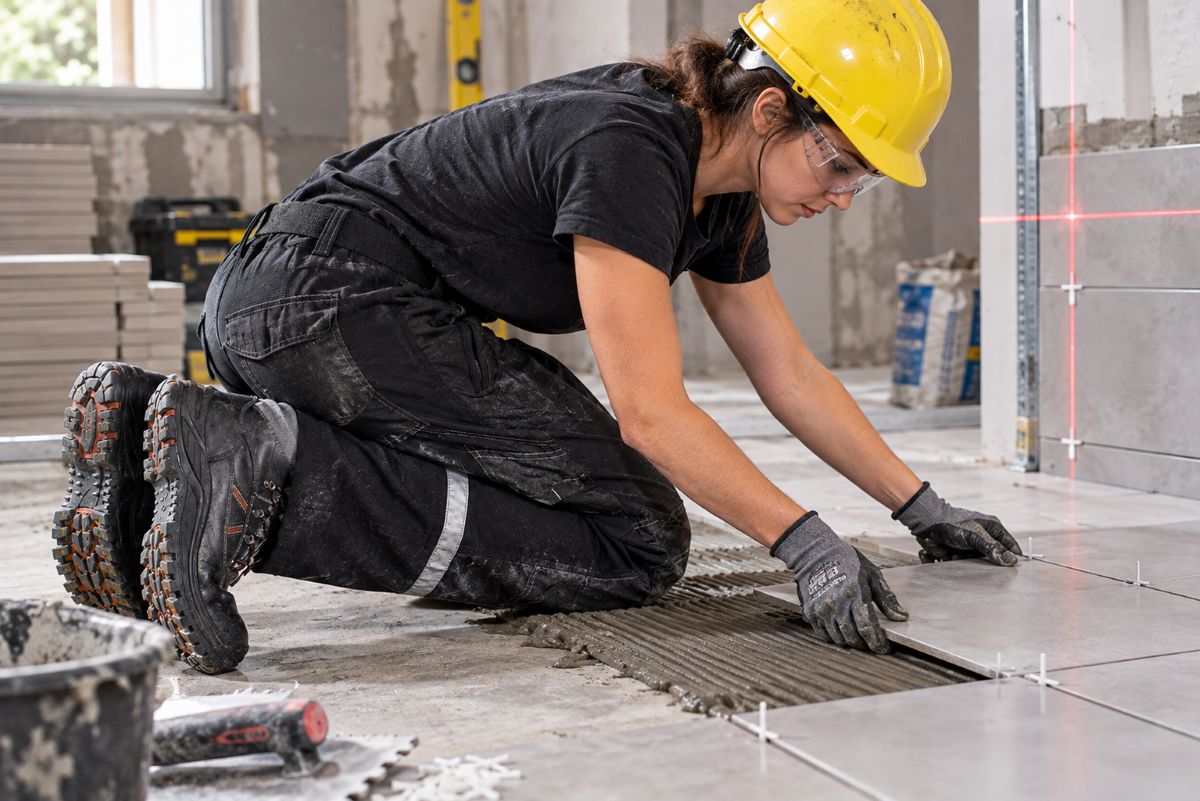
European controls reveal numerous non-compliances among safety shoes, while professional helmets show a more favorable record.

THE personal protective equipment, safety shoes and professional helmetss in this case, are supposed to constitute the first barrier to protect workers from the risks present on construction sitess, in workshops and more widely in workplaces. It is still necessary that the equipment sold actually fulfills the protective functions announced. However, the results of two test campaigns carried out on a European scale show that this is not always the case.
Said checks were carried out as part of the2025 edition of the “Joint Actions on Product Conformity” (JACOP) campaigncarried out in the European Union and EFTA countries, a cooperation aimed at harmonizing the practices of national market surveillance authorities – the European Commission finances and coordinates the operations, while the participating authorities pool their methods and results in order to strengthen controls in the single market. “Market surveillance campaigns help protect businesses from unfair competition and ensure that products sold in the single market are safe for consumers“, said Vanessa Capurso, project manager at DG GROW.
82% of safety shoes inspected are non-compliant
Market surveillance authorities have tested 83 models of safety shoes in eight countries: Cyprus, Germany, Luxembourg, Netherlands, Norway, Portugal, Spain and Sweden. 65% of purchases were made online and 35% in physical stores. By combining performance testing and review of accompanying product documents, 82% of shoes were found to be non-compliant.
The main failures directly concern the protection capabilities of this equipment. In particular, the authorities noted insufficient antistatic properties, as well as problems with impact and puncture resistance. In other words, some products presented as safety shoes did not properly perform the functions for which they were intended.
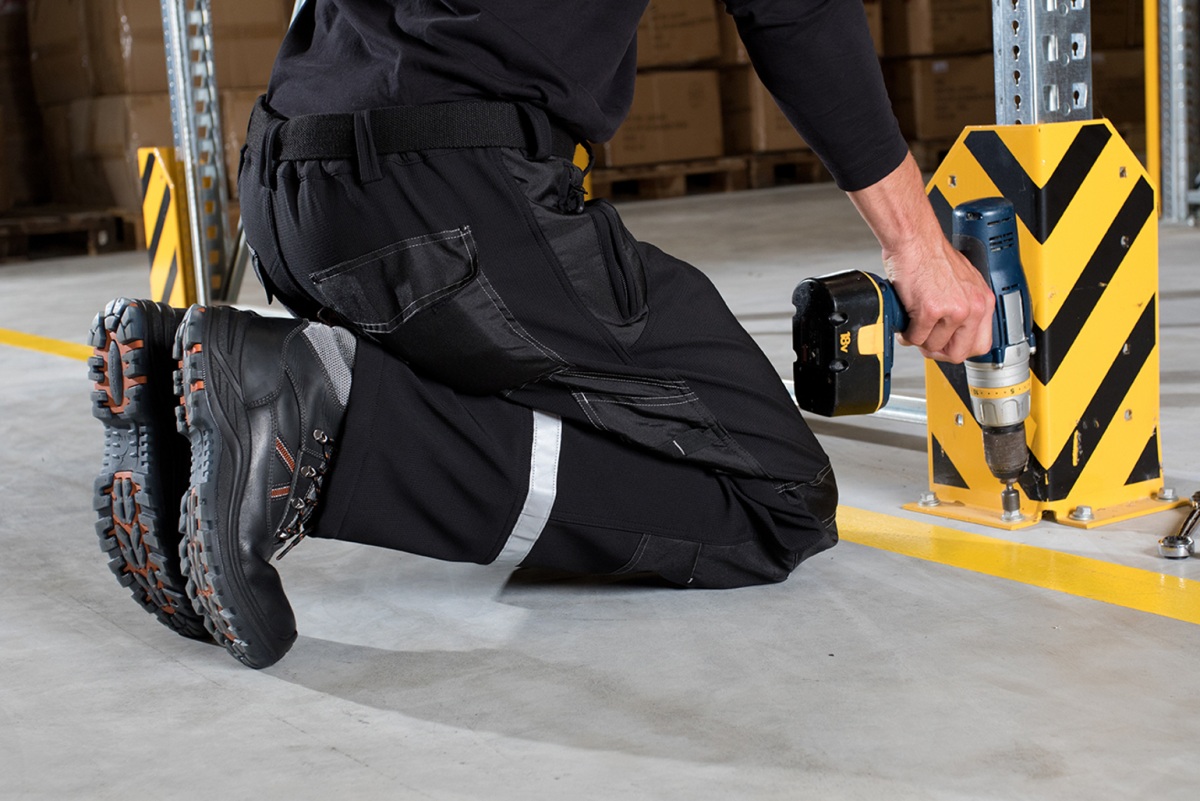
The checks also revealed numerous more formal irregularities. Some shoes were accompanied by missing, unclear or non-compliant instructions for use. In other cases, the protection category or the EU declaration of conformity was incorrect or missing. The CE marking could also be absent or not indelibly affixed. © JACOP
The controls have already led to several measures:
– the sale or marketing of 24 models was prohibited;
– Fifteen economic operators received warnings or fines;
– Four models have been recalled.
Certain online sales platforms have also been asked to withdraw the affected products. In one case, an economic operator was fined 7,000 euros for having marketed shoes whose protective characteristics did not correspond to the performances highlighted in its advertising materials. He was also ordered to remove the product from his website.
Professional headsets show a more favorable outcome
The finding is significantly different for professional safety helmets since of the 65 models tested, 46, or 71%, met the controlled requirements. However, nineteen samples, representing 29% of the total, did not meet the criteria.
The tests focused on several essential characteristics: shock absorption, penetration resistance, flame resistance, effectiveness of the chinstrap fixing system, but also durability of the markings and labels. The shock absorption and penetration resistance tests were notably carried out after having subject the helmets to different conditions likely to degrade their performancesuch as extreme temperatures, immersion in water and aging under ultraviolet radiation. The main weakness noted concerns shock absorption.

The 65 helmets were taken from eight countries: Belgium, Cyprus, Germany, Greece, Ireland, the Netherlands, Spain and Sweden. Unlike the shoe campaign, the information provided here does not distinguish the proportion of purchases made online and in store. © JACOP
THE failures observed on helmets were not considered harmless in all cases. Eight products were classified as serious risk and four others as high risk. Market surveillance authorities withdrew six products from the market, recalled two products from consumers and banned the sale of another. Seven warnings were also issued to economic operators, while other corrective measures are still underway.
Eight products have also been listed in Safety Gate, the European rapid alert system dedicated to dangerous non-food products. Thirty-nine were registered in ICSMS, the information and communications system used by European authorities to exchange information on market surveillance and measures taken.
CE marking alone is not enough
For the professionals who purchase PPEthe results of these controls remind us of the importance of do not limit yourself to the apparent presence of a CE marking. Indeed, users must above all check that the level of protection corresponds to the risks to which they are exposed. The instructions should be consulted and the information supplied with the equipment checked. For the helmets, the EU declaration of conformity must be attached to the product or accessible at the Internet address mentioned in the instructions. THE CE marking must also be present and correctly affixed.
The European authorities also recommend being wary of vague or excessive commercial arguments and checking, before use, whether a product has been the subject of an report or recall in Safety Gate.
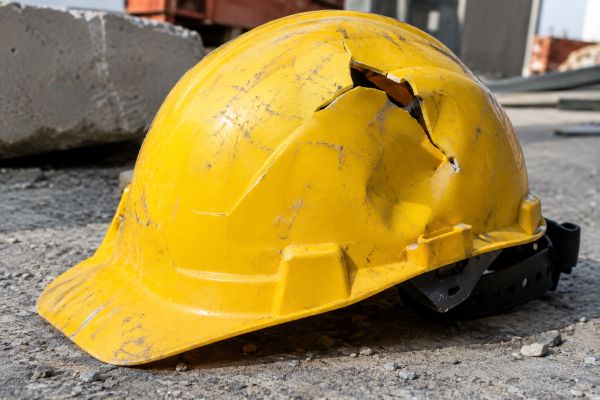
A particular rule concerns helmets: after an impact, equipment must be replaced even if no damage is visible to the naked eye. © IA / Laure Pophillat
Manufacturers and distributors directly concerned
THE manufacturers and economic operators who place PPE on the European market must respect the Regulation (EU) 2016/425 relating to personal protective equipmentas well as the applicable harmonized standards. This includes having complete technical documentation, providing instructions and accurate safety information, complying with marking requirements and ensuring consistency between the products actually manufactured and the models that have been certified.
Commercial information must also correspond to the level of protection actually provided by the equipment. A product presented as offering particular protection must actually be capable of providing it. Economic operators must also ensure that the name and contact details of a responsible person established within the EU or EEA appear on the product, in accordance with applicable requirements.
In case of non-compliancethe consequences can be serious: ban on sale, withdrawal from the market, recall from consumers, fines or even liability actions. Dangerous or non-compliant equipment may also be blocked at customs.