
Innovation between tradition and new technologies
The initiative was also born with the aim of enhancing a supply chain that combines innovation and responsibility, strengthening a development model based on the regeneration of heritage and the reduction of land consumption. In this context, sustainable restoration represents a strategic terrain in which scientific research, experimentation and advanced technical skills come together, as demonstrated by institutions of excellence such as the Central Institute for Restoration and the Opificio delle Pietre Dure.
Many of the most effective solutions identified in the report derive from a contemporary reinterpretation of traditional construction intelligence, typical of Mediterranean architecture. At the same time, advanced technologies such as biotechnologies applied to biocleaning are becoming established, which allow for less invasive and safer interventions for operators and the environment, thanks to the use of microorganisms and enzymes for the selective removal of deposits.
Nanotechnologies are also making a significant contribution to the sustainable regeneration of historic heritage. Among the most significant innovations are mortars and materials based on geopolymers, alternatives with less impact than traditional cement, as well as protective treatments capable of counteracting degradation, pollution and climate variations. Some products are also capable of absorbing pollutants present in the air, improving environmental quality.
Energy efficiency and system solutions
A central theme is that of rising damp, one of the main critical issues of masonry buildings, which in addition to compromising the decorative systems, negatively affects energy performance. The report highlights how several Italian companies have developed more sustainable solutions compared to traditional techniques, such as electrophysical and electrokinetic systems or non-invasive devices that regulate the electromagnetic fields of the walls, preventing the water from rising and encouraging its return to the ground.
The transition also involves plant engineering: hybrid systems and renewable sources are spreading, in particular heat pumps that exploit natural resources such as air, water and soil. At the same time, the lighting redevelopment through LEDs, smart systems and light monitoring allows the energy consumption of the historical heritage to be significantly reduced.
An increasingly strategic role is played by diagnostic technologies, which allow the state of conservation of buildings to be monitored in real time and their deterioration to be predicted. Sensors applied to materials allow timely, targeted and less invasive interventions, optimizing costs and times.
The declarations: culture, innovation and green transition
“The strength of our economy and of Made in Italy owes a lot – declares Ermete Realacci, President of the Symbola Foundation – to culture and beauty. More than in other countries. Culture and creativity, in addition to enriching our identity and fueling demand for Italy in the world, can help us face together the difficult challenges we face. The report by the Symbola Foundation and Fassa Bortolo tells us that innovating in green restoration means facing a double challenge, cultural and environmental. It means preserving the identity of places and, at the same time, making them more efficient and resilient. Our country represents an important laboratory of restoration technologies and skills. Italy has the energy to overcome the crisis we are going through and this is demonstrated by the virtuous and innovative realities, described in the report, which are the best answer to build together – as stated in the Assisi Manifesto – an economy and a society more on a human scale and therefore more capable of the future”.
“The theme of building redevelopment is destined to become increasingly central – then declares Alessandro Trivillin, President and CEO of the Fassa Bortolo Group – in contemporary construction, both for the recovery of a unique historical heritage and for energy optimization and reduction of land consumption. For us at Fassa Bortolo this awareness has translated, for decades now, into a concrete commitment to promoting good practices that can be a stimulus for the entire sector, thanks also to precious collaborations such as the one with the Symbola Foundation. In parallel with awareness-raising activities, we constantly invest in research and innovation to develop solutions that actively contribute to this transformation: products with a lower carbon footprint, more compatible and less polluting materials such as lime, systems for energy requalification. Our goal is to continue to increasingly raise the bar of quality”.
Finally, Andrea Griletto, Director of Assorestauro, declares: “The report highlights how the historic built heritage can concretely contribute to the ecological transition and the achievement of the objectives of the 2030 Agenda. The experiences collected demonstrate that restoration can integrate protection, innovation and energy efficiency, reducing the environmental impact of historic buildings. For this reason, it is essential to develop intervention models and environmental and energy policies dedicated to the existing heritage, specifically the protected one. As Assorestauro we are committed to promoting discussion, direction and consultation between the restoration chain, institutions and research bodies”.
The 100 stories told
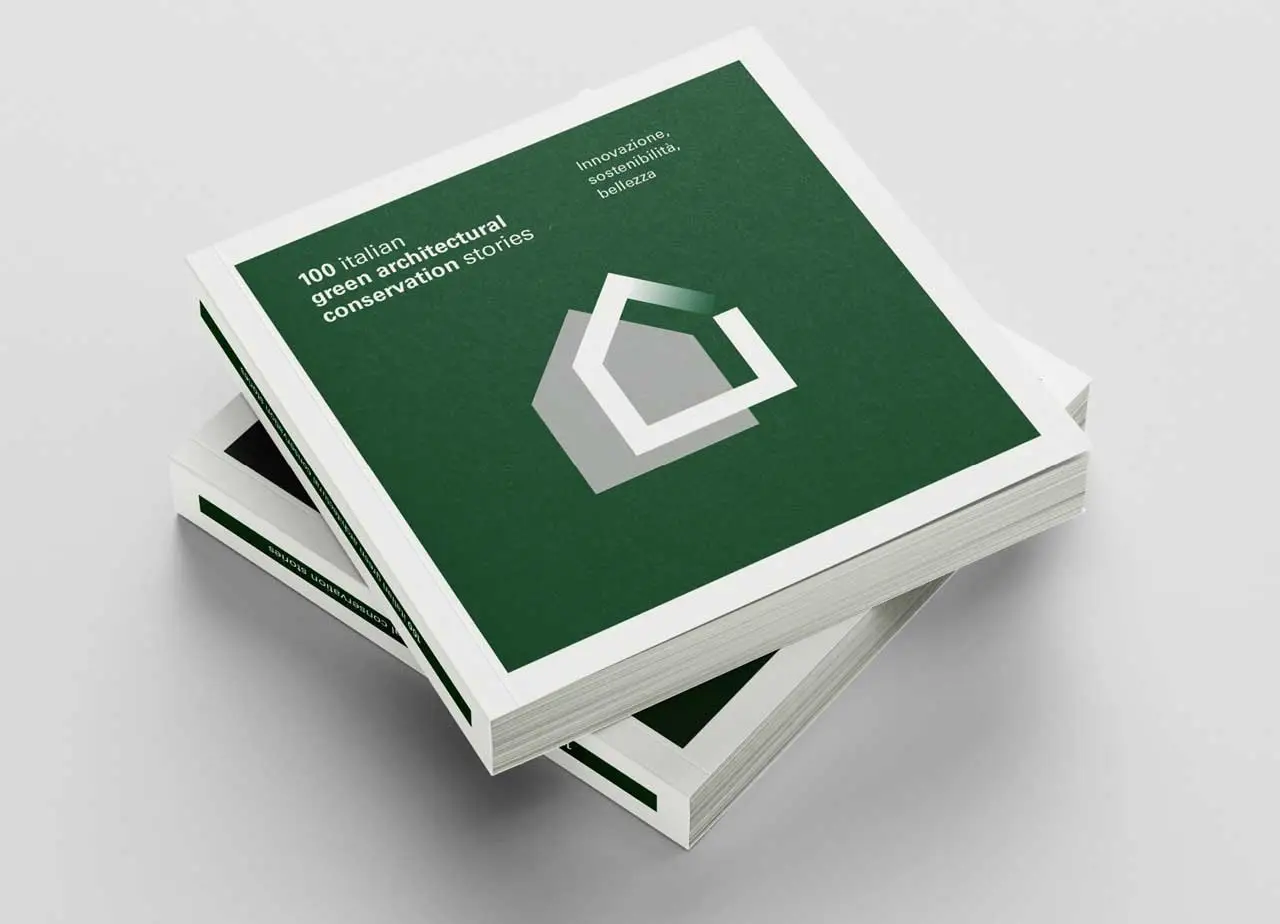
Here is a list of the 100 stories told in the Report by Fassa Bortolo and the Symbola Foundation, in partnership with Assorestauro and the Brescia Chamber of Commerce, with the patronage of the Ministry of Culture:
- CERTIFICATIONS: CasaClima – South Tyrol Energy Agency | Wood Wood Consortium | GBC Italy | GreeningLab – Planex
- DIAGNOSTICS AND MONITORING: CMR LAB | LADC – Polytechnic Milan | LegnoDOC
- PLANT ENGINEERING: Aermec | Artemis | DZ Engineering | Enel | Exenia | Gewiss | Hera Luce | iGuzzini | Olimpia splendid | RBM | TEON | Thermodif IC | Thermoeasy | Umbra Control
- INSULATION AND FINISHES: Biopietra | F&F Restorations | Bozzarelli Carpentry | PM Windows and Doors | Ton Group
- MATERIALS: 4ward 360 | August Nanotherm | Azichem | BIOmat Hemp | Brebey | Brenta | Calchera San Giorgio | CIR – Italian Restoration Chemistry | CTS | CVR | Diasen | Dyaqua | FIBER NET | Gavazzi Technical Fabrics | Industrie Cotto Possagno | KIMIA | Brenta Lime | Lab4Green | Mapei | Natural Calk – Arts and Crafts | Oltremateria – Ecomat | Bio Aedilitia factory | Politect | Renner Italy | Ricehouse | Röfix Italy | Senini | Siltea | Snaptech | Spring Color | Tassullo | Tecnova Group
- DESIGN: Archliving | B5 | Binary Lab | By Vincenzo Dino & C. | Edilsystem | Ermentini Architetti | Fratelli Navarra – Italiana Costruzioni | Giovanni Vaccarini Architects | Guicciardini & Magni Architetti | Lithos | Masters | Mario Cucinella Architects | Blu Architetti Associati shop | Piraccini+Powerful Architecture | Setten Genesio | SPC Engineering | Studio Berlucchi | Studio Leonardo | PROMOTION: Assorestauro | Brescia Chamber of Commerce | FAI – Italian Environment Fund | SIC Italia – Sustainability in Conservation
- RESEARCH: Center of Cultural Heritage Technology of the Italian Institute of Technology – IIT | CETMA – Center for Research and Technological Innovation | CIRI – Building and Construction University of Bologna | DAda Lab | Department of Chemistry and Industrial Chemistry – University of Pisa | Department of Biological, Geological and Environmental Sciences – University of Catania | DTC Lazio – Technological District, Cultural Heritage and Activities | ENEA | Eurac Research | Foundation Center for the Conservation and Restoration of Cultural Heritage “La Venaria Reale” | ISPC CNR Institute of Cultural Heritage Sciences | Central Institute for Restoration | RSE – Energy System Research | TekneHub – University of Ferrara
- TECHNOLOGIES: ACCA Software | Athena | El.En. Electronic Engineering | IBIX | Leonardo Solutions – Domodry | Vimar