
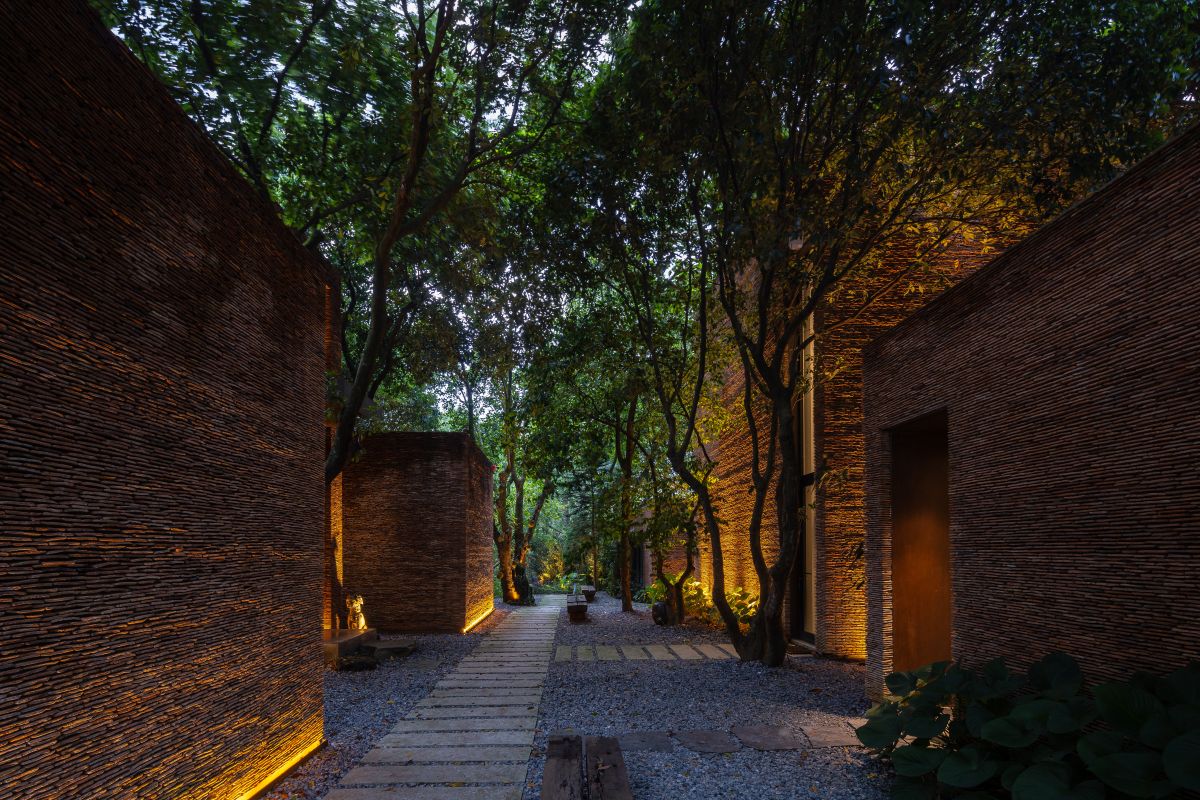
Reuse, low carbon, climate comfort and constructive innovation: the winners of the BRICK AWARD 2026 demonstrate that brick and ceramic remain at the heart of the most ambitious architecture of the moment.

From a Vietnamese temple built from millions of tiles reused to a Mexican distillery set in a volcanic landscape, passing through bioclimatic social housing in Barcelona, the winners of the BRICK AWARD 2026 demonstrate that the brick and ceramic remain leading materials. Gathered in Vienna on the occasion of the ceremony organized by Wienerberger, architects and designers from around the world have been rewarded for their ability to combine innovation, environmental performance and architectural quality.
Awarded every two years since 2004, the BRICK AWARD has established itself as one of the most prestigious international distinctions devoted tobrick and ceramic architecture. Independent of manufacturers, the competition rewards achievements that push the limits of these materials while responding to the challenges of sustainability, climate resilience and use.
Brick confirms its place in the architecture of tomorrow
For Heimo Scheuch, CEO of Wienerberger AG, the projects awarded this year illustrate the ability of ceramic materials to meet current challenges in the sector : “mEven after more than 30 years of career in this sector, I remain fascinated by the incredible capacity for innovation which takes the use of brick and ceramics to new heights. Tonight’s winners demonstrate the versatility of these timeless materials, capable of meeting the most pressing needs linked to climate change and contemporary lifestyles, while sparking a sense of wonder and beauty in those who encounter these buildings every day“.
The winners were selected from fifty projects from twenty-one countries by an international jury made up of recognized figures from the world of architecture and design. The evaluation criteria included:
– architectural innovation;
– Mastery of materials;
– Aesthetic quality;
– Environmental performance;
– Climate resilience;
– And, finally, the ability of projects to meet the needs of their users.
Beyond the financial reward – €7,000 for the Grand Prize and €5,000 for the category winners – the distinguished projects now join Brick Book 26, a reference publication which brings together the the most inspiring achievements of contemporary architecture in brick and ceramic.
A Vietnamese temple wins the Grand Prize thanks to six million reused tiles
THE Grand Prize of the BRICK AWARD 2026 was awarded to the Temple and Museum Dao Mau, made in Soc Son, Vietnamby the ARB Architects firm for the artist Xuân Hinh. Already awarded in the “Sharing public space” category, this 5,000 m project2 won over the jury with its ability to combine cultural heritage, constructive innovation and environmental exemplarity.
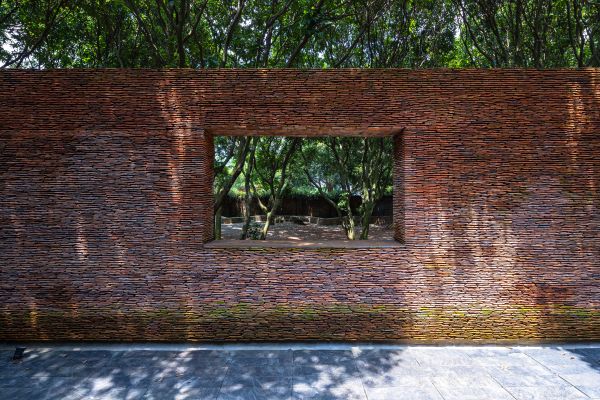
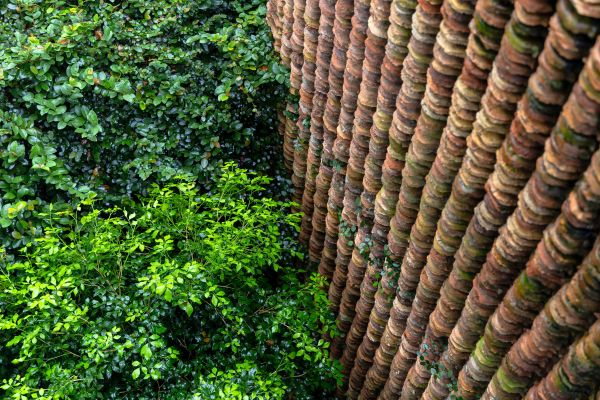
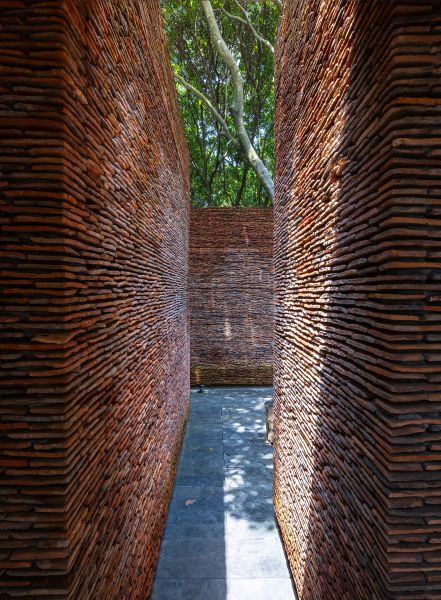
The project is based in particular on a large-scale reuse approach. Nearly six million terracotta tiles from more than 500 local homes were recovered and then integrated into the work, making it possible to create a building with a negative carbon footprint while establishing a direct link with the history and inhabitants of the area. ©Trieu Dog
The architecture draws on Vietnamese spiritual traditions while offering contemporary uses, in a composition that combines vernacular materials, work with light and landscape integration.
In Majorca, a brick house transforms the constraints of the site into an architectural asset
In the “Feeling at home” category, the prize was awarded to Ca na Birgit, a detached house designed by TEd’A Arquitectes on the cliffs of Ses Penyes Rotgeswest of Majorca.
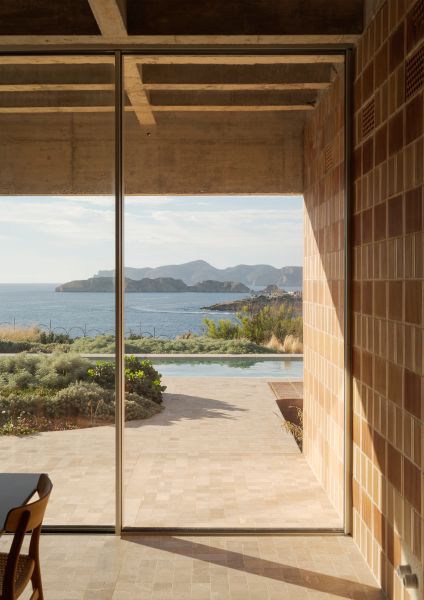
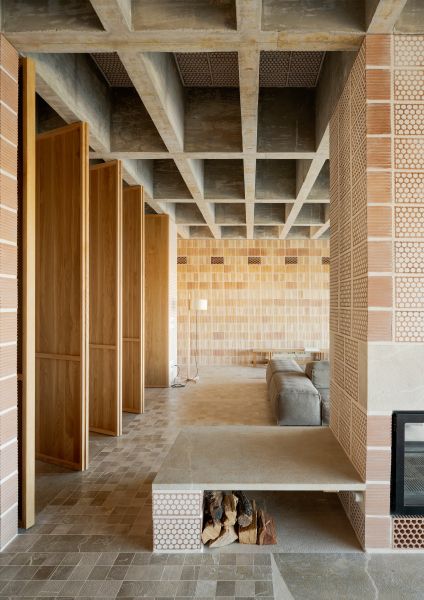
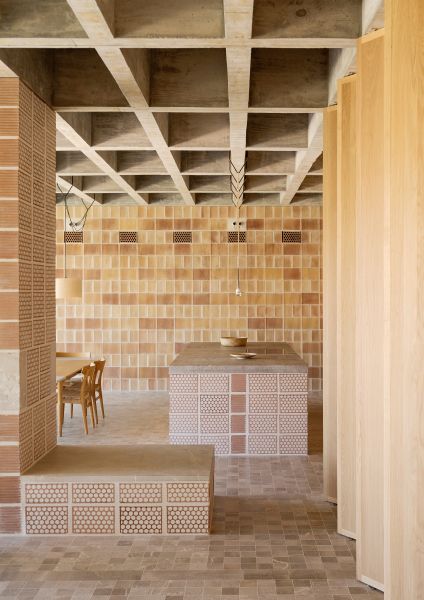
With a surface area of 194 m2this achievement illustrates a particularly intelligent use of local brick. The main challenge was to offer occupants a clear view of the Mediterranean while preserving their privacy from neighboring properties. © Luis Diaz Diaz
The architects responded to the constraint – offering an unobstructed view while preserving privacy – by designing two massive parallel walls which frame the maritime landscape while protecting the living spaces from outside views. This seemingly simple solution actually constitutes the very foundation of the architectural project and also contributes to its climatic performance.
Bioclimatic social housing rewarded in Barcelona
The “Living together” category distinguished a mixed building of 54 social rental housing units designed in Barcelona by the Peris+Toral Arquitectes firm.
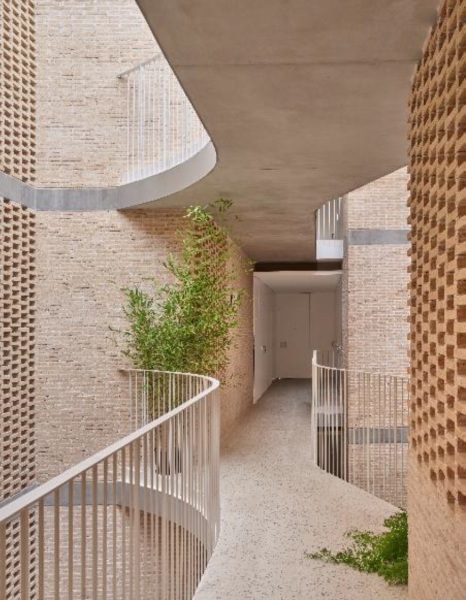
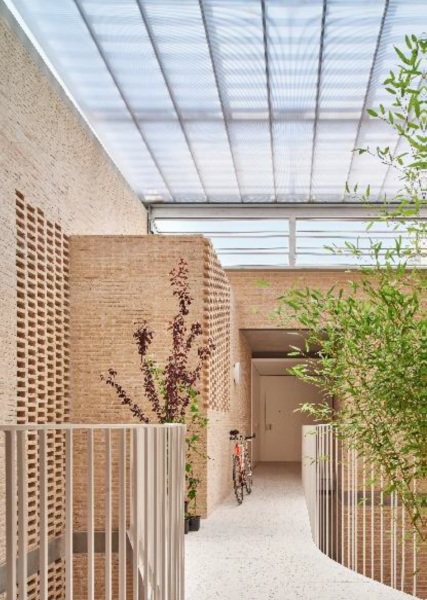
This project stands out for the creation of a bioclimatic “social atrium” connecting the apartments to the common spaces located on the ground floor. This spatial organization promotes both exchanges between residents and the natural regulation of temperatures. © Jose Hevia
There brick used for facades, produced from biomasscontributes directly to the thermal comfort of the building. Thanks to its inertia, it helps maintain heat in winter while limiting summer overheating, thus reducing energy needs linked to heating and cooling.
A Mexican distillery that merges with its volcanic landscape
In the “Working Together” category, the jury awarded La Hacienda Jalisco, a set of offices and warehouses designed by ATELIER ARS for tequila producer Clase Azul.
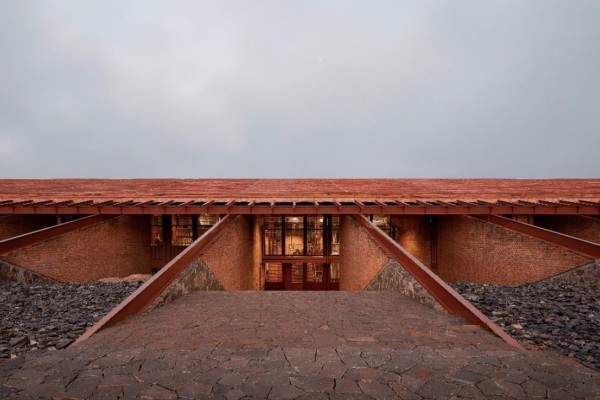
The project relies largely on the resources available on the site. The architects integrated local ceramics into the construction as well as stones taken directly from the excavation of the land. © Cesar Bejar
The roof constitutes one of the most remarkable elements of the operation: covered with traditional terracotta elements, it creates what the designers describe as a true “ceramic horizon”. This envelope visually anchors the building in its volcanic environment while creating continuity between the architecture and the natural relief.
When brick becomes a large-scale field of experimentation
The “Building outside the box” prize was awarded to Endless Brick Playground, an atypical project developed at the Chinese Academy of Arts in Hangzhou.
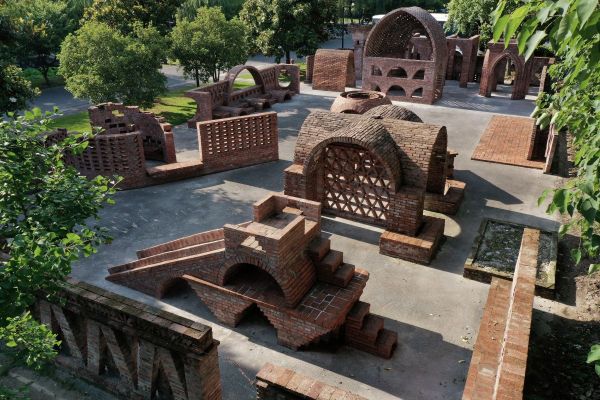
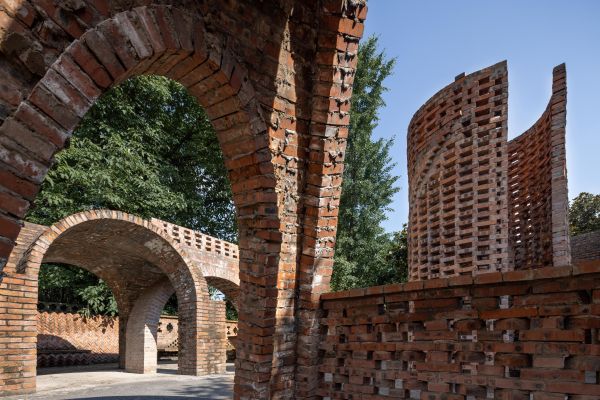
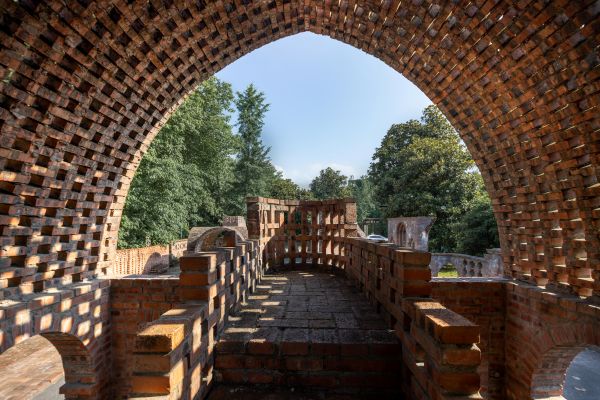
For more than ten years, first-year architecture students have been experimenting with the structural and formal possibilities of red brick. For five weeks, they must design and build a structure using exclusively this material. © China Academy of Art
Between 2014 and 2024, nearly 80 students participated in this educational adventure which resulted in the creation of 48 works. Certain constructions are deliberately dismantled each year to make room for new experiments. At the end of 2024, twenty-six structures remained on the site, revealing a remarkable diversity of shapes, volumes and constructive approaches.
A Belgian district rewarded for its approach to reuse
The jury also awarded a Special Prize to a shared housing project developed in Kortrijk, Belgium.
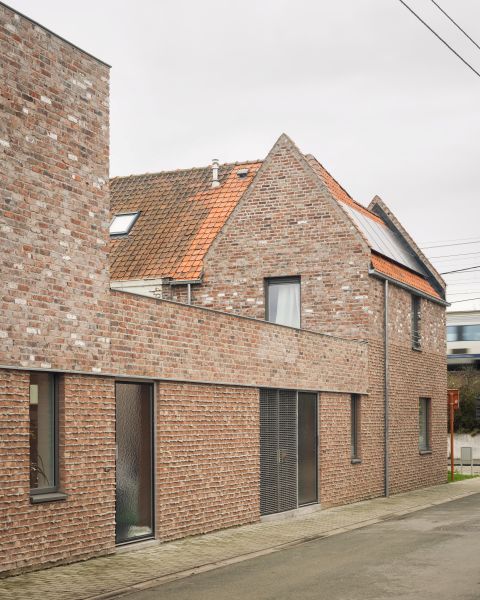
Called MAKER, this operation transforms a set of 54 housing units into a contemporary garden city promoting social interactions and contact with nature. The approach is largely based on the reuse of materials: recovered bricks and tiles make up the facades and contribute to the architectural identity of the district. © Stijn Bollaert
Beyond environmental performance, the project intends to demonstrate that materials from reuse can become a real lever for architectural and urban quality.
© Trieu Chen