
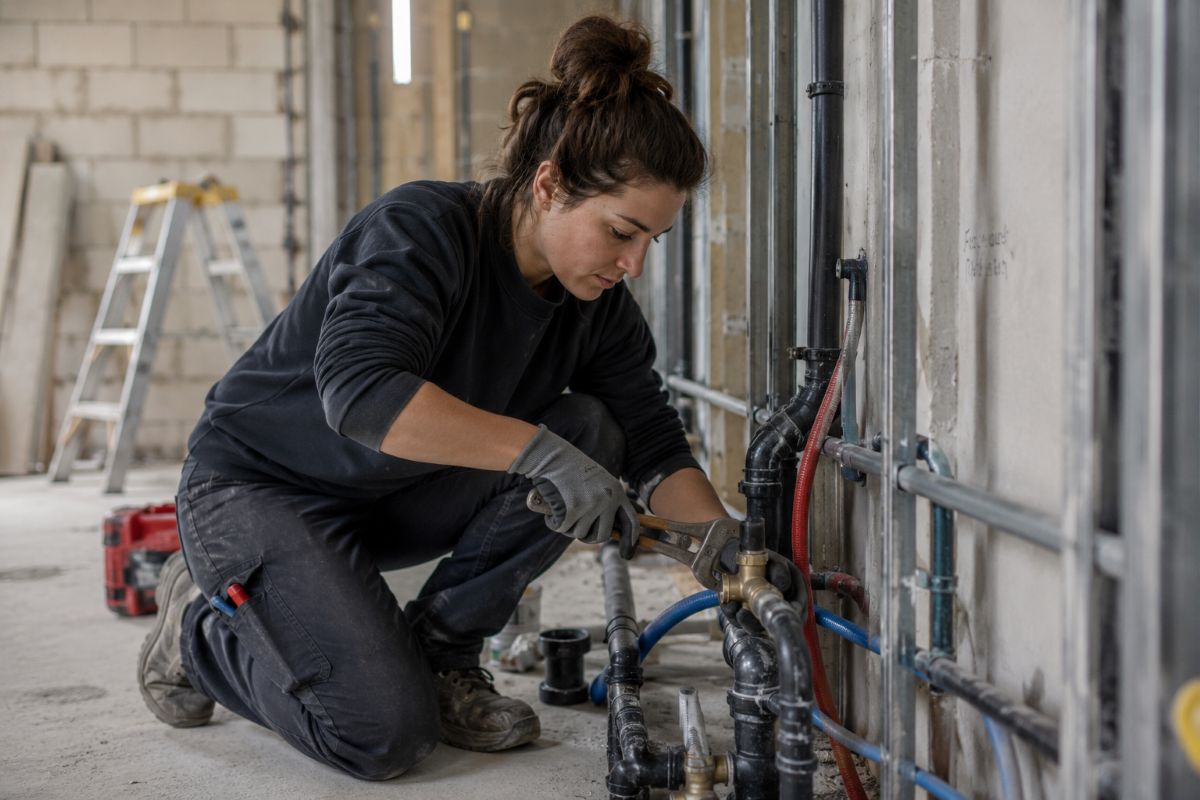
A round table organized by the École Gustave highlights the stereotypes, sexist behaviors and recruitment difficulties which continue to hinder diversity in the sector.

If the feminization of construction progresseswomen today represent only 12% of employees in the sector, and only 2% of people present on construction sites. A paradox while the BTP still struggles to recruit and that companies increase initiatives in order to attract new profiles.
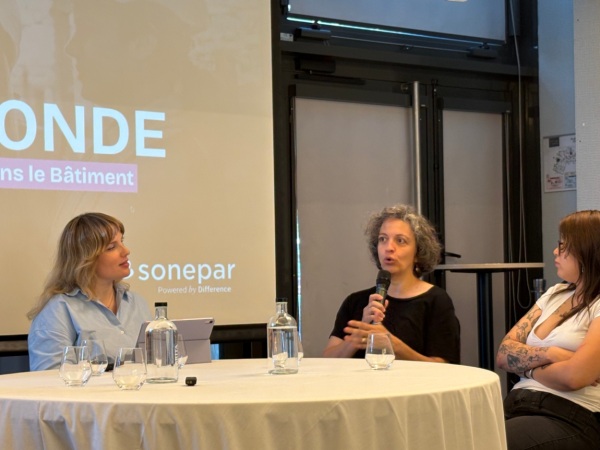
The subject was at the heart of a round table organized in June by the École Gustave, a training school for construction professions financed by France Travail. Around the table, representatives of VINCI Energies and Sonepar, a construction company manager, a trainer and an apprentice electrician compared their experiences with those of institutional and associative players, including France Travail. © Gustave School
Beyond the figures, the testimonies above all highlighted the persistence of mechanisms which still dissuade certain women from engaging in the construction professions :
– stereotypes about physical strength;
– Questioning technical skills;
– Sexist remarks;
– Difficulties finding their place on construction sites;
– Or even lack of female role models to identify with.
Gender stereotypes remain anchored in construction
The idea that the construction professions would require above all physical strength remains one of the main obstacles to the feminization of the sector. This representation continues to keep women out of certain technical professionseven though the skills mobilized on construction sites also rely on mastery of tools, precision, knowledge of standards, ability to solve problems and professional experience.
THE women must also deal with a form of suspicion regarding their skills. Where a man will spontaneously be considered competent until proven otherwise, some professionals explain that they have to demonstrate their legitimacy more, including when they occupy technical positions or run their own business.
The testimony of Leslie Garcia, apprentice electrician, illustrated this reality in a particularly concrete way. She recounted remarks made by one of her former tutors, who sought to dissuade her from pursuing this path because of her gender: “he told me: it’s better that you change path, because you are not capable, you are a woman“, she reports. Since then,The situation was taken care of by her company, which supported her in the face of this behavior and dismissed the tutor concerned. An example which also shows the importance of role played by employers when sexist behavior is reported.
On construction sites, women must still earn their legitimacy
One of the most ordinary forms of this exclusion lies in theinvisibilization. On a construction site or during a professional exchange, certain interlocutors continue to spontaneously address a male colleague rather than a female technician or business manager who is directly responsible for the subject discussed. These behaviors, sometimes trivialized because they take the form of reflexes or supposedly innocuous remarks, contribute to maintain the idea that technical skills remain predominantly male. They also constitute a barrier to customer loyalty. women in construction professions, even as companies seek to expand their recruitment pool.
Generational renewal will not necessarily be enough to make these practices disappear. Arnaud Bidet, head of human resources at VINCI Energies, warned against the idea that behaviors would change mechanically with the arrival of younger generations. “I’m a little afraid that we can’t focus solely on generational change“, he explained, referring in particular to the progression of masculinist discourse among part of the younger generations. For companies, the responsibility is therefore also to build a professional framework in which sexist behavior cannot take hold and even less become trivialized.
Training, the first lever for changing mentalities
In this context, training organizations have a role to play because they can intervene from the moment they enter the profession in order to support women who are retraining, but also to change the representations of male learners. At the Gustave School, Olga Alexandre, trainer, notably supports the women who choose a retraining in construction. Her own background and experience serve as a point of support for female learners, who can thus project themselves more easily into professions still largely associated with a masculine world.
Support also involves raising awareness among all students about respecting people on construction sites. Because the diversity cannot be based solely on the ability of women to adapt to a professional environment historically designed by and for men. It also assumes that collective practices evolve.
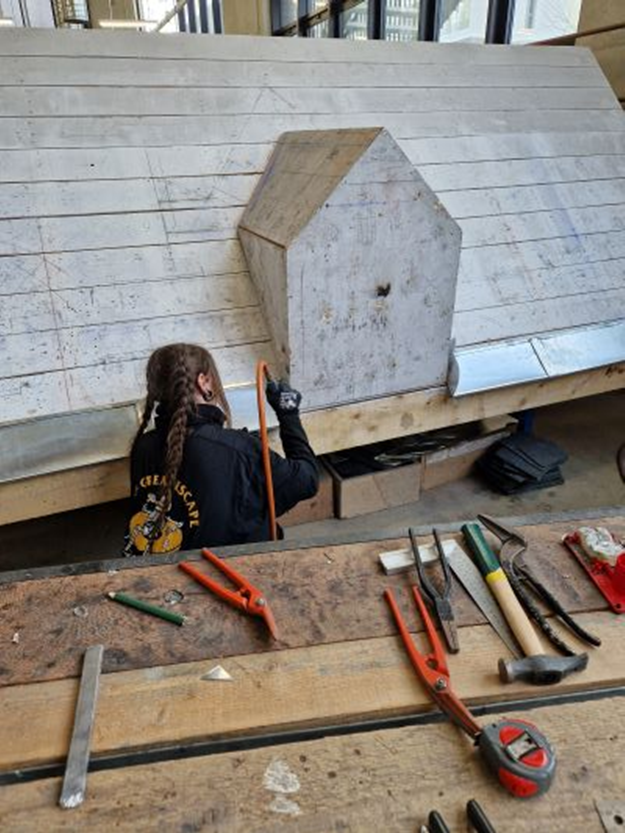
The participants in the round table also highlighted the positive effects of this diversity on the functioning of teams. The presence of women would contribute in particular to promoting more respectful professional relations, to improving exchanges between colleagues and, in certain cases, to easing tensions within teams. © Ecocampus
Deconstruct clichés from orientation
To sustain this development, several avenues have been put forward, starting with much earlier awareness of technical professions. There representation of manual trades as exclusively male professions is in fact built well before entering training. Acting from the orientation would allow present more widely to young girls the opportunities offered by construction, electricity, climate engineering and even technical construction professions.
Institutional support constitutes another lever. Schemes such as the “Ingénieuse” initiative supported by France Travail can help to raise awareness of these sectors and support women who wish to get involved in them.
The visibility of professionals also plays a determining role. Involving technicians, work supervisors, artisans or managers as ambassadors, particularly on social networks, allows us to show a professional reality that is still too little represented in the collective imagination.
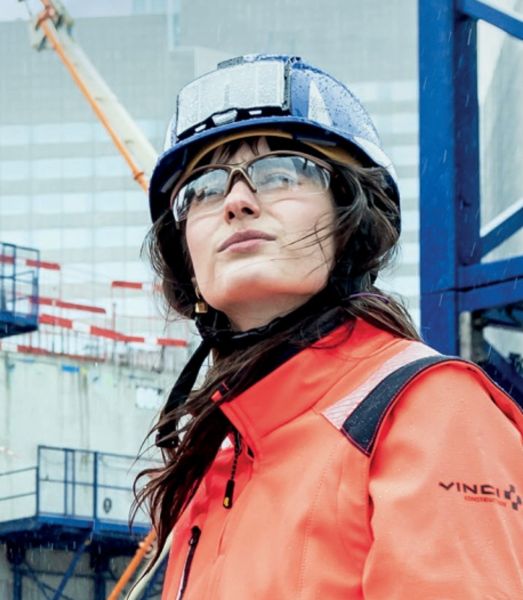
This visibility responds to a very concrete challenge: showing that construction professions can constitute qualifying, sustainable and fulfilling careers for women, and not only professions in which they would occupy a marginal place. © Vinci
Finally, companies must continue to strengthen their internal policies regarding the prevention and treatment of sexist behavior. The training of teams, the possibility of reporting the facts, the rapid reaction of the hierarchy and the implementation of sanctions when the facts are established contribute directly to the creation of a truly inclusive work environment.
The Gustave School wants to increase the proportion of women in its training
L’École Gustave intends, for its part, to feminize construction professions an axis of its action. The establishment regularly organizes awareness-raising operations such as open days for women in order to present them with the training and professional prospects offered by the sector.
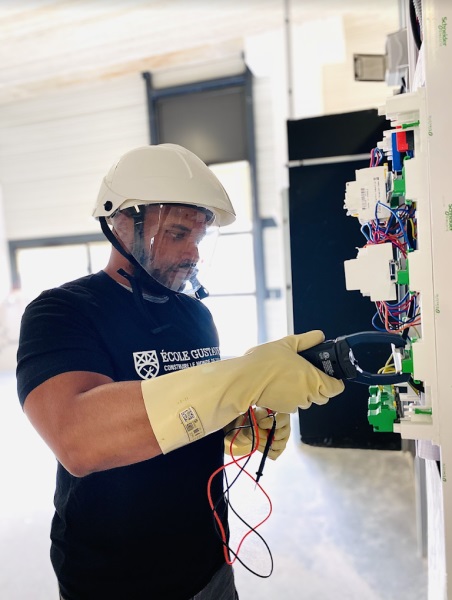
The share of women, however, remains a minority in promotions of theGustave School : in 2025, they represented 5% of the school’s enrollment. The establishment wishes to increase this proportion to 8% during the next school year. © Gustave School
For Marie Blaise, founder of the École Gustave, the question must be approached from the angle of skills rather than gender. “Construction professions are not a question of gender, but of skills and know-how“, she believes, also considering that craftsmanship can constitute a lever for social integration and economic sovereignty. This approach takes place in a sector which must simultaneously respond to significant recruitment needs and develop its image among audiences who remain distant from it. Feminization therefore represents both an issue of professional equality and a potential response to persistent tensions on the job market.
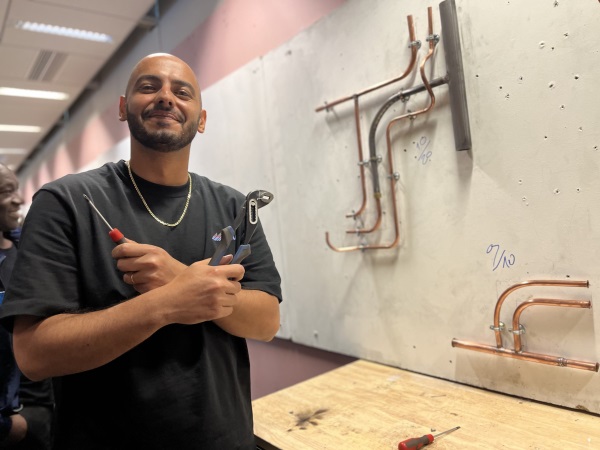
Founded in 2021 by Marie Blaise, Jérémy Diavet and Cyril Pierre de Geyer, École Gustave works in partnership with France Travail, which directs job seekers towards its training courses and provides funding. The establishment prepares in particular for level 3 diplomas as well as level 4 HVAC training, registered with the RNCP by decree of December 30, 2015 and delivered by the Ministry of Labor. The school is also Qualiopi certified. Since its creation, it indicates that it has trained more than 2,000 people and supported them in returning to employment. It boasts a success rate of 87% and a return to employment rate of 87%. To bring training closer to the operational needs of companies, it works in particular with large groups in the sector such as VINCI, Bouygues Construction, Sonepar, Van Marcke and Velux. © Gustave School