
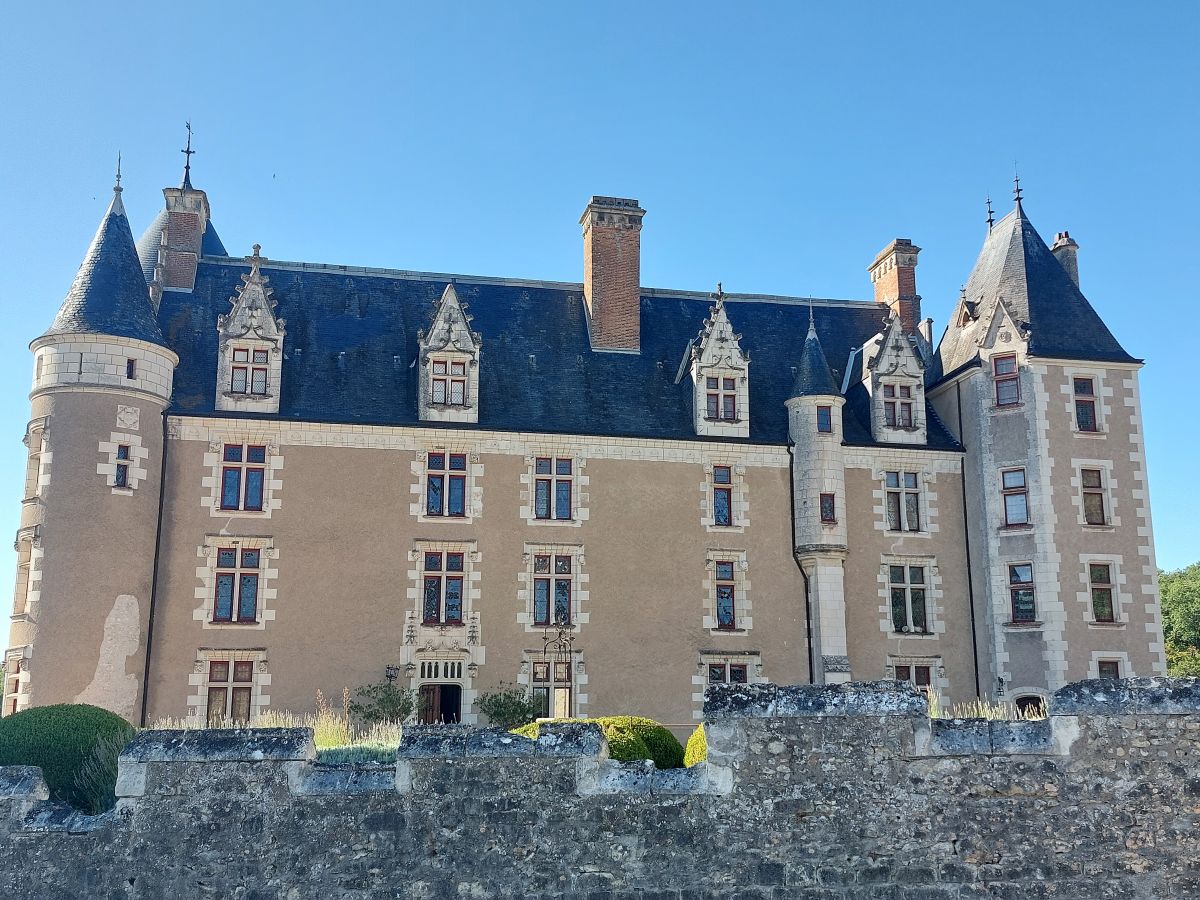
Are you considering work in a protected area? Discover the role of the Architect of Buildings of France (ABF), the rules applicable in the ABF zone and the steps to follow to succeed in your project.

Do you want to enlarge your house, redo a facade, change windows, install a fence or install solar panels? Before you begin, it is essential to check whether your accommodation is located in a protected area. In these areas, the work does not depend solely on traditional town planning rules: they are subject to the opinion of theArchitect of Buildings of France (ABF). This situation concerns many owners, particularly in old centers, around historic monuments or in certain so-called “remarkable” districts.
Be located in the ABF zone does not mean that it is impossible to transform your home. This simply involves designing a project compatible with the history, architecture and landscape of the place. The objective is to preserve heritage quality while allowing the evolution of buildings.
Who are the Architects of Buildings of France?
The Architects of Buildings of France (ABF) are civil servant architects belonging to the body of State Architects and urban planners. They work within the Departmental Units of Architecture and Heritage (UDAP), services of the Regional Directorates of Cultural Affairs (DRAC).
Their mission is not only to protect historical monuments. They also ensure the architectural quality of projectstheir insertion into the landscape and the preservation of old centers, villages, remarkable neighborhoods and protected sites. Their intervention is mainly based on Heritage Codenotably its articles L. 621-30 to L. 621-32 relating to the surroundings of historic monumentsas well as the Town Planning Code.
What is an “ABF zone”?
The term “ABF zone” is not an official legal category. It designates the protected areas in which a planning authorization requires consultation of theArchitect of Buildings of France.
Three categories of protection are mainly concerned.
The surroundings of historic monuments
This is the most common case. When a building is classified or registered as a historic monumentits surroundings benefit from protection provided by the Heritage Code. In a delimited perimeter of the surrounding area (PDA), that is to say a perimeter adapted to the specific challenges of each historic monument and in each territory, any building located within this perimeter is subject to the approval of the ABF, an opinion which must therefore necessarily be respected.
The installation of PDAs is gradually replacing the existing 500 meter protection perimeters.
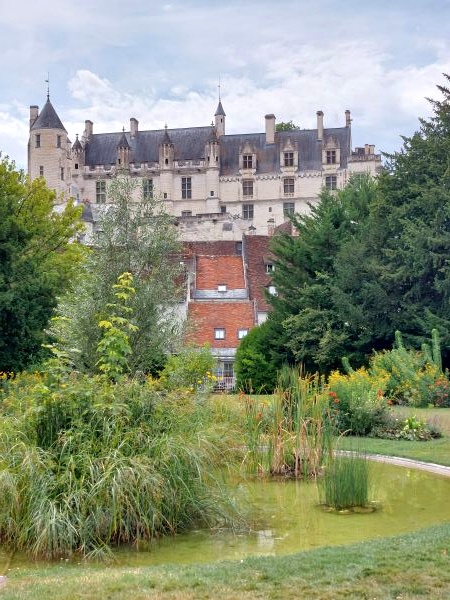
Within a defined perimeter of the surrounding areas (PDA), real estate projects are thus subject to the assent of the architect of Bâtiments de France, which must be respected. © Laure Pophillat
Remarkable heritage sites (SPR)
THE remarkable heritage sites bring together historic centers, neighborhoods or villages of architectural, urban, historical, archaeological or landscape interest.
They are intended to be governed by a Conservation and enhancement plan (PSMV) or a Architecture and heritage development plan (PVAP), which define the rules applicable to constructions, facades, roofs, materials and sometimes developments.
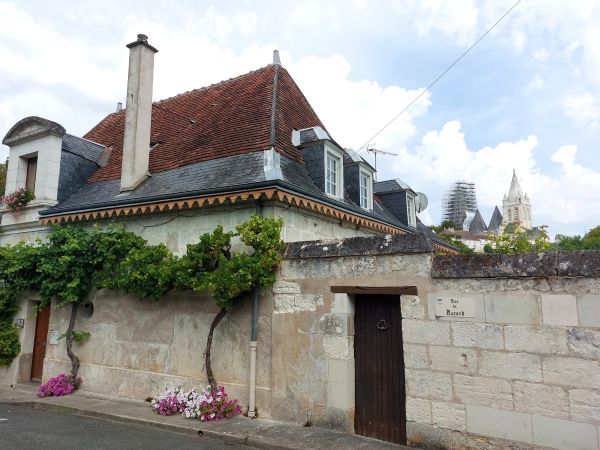
Remarkable heritage sites bring together historic centers, neighborhoods or villages whose architectural, urban, historical, archaeological or landscape interest justifies special protection. © Laure Pophillat
Other protected areas
These include registered and classified sites provided for by the Environmental Code (articles L.341-1 et seq.). These protections concern natural or built areas of particular landscape interest.
How do I know if a property is affected?
The proximity of a monument, a church, a castle or a heritage element may lead to the application of special rules. Many owners are unaware that their home is located in a protected area. The information appears, as a general rule, in their deed of acquisition – notarial deed. It is also possible to check the situation of the property:
– on the Heritage Atlas of the Ministry of Culture;
– On the Urban Planning Geoportal, which lists in particular public utility easements and the Local Urban Planning Plan (PLU);
– From the town planning department.
This verification must take place before any study or signing of a quote.
What work is involved?
In a protected sector, certain operations require authorization whereas this would not have been necessary in an unprotected sector. As soon as a project modifies the appearance of a building or its environment, it can therefore require planning permission subject to the opinion of the ABF. This concerns in particular: facade renovations, roof repairs, replacement of windows, shutters or doors, creation of openings, extensions, installation of fences, installation of photovoltaic panels, felling of trees.
Certain interior work may also, depending on the case, be subject to ABF control.
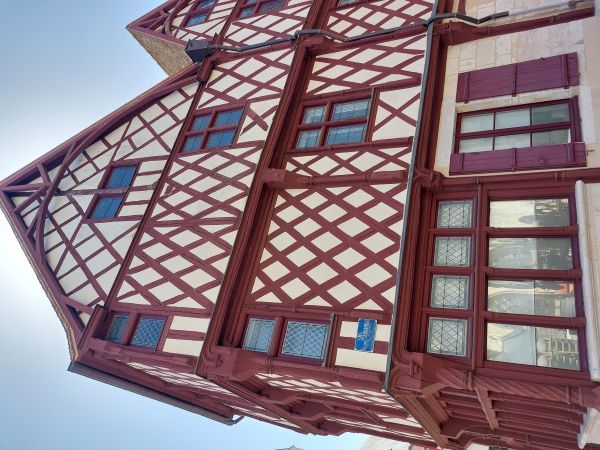
The ABF examines not only the general appearance of the project with regard to its insertion into the site, but also the materials, colors, joinery and architectural elements. © Laure Pophillat
What steps must be taken?
THE projects located in protected areas follow the usual procedures of the Town Planning Code: prior declaration, building permit, development permit or demolition permit depending on the nature of the work. The particularity lies in the consultation of the ABF during the examination of the file.
The quality of the file is essential. The plans, photographs, descriptive notices and insertion documents must allow a precise understanding of the project. The materials and architectural choices must be detailed.
Before submitting the application, it is often recommended to contact the UDAP or the Council for Architecture, Urban Planning and the Environment (CAUE). This approach makes it possible to identify possible difficulties and adapt the project.
What is the scope of the ABF’s opinion?
L’ABF opinion does not always have the same legal value. The law provides in certain sectors (notably PDAs), an assent. The assent is an opinion which must be collected and which the competent authority – essentially the town hall – to issue the authorization must follow. L’competent authority cannot therefore grant planning permission against the opinion of the ABF.
In other situations, theABF can provide a simple opinion. The community can then decide not to follow it, but it then becomes liable in the event of an appeal.
How much time should you allow?
THE projects located in the ABF sector generally require longer lead times. When theopinion of the ABF is requiredthe processing times are increased, it is necessary to take into account:
– two months for a prior declaration;
– Three months for a permit concerning a detached house;
– Four months for other building permits or development permits;
– Three months for a demolition permit.
These deadlines must be anticipated in the organization of the site, financing or a possible real estate sale.
What happens if the ABF refuses the project?
A refusal of the ABF does not necessarily mean abandoning the project. It is often useful to get back in touch with the ABF in order to understand the reasons for the refusal and to identify possible adaptations.
When the refusal of planning permission is based on theABF oppositionA administrative appeal against the ABF’s assent can be exercised with the regional prefect within two months following notification of the decision by registered letter with acknowledgment of receipt. The prefect may consult the Regional Heritage and Architecture Commission (CRPA).
If the prefect confirms the refusal, a contentious appeal before the administrative court remains possible.
What are the risks in the event of work carried out without authorization?
In a protected area, carrying out work without the necessary authorization can have significant consequences. The administration can impose compliance or restoration.
Article L.480-4 of the Town Planning Code provides for criminal sanctions in the event of carrying out work without the required authorization or in disregard of the applicable regulations. Offenders may in particular be punished with a fine of between 1,200 euros and 6,000 euros per square meter of surface area built, demolished or rendered unusable.
An irregular situation can also make a future sale more difficult. If the work carried out does not have the necessary authorizations or the certificate of conformity, buyers may hesitate to purchase the property, or even abandon the transaction.