
In the event of water damage, certain steps must be taken quickly to receive compensation. Origin of the loss, insurance, agreements between insurers: all the rules to know.

Dripping ceiling, warping parquet floor, slowly spreading damp stain… The Water damage is one of the most common disasters in homes.. Insurance law and agreements between insurers specifically organize the management of these situations. Identification of the origin of the leak, declaration to the insurance companyrole of compensation agreements: here are the essential rules to know in order to react effectively.
A guarantee included in home insurance
In practice, thecompensation for water damage is based on the home insurance contract. Unlike other guarantees, theextent of the “water damage” guarantee is not defined by law. Insurers therefore have a certain freedom to determine the situations covered or excluded.
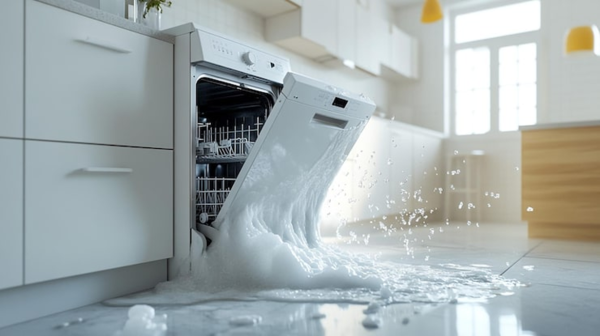
Damage caused by a washing machine, a hot water tank or an overflowing bathtub generally falls into this category, that of a sudden event. © Freepik
In most contracts, the damage caused by the action of water is covered when it results from a sudden event : leak, burst pipe, overflow of a household appliance or accidental infiltration through the roof. On the other hand, certain situations can be excluded: progressive humidity, condensation, porosity of the walls or even damage caused by a substance other than water, such as fuel oil. Damage due to lack of maintenance or non-compliant installations can also be excluded.
Given these differences from one contract to another, it is therefore essential to check precisely the guarantees and exclusions provided for in your home insurance.
Who should be insured in the home?
There law requires home insurance for tenants. The tenant must, in fact, subscribe to a insurance covering water damage in particular and provide a certificate to the lessor upon entry into the premises and then each year. Failing this, the owner may terminate the lease.
The lessor owner of a condominium apartment must also be insured, by means of a so-called “non-occupying owner” contract. This guarantee compensates for damage when the accommodation is vacant, when the tenant’s insurance is faulty or when its guarantees are insufficient.
THE owner-occupier of a home is not required to take out home insurance. On the other hand, in co-ownership, civil liability insurance must be taken out.
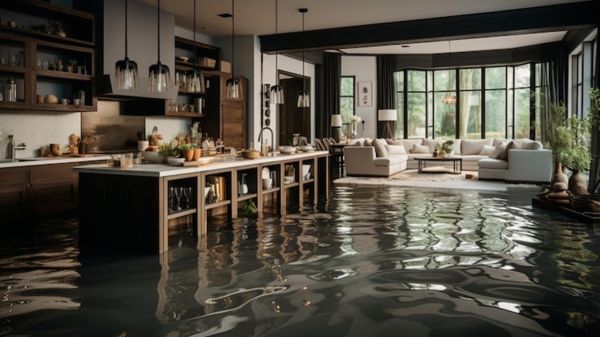
In practice, however, this coverage remains strongly recommended: water damage can lead to very costly repairs. © Freepik
Identify the origin of the disaster: the first step
Faced with a water damagethe priority is to locate the leak in order to limit its consequences. It could be a defective device, a broken pipe, an overflow of sanitary equipment or even water infiltration linked to a climatic event.
Concretely, the occupant must first try to identify the origin of the problem. When the leak is located in the housingit is appropriate, for example, to close the water supply to the device concerned or to cut off the general power supply. Safety measures may also be necessary, such as cutting off the electricity to avoid any risk of electrocution. If the origin appears to come from another apartment, you must immediately notify the neighbor concerned so that they too can interrupt the water supply.
When the leak remains invisible or difficult to locatethe intervention of a professional is necessary. A leak detection can then be carried out by a plumber. Since 2018, agreements between insurers provide in many cases for the coverage of these research costs, within the limit of certain amounts.
When the water leak is controlledit is important to take photos of anything that was damagedcoverings as well as objects, before wanting to wipe and move everything. Keep all items that were damaged during the disaster. Even damaged, with invoices, photos and warranty certificates, etc., they can help identify and estimate the value of the destroyed goods.
It is important to contact your insurer as soon as possible who will record the claim and will specify the recommendations to follow to its insured.
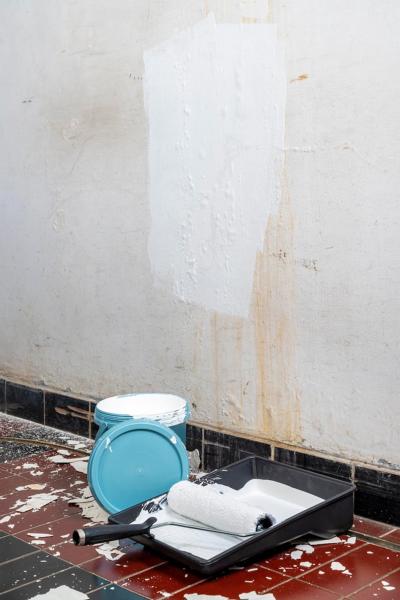
Renovation work (painting, floors or ceilings) must not be undertaken before the agreement of the insurer or the visit of the expert. Failing this, the insurance company could reduce or refuse compensation because it cannot observe the damage. © Freepik
Who can be responsible for water damage?
Once the leak identifiedit becomes possible to determine the responsibility for the loss. Indeed, the “responsible” is theoccupant of the place of origin of the leak. Please note, “responsible” does not in any way mean that there was a fault committed by the occupant. From there:
– if the leak comes from your home : as the owner (or tenant) of the accommodation, you are responsible for water damage ;
– If theorigin of the disaster is your neighbor’s home : he is responsible for the water damage;
– If theorigin of the loss is a common part of the co-ownership : there co-ownership is responsible for water damage.
It should be noted that if the neighbor disputes his responsibility or does not respond to requests, it is important to send him a formal notice by registered letter so that he contacts his insurer and stops the leak. If the situation persists, the dispute may be brought before the court.
Agreements between insurers for faster compensation
Since June 1, 2018, insurers have put in place a mechanism intended to simplify the handling of these claims : the “Compensation and recourse agreement for property losses”, called IRSI agreement. The latter provides several installments of compensation depending on the amount of damage.
Damage whose total amount is less than 1,600 euros
For damages whose total amount is less than 1,600 euros excluding taxes, theinsurer of the occupant of the damaged property is deemed to be a manager, which means that it compensates its insured according to its contract, without possible recourse against a potential liability and its insurer.
Damage whose total amount exceeds €1,600
For damage whose total amount is greater than €1,600 and less than €5,000 excluding taxes: theinsurer of the injured occupant is also deemed to manage the claim on behalf of all insurers but must appoint an expert to assess the damage.
Damage exceeding €5,000
Beyond €5,000 of damage, the agreement no longer applies: each insurance company then intervenes according to the classic liability rules. So, when the damages exceed the amounts provided for by the IRSI agreementanother convention may apply. In this case, the victim’s insurer turns to the responsible party’s insurer to obtain reimbursement of the sums paid.
Five days to report the loss
Once the emergency has been dealt with, theinsured must make a claim declaration to their insurer. THE insurance law provides for a minimum period of five working days from the discovery of the water damage. Saturdays, Sundays and public holidays are not taken into account in this calculation.
The declaration can be made by telephone, online or by post, but it is advisable, mainly for major losses, to send a registered letter with acknowledgment of receipt. This document must indicate the contact details of the insured, the contract number, the date and circumstances of the loss, as well as a description of the damage and the property affected.
In buildings, it is often useful to also complete a amicable report “water damage”. This document, signed by the parties concerned (neighbors, trustee, lessor), makes it easier to identify responsibilities and speed up the processing of the file.
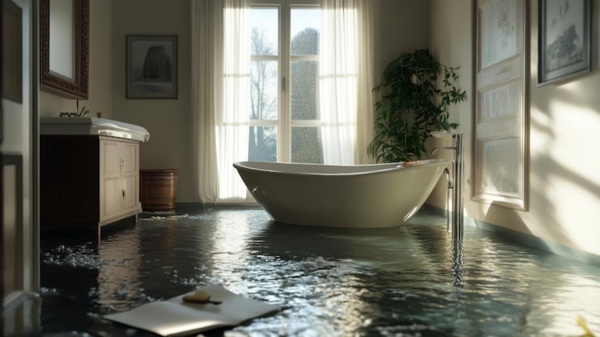
Please note: depending on the clauses of your insurance contract, not respecting the deadlines for reporting a claim may result in a refusal of compensation or limited coverage by insurers if the delay in reporting causes them harm. © Freepik
Expertise and damage assessment
Recourse to an expert is not automatic. The insurer decides to appoint a professional when the extent of the damage justifies it, particularly when their amount exceeds a certain threshold or in the event of repeated losses.
The expert then has several missions: determine the causes of water damageidentify possible liabilities and assess the cost of repairs. The assessment generally takes place several weeks after the disaster, so that the surfaces have had time to dry and the true extent of the damage can be seen. Once the report is submitted, theinsurer sends the insured a compensation proposal. Payment generally occurs within the time limit stipulated in the contract, often within the month following acceptance of the offer. Compensation can concern both real estate elements – walls, ceilings, parquet floors – and movable property such as furniture, household appliances or clothing.
What to do in the event of refusal or disagreement with your insurance company?
If the insured considers that the compensation offered is insufficient, he or she may request a second opinion. The costs are in principle his responsibility, unless he benefits from legal protection insurance. In the event of persistent disagreement between the experts, a judicial expertise may be ordered by the court.
However, before any legal action, an amicable appeal must be attempted. The insured can in particular contact the insurance mediator, after contacting the claims department of their company.