
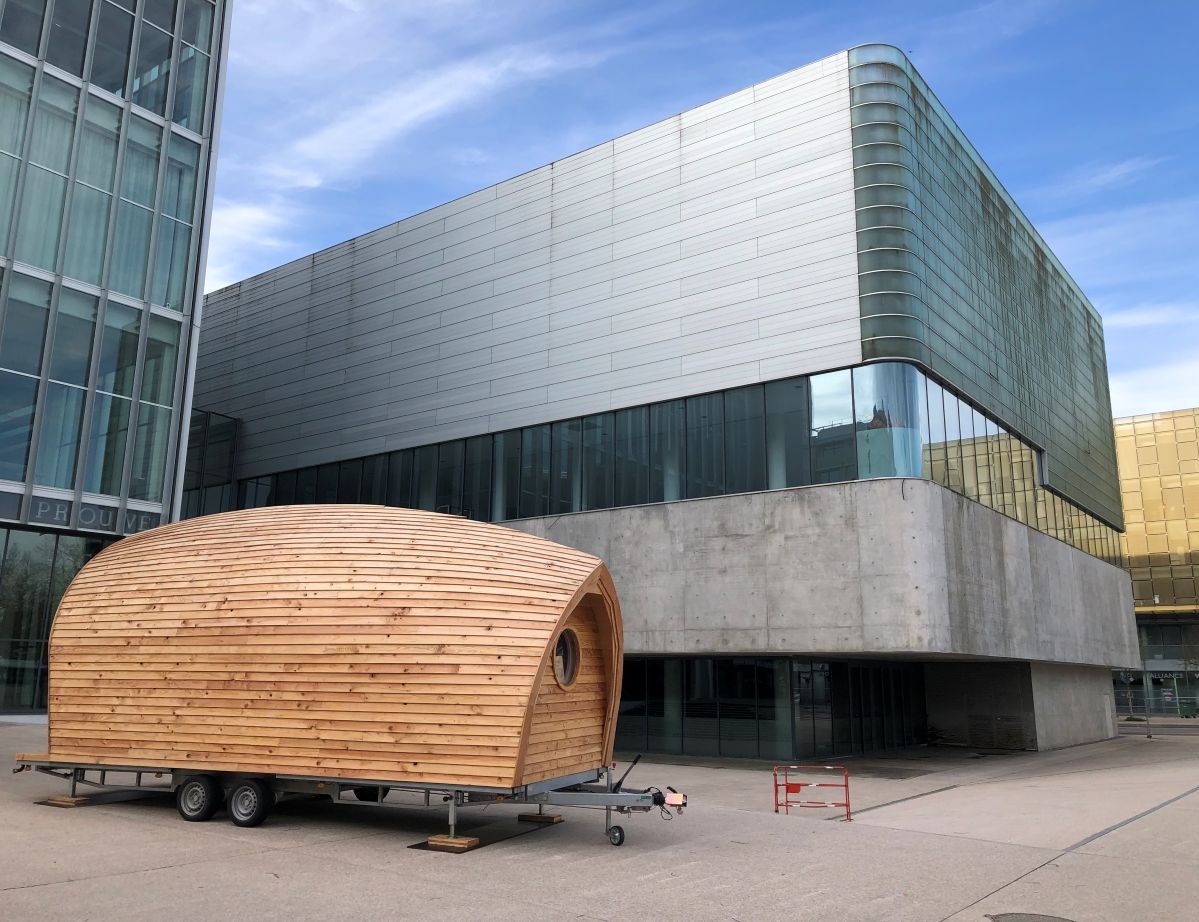
The Steering Committee, meeting on April 23 in Paris, validated a completely exceptional double edition, in a context where, despite everything, the demand for biogeosourced construction materials is well oriented.
Publi-Information 


L’commitment from Nicole Valkyser, organizer of the International Wood Construction Forum since 2012, to return to Épinal and Nancy, was firm and had been taken in 2025 after the reactions caused by the maintenance of the event in Paris for February 2026. However, the wood industryexhibitors and people who responded to the satisfaction survey are once again pleading for remaining in Paris.
The equation is as follows: FBC 16 from February 9 to 12 (the 9th day of visits) before the political vacuum of the agricultural show, in order to allow the wood industry to present its white paper before the presidential elections. But also, to give substance to the Ecomaterials Alliance signed on February 25 at the Forum with around fifteenprofessional organizations in the biogeosourced sector and reuse.
A political timetable
In full agreement with the stakeholders of the Grand Est Region, an edition 17 initially planned for the beginning of June has been postponed to the end of October. In fact, the presidential elections will most likely lead to a dissolution of the Assembly and the beginning of June will be in the middle of the legislative electoral campaign. Furthermore, more than eight months will separate the two editions. It will be time to revisit the past government’s commitments to build 2 million homes, and the serious international deadline of 2030 in terms of carbon emissions.
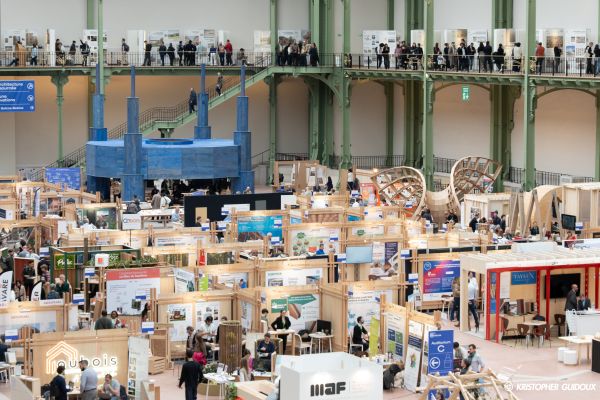
Eloquent image of the nave of the Grand Palais for Forum 15 last February. The Belleville stands will come to Nancy, not the Quadrilogue. © Davide Boureau urbamutability
High sawn timber prices, increasing volumes
L’wooden architecture is currently going through an acute crisis. However, the figures published today by the ONF are encouraging with regard to structural lumber sales in 2025. Despite a downward revision of the RE2020 carbon objectives on paper, the almost universal application of the Regulation, finally, from June 2026, reinforces a diffuse situation where the wood and biogeosourced materials enter through the back door in many projects which simply can no longer be handled in all concrete.
The time of the spinning tops is numbered
Thus, thewooden architecture is struggling due to an unfavorable economic context, fire regulations impacting the bio-based constructionand prices which according to the ONF are not falling. But the wood and biosourced materials in construction and especially renovation are stimulated by the ease of intervention, the flexibility of solutions compatible with concrete and metal, and the progressive broadening of compatibilities with different supports.
At the same time, massive investments in French production facilities make the solutions attractive because they are local and less emitting.
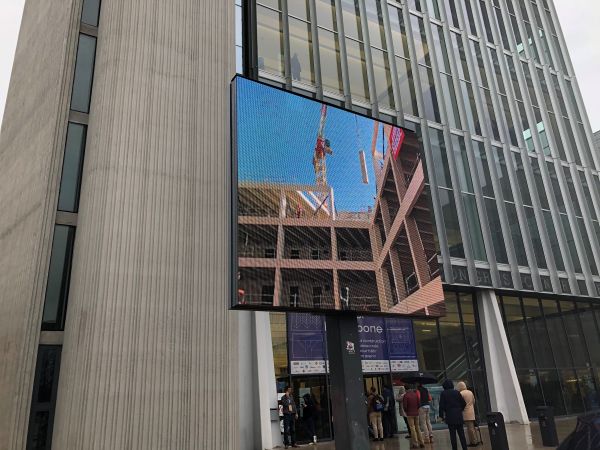
The Prouvé Center in Nancy, very mineral, also has good sides, like the outdoor screen, and also the good memories of past editions. © Jonas Tophoven
Hybrid construction and invisible wood
We are witnessing a sort of paradox, the end of wooden architecture and the advent of wood construction. Often, wood is more or less the decor, both in FOB or even MOB or simply in cladding, with extensive use of wood in interior design and furniture. And there are also situations where structural wood is hidden but sometimes massively present. An option that could develop widely with the development of fire regulations applied to biosourced materials and systems.
Massive use of crisis wood for enclosed off-site structuresnon-visible or even downgraded. Without forgetting that we are at the dawn of the wave of “superwood”, augmented woods, like this Italian paulownia CLT compressed to achieve the mechanical characteristics of steel.
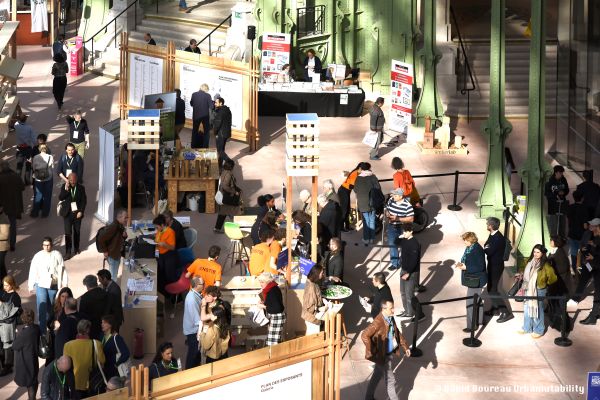
The welcome in full February sunshine at the Grand Palais. The weather was a divine surprise, although the heat was not scorching. 18,000 entries recorded over three days, a figure out of all proportion to Épinal Nancy in 2024. © David Boureau urbamutability
Épinal and Nancy at the heart of wood technology
Another paradox: if the wood industry insists on presenting its white paper at the Grand Palais, Paris is above all the place to highlight eco-materials. Build in wood does not really speak to Parisians in a world that is already completely mineralized, while urban dwellers have a logical appetite for natural materials and reuse in general.
Conversely, Épinal and Nancy stand out for their geographical location in the heart of Europe and basins of renewable raw materials (in principle) and more independent of fossil speculation. In this heart of Europe, knowledge of wood is central and needs to be cultivated and shared. THE Grand Est is a major region for wood construction but still a land of conquest for straw, hemp, raw earth and the reuse of materials.

Nicole Valkyser, organizer of the Forum, in April 2024 at the end of a successful 5th consecutive edition in Épinal and Nancy. © Jonas Tophoven
A double edition without repetitions
The deduplication of the Forum will remain an exception but there is plenty to do to meet the expectations of the Ile-de-France megacity and the French and European regions, so that the Grand Palais edition will be able to adapt even better to local expectations, as will Épinal and Nancy, with simply two thematic overlaps: the Eurocode and Fire Protection workshops, two decisive subjects for the year 2027, for which it is particularly welcome to have a session in February and another, additional, end of October.
Jonas Tophoven / © Jonas Tophoven