
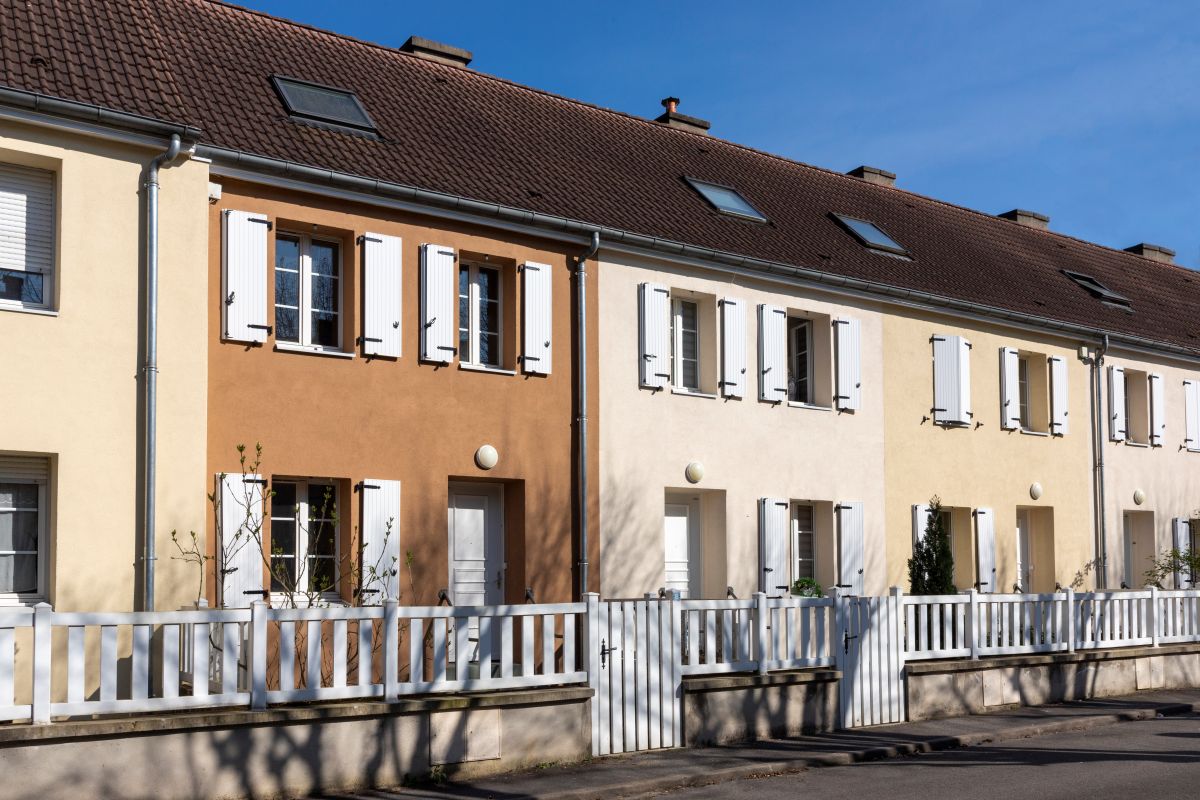
In Pont-Sainte-Maxence, OPAC de l’Oise renovated 20 social housing units with an exterior thermal insulation solution developed by Sto, combining wood fiber, cement-free undercoating and biosourced binders.

HAS Pont-Sainte-Maxence, in OiseA energy renovation program led by OPAC de l’Oise acts as a life-size demonstrator. On this social residence of 20 housing units, the company Appli – Sionneau group – deployed a external thermal insulation solution (ITE) developed by Sto who claims thelowest carbon footprint on the market. A innovation combining wood fiber, biosourced binders and cement-free undercoating in order to reduce both site emissions and occupant energy consumption.
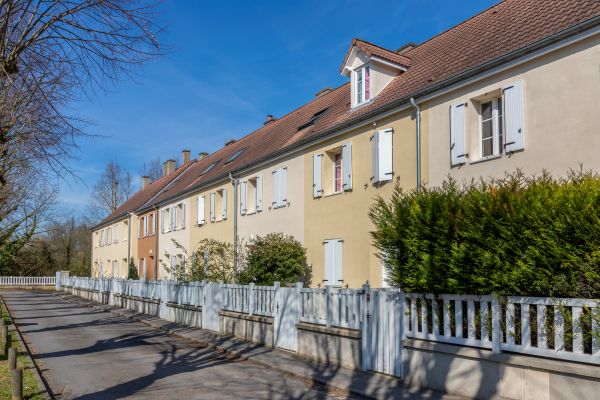
Undertaken on two buildings dating from the 1950s, the renovation program responds to a strategy now well identified by the social landlord. “We are working to improve the DPE labels of our most energy-intensive residences. There is an issue of controlling costs for our tenants, and the desire to provide them with additional comfort, in summer and in winter,” explains Gaëtan Habare, the operations manager within the OPAC of Oise. © Manuel Panaget
The operation is mainly based on thermal insulation from the outside of the facades. If the use of wood fiber panels already constituted an efficient solution from an environmental point of view, the Appli company wanted to go further by offering a variant integrating a innovation developed by Sto.
A cement-free system that drastically reduces the carbon footprint
At the origin of this proposition is the StoLevell Neo AimS®, an undercoating which ensures both the bonding of the insulation and the function of hydraulic undercoatinge. Its particularity lies in its patented formulation which completely dispenses with cement, a material whose manufacture remains one of the main sources of CO emissions.2 in the construction sector. “The particularity of this project is that we proposed a second variant to the OPAC of Oise to go further in decarbonization, with the implementation of an undercoat developed by Sto, the StoLevell Neo AimS®“, indicates Xavier Pruvot, the director of the company Appli.
According to Sto, this formulation reduces the product’s carbon footprint by 40% compared to traditional solutions. Associated with a wood fiber insulation in the complete StoTherm AimS® systemthe undercoating helps to create a particularly virtuous envelope from an environmental point of view. The system also integrates theStolit AimS® finishing coatingwhose formulation replaces 30% of the hydrocarbon binder usually used by a biosourced binder from pine oil. An approach which is part of the growing desire of manufacturers to replace fossil materials with renewable resources.
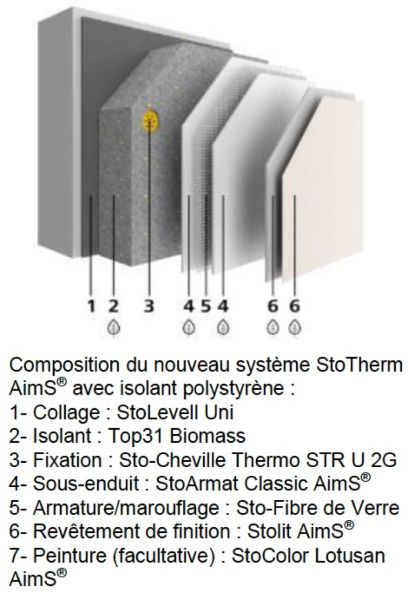
Through its “Building responsibly” approach, Sto intends to support project owners, specifiers and implementation companies in carrying out more sustainable projects, while guaranteeing the quality and reliability of the solutions implemented. This philosophy results in the development of products designed according to eco-design logic, integrating environmental issues from the formulation phases through to the choice of packaging. The StoTherm AimS® system is fully part of this approach. © Sto
A facade that stores carbon
L’benefit of the StoTherm AimS® system is not limited to reducing its carbon footprint. Thanks to the presence of wood fiber, the complex also contributes to carbon storage, an argument which weighed heavily in the social landlord’s decision. “It is our role, as a lessor, to encourage innovation and help low-carbon solutions become industrialized.“, underlines Philippe Lesobre, works manager at OPAC de l’Oise.
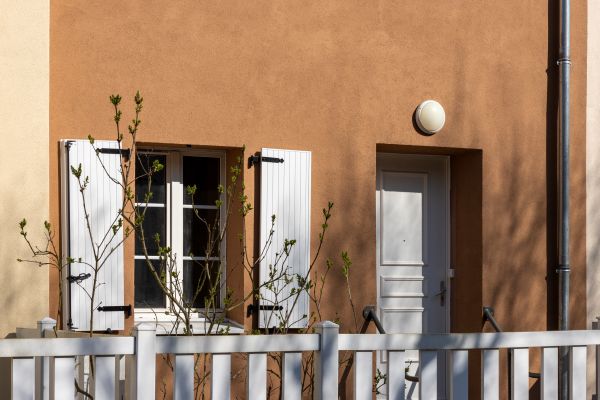
This innovative solution benefited from a Technical Experimental Assessment (ATEx) issued by the CSTB, allowing its implementation as part of this pilot project. To secure the deployment of this still recent technology, the Appli teams were also supported by Sto’s technical services. © Manuel Panaget
“There is no difficulty with StoLevell Neo AimS® once you master its slightly more fibrous texture. We took a little more time on the first treated building, in particular to ensure drying times, but we already went much faster on the second building.t”, observes Xavier Pruvot. Launched in the spring of 2025, the project was therefore completed last December and a few months after delivery, the first results already seem to confirm the objectives set by the project owner. “The contract seems fulfilled on energy performance: tenants are already starting to see their charges drop in the first months of 2026“, reports Gaëtan Habare.
For the Appli company, this first operation also constitutes a showcase of know-how. “The slogan of Appli and the Sionneau group, of which we are part, is “Together towards low carbon”. We are proud of the work carried out in Pont-Sainte-Maxence and we now offer the StoTherm AimS® as a variant on all our projects”, explains Xavier Pruvot. © Manuel Panaget
Manuel Panaget