
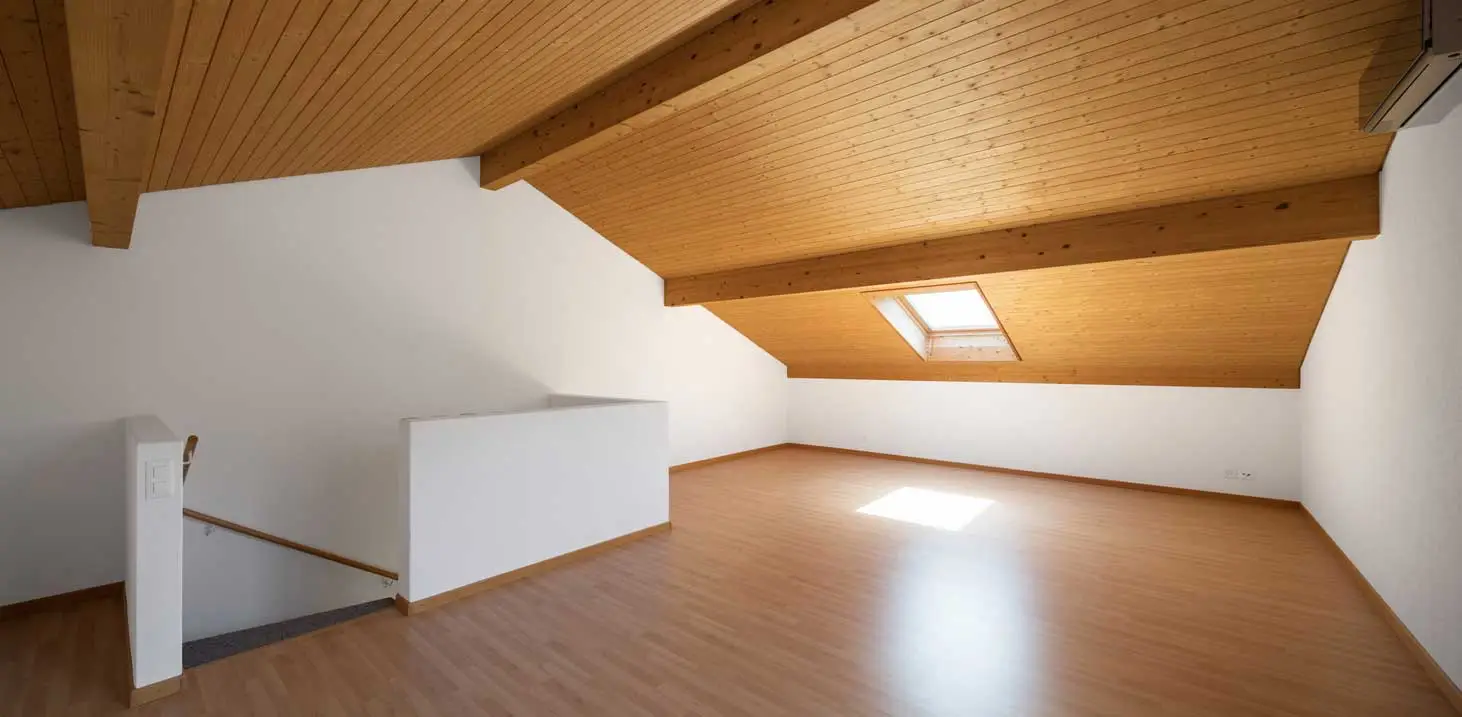
Disputes in construction matters and regulations that change over time: when the case is pending, the judge must apply the provisions in force at the time of the judgment, regardless of what was foreseen at the time the intervention was carried out. A principle established by the Supreme Court with sentence 15256/2026, which effectively imposes the “shield” of the Save Casa in pending cases.
The sentence addressed the problem of the recovery of attics for residential purposes carried out through partial demolition and reconstruction with raising the ridge level, but the obligation for the referring judge to retroactively apply the favorable provisions introduced by the regulations is valid for all previous demolition orders not yet made final.
>> Are you interested in articles like this? Receive them directly
From new construction to renovation
The issue addressed by the Court of Cassation concerns the demolition order of the vertical extension of an attic (with an increase in height of approximately two metres) carried out in 2007, due to the limit of 10 meters of distance between window walls provided for by the art. 9 of Ministerial Decree 1444/1968. The neighbor had appealed based on the fact that it was a new construction that did not respect the minimum distances, therefore requesting the removal of the attic. The owner had appealed but lost at first and second instance.
In particular, the judges of merit had classified the intervention as “new construction” and the Court of Appeal had excluded that the exceptions provided for by the urban planning law of the Lombardy Region (articles 63-64 LR no. 12/2005) could operate in the absence of municipal area planning or detailed plans. A principle completely overturned by the Supreme Court, based on the evolution of the rules in recent years.
Wider perimeter for renovation
The Court based its decision on the evolution of the art. 3, paragraph 1, letter. d) and art. 2-bis, paragraph 1-ter of Presidential Decree no. 380/2001 which expanded the perimeter of the renovation, and then what was foreseen by the Salva Casa decree regarding the renovation of the attics.
As regards renovation, the 2020 reform also included in this area demolitions and reconstructions with different shapes, elevations and grounds, admitting volumetric increases if provided for by current legislation or urban planning instruments. In the past, however, renovation was identified only as an intervention that was contained within the pre-existing limits of height, volume, shape and footprint area of the building, while any excess was considered as new construction. With the new rules, however, to fall within the scope of reconstruction it is sufficient to respect the original volume, without the need to also respect the shape, with consequent inapplicability of the regulation on distances, provided for new buildings.
As regards the specific issue of the recovery of attics, the Salva Casa decree introduced paragraph 1-quater to the art. 2-bis of the TEU providing for a specific reserve of competence in favor of regional laws for recovery, also indicating in this context the possibility of derogating from the minimum distance in specific cases. In essence, the decree legitimizes regional laws to derogate from the minimum state and municipal distances in force at the time of the intervention, and the derogation no longer necessarily has to be included in detailed plans or subdivision agreements referring to groups of buildings (ex art. 9, last paragraph, Ministerial Decree no. 1444/1968), but is immediately effective.
The exception to the minimum distance of the Save Home decree
For the recovery of attics, therefore, the only conditions set by the state law regarding minimum distances are:
- compliance with those in force at the time of the original construction of the building (and not those at the time of the addition);
- maintaining the shape and surface of the attic as delimited by the pre-existing perimeter walls;
- compliance with the maximum height permitted by the building permit, without prejudice to a different more favorable regional provision.
Beyond these cases it is not possible to block these interventions, and the judge of merit must necessarily take into account the evolution of the provisions in force at the time in which the judgment is still pending. This is a well-established and generally applicable principle.
Principle iura novit curia in light of ius superveniens
Precisely for this reason, the Court of Cassation referred to previous sentences on the matter and therefore reiterated that the obligation to apply the principle according to which, if a different provision comes into force, the judge must take it into account during the judgement. A principle that is absolutely valid and which therefore applies even in the case of minimal distances.
In this context in particular, the builder’s right to maintain the work at the shorter distance is consolidated, if the intervention has already been completed. In essence, when a less restrictive regulation is approved, the building is in conflict with the regulation in force at the time of its completion, but complies with the new one, this can no longer be considered illegitimate for this specific reason. Consequently, the neighbor cannot demand demolition or, in any case, reduction to the dimensions required by the regulations in force at the time of its construction.
>> If you want to receive news like this directly on your smartphone, subscribe to our new Telegram channel!
Thank you for subscribing to the newsletter.