
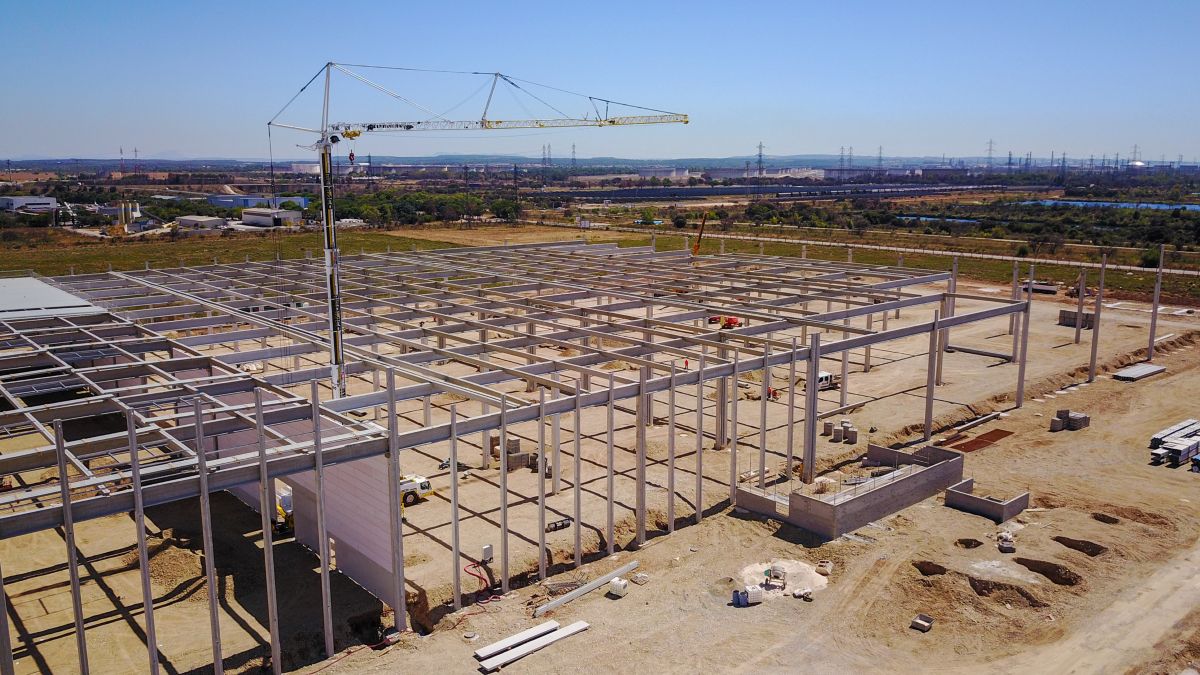
Rector Charpentes & Structures launches RSOFT, a range of prefabricated concrete frames and structures with reduced carbon impact. Certified, it promises up to 32% CO? in less.

With the entry into force of new RE2020 carbon requirements for industrial and tertiary buildings – with a ceiling set at 840 kg eq. CO2/m2 – construction players must now deal with stricter emissions thresholds. To respond to this regulatory development, Rector Charpentes & Structures, a specialist in concrete prefabrication for over thirty years, is launching RSOFT, a range of concrete frames and structures with reduced carbon impactwhose performance is certified.
Up to 32% CO emissions2 in less
There RSOFT range brings together beams, posts, pre-slabs, hollow core slabs and prefabricated fire-resistant panelss. According to the manufacturer, it can reduce up to 32%carbon impact of the “prefabricated concrete framework” lot compared to a conventional solution. This reduction is based on two main levers:
– the first concerns concrete formulations, adapted to each production site: Rector uses different types of cements, including CEM III and CEM IVassociated with specific binders such as slags or fillers, in order to limit emissions linked to concrete manufacturing ;
– The second lever is the use of recycled steel: the RSOFT range incorporates 100% recycled HA steel and at least 80% recycled HLE steel, thus reducing the carbon footprint of the frames.
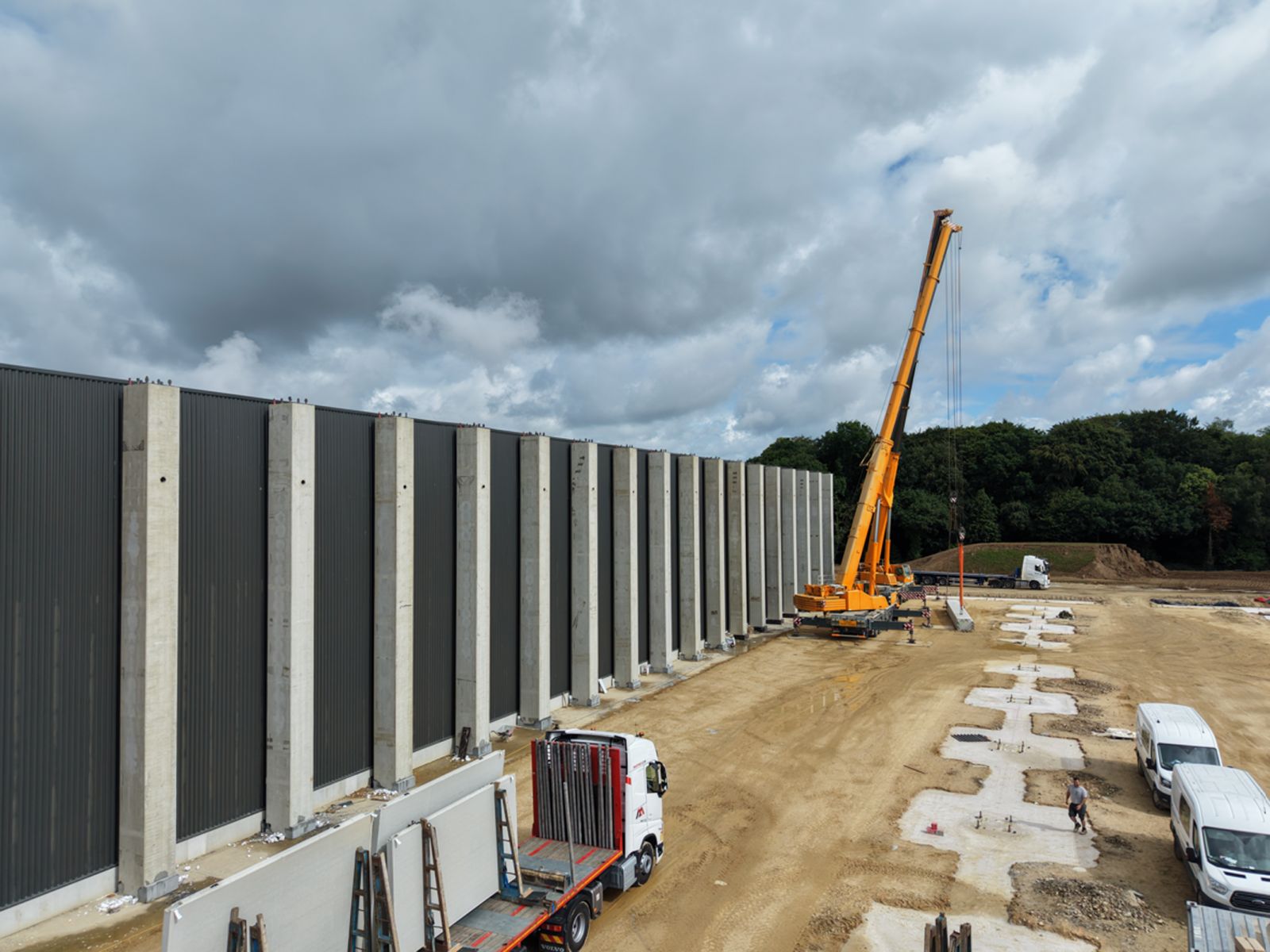
Rector Charpentes & Structures uses its own concrete formulations, optimized for each of its production sites. The combination of different types of cement (CEM III, CEM IV, etc.) with specific binders (slags, fillers, etc.) gives its concretes a lower carbon impact than standard concretes. © Rector Frames & Structures
A carbon calculator validated by an independent third party
Beyond the products themselves, Rector highlights an internal carbon calculator developed by its R&D, Quality and CSR teams. This tool makes it possible to evaluate, from the study phase, thecarbon impact of the framework lot and precisely measure the gain obtained thanks to the RSOFT range compared to a standard solution.
On the basis of the carbon values considered as standard (total GWP according to the FD P 18-483-2 fascicle for concrete – standard according to the FD P 18-483-2 fascicle “Specification of concrete for structures with reduced carbon impact” developed by the AFNOR/P18B “Concrete” commission) and the mix of internal consumption of recycled and non-recycled steel, it automatically calculates the percentage of reduction in the carbon impact of the framework lot of the optimized project thanks to the RSOFT low carbon frame range. It also quantifies the carbon impact of all the products that constitute the framework, taking into account the concrete formulations as well as the actual recycled steel rate of the products in the RSOFT range as they will be manufactured in the manufacturer’s factories.
The methodology was verified and validated by the environmental consulting firm GINGKO 21, which provides independent assurance of the announced results.
Production already deployed on several sites
To support the deployment of this new range, Rector relies on formulations already mastered in its factories in order to preserve production rates and delivery times. Manufacturing is currently carried out on the sites of Thouars, Celles-sur-Belle (Deux-Sèvres), Dangé-Saint-Romain (Vienna) as well as in Harelbeke, in Belgium.
With RSOFT, Rector Charpentes & Structures intends to propose a concrete response to the new constraints of RE2020 and support industrial and tertiary projects towards concrete structures with a significantly reduced carbon footprint, while maintaining the performance expected on large-scale projects.
Rector Frames & Structures