
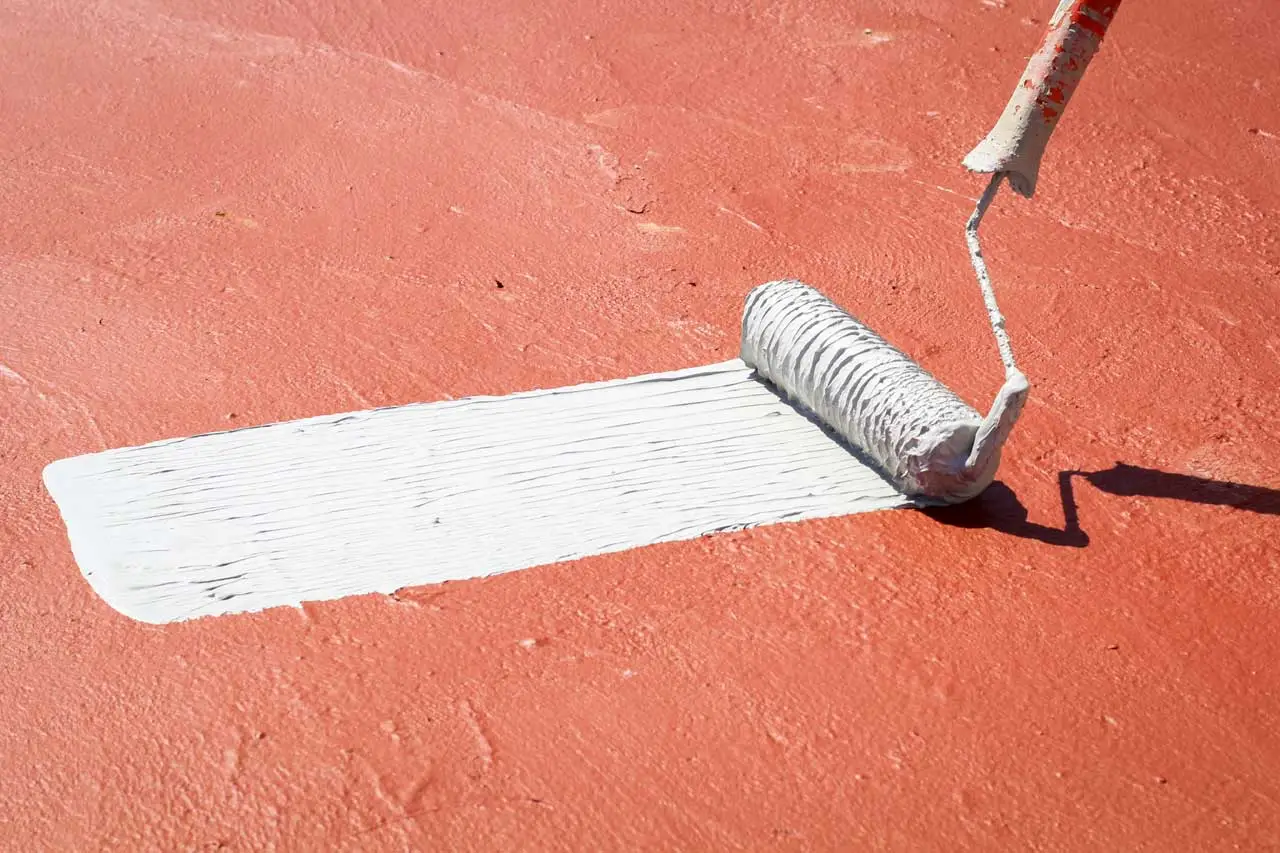
Because the terrace is vulnerable to infiltration
Unlike pitched roofs, the terrace is an exposed horizontal surface that must simultaneously manage atmospheric agents, possible operating loads, high thermal expansions and rainwater stagnation. In summer, surface temperatures can exceed 70°C, subjecting the waterproof system to thermal stress which accelerates its aging.
Any discontinuity or overlap typical of preformed membranes becomes a potential entry point for water; for this reason Icobit liquid technology focuses on absolute continuity of the covering, eliminating structurally weak joints.
The most frequent causes: technical errors and degradation of materials
Most water infiltration phenomena derive from an incorrect choice of system or from preparation of the support not carried out in a workmanlike manner.
Materials that do not comply with the recent UNI 11928-1:2023 standard are often used, lacking adequate performance and the necessary certifications. Other critical issues include insufficient slopes which favor water stagnation – a real “hotbed” of degradation – and inadequate treatment of critical points such as horizontal-vertical connections, passing bodies and drain outlets.
Structural consequences of untreated infiltrations
The water that penetrates the stratigraphy not only causes aesthetic damage or mold, but triggers degenerative chemical-physical processes in the concrete. The carbonation phenomenon, managed according to the EN 1504-2 standard, reduces the pH of the conglomerate and interrupts the passivation of the metal reinforcements, leading to their oxidation and expansion. This degradation can compromise the static safety of the building and drastically reduce its asset value, making extremely expensive corrective waterproofing interventions necessary.
Concrete cracking and crack bridging
Cracks in concrete are physiological phenomena linked to structural shrinkage or settlement. The real technical challenge consists in employing systems capable of “bridging” these lesions without breaking, a defined property Crack Bridging Ability and governed by the EN 14891 standard.
Icobit membranes, such as those of the Icoper or Keep Dry line, are designed to resist cracking, maintaining waterproof integrity even in the presence of micro-movements of the support, guaranteeing elastic elongation that ensures tightness, even at low temperatures.
How to carry out waterproofing of the terrace
An intervention carried out in a workmanlike manner begins with the mechanical preparation of the support, which must be intact, cohesive and dry. After the possible application of a specific priming layer (primer), the liquid membrane is spread in at least two coats to guarantee a uniform consumption of no less than 2 kg/m².
Where applicable, it is advisable to use a non-woven fabric reinforcement between the first and second coat of product to ensure greater mechanical resistance of the covering. Furthermore, it is essential to take care of details, such as vertical flaps, through the use of sealants such as strips, ensuring that the system adapts perfectly to the geometry of the terrace.
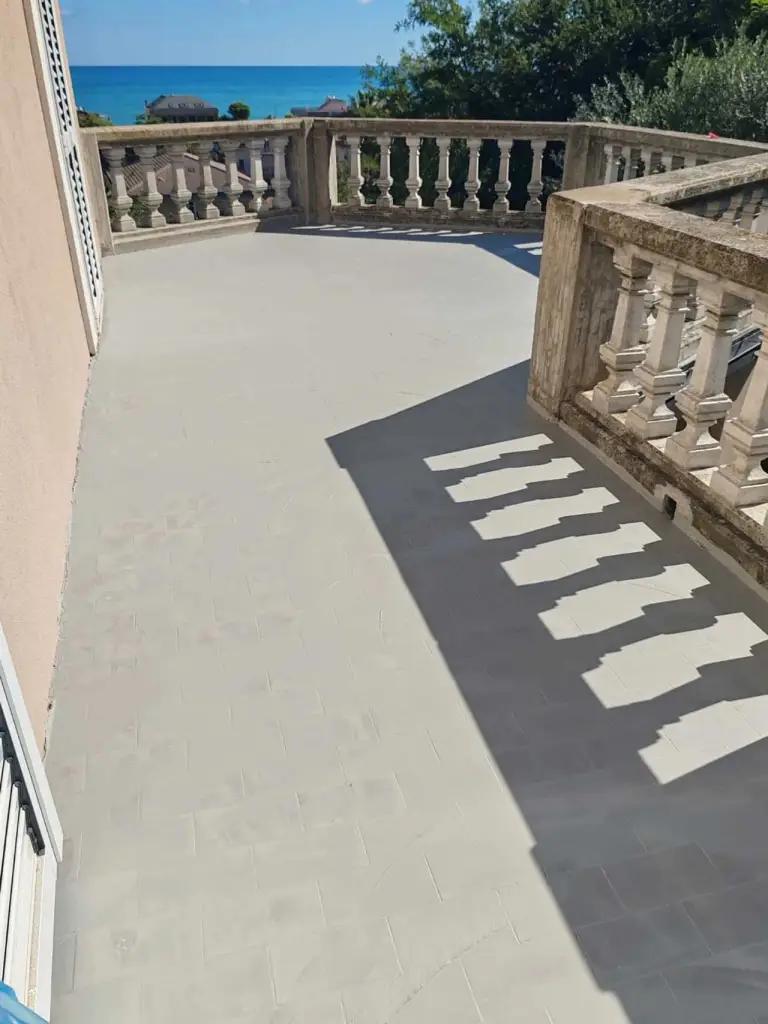
Maintenance and prevention: a proactive approach
A common mistake is to consider the waterproofing of terraces as a definitive and unchangeable intervention. To maximize the working life of a waterproofing system, Icobit recommends the adoption of a scheduled maintenance plan. A seasonal check of the effectiveness of the drainage and visual verification of the integrity of the surface are essential to prevent small defects from turning into structural damage.
The use of solutions such as the maintenance booklet allows you to monitor the health of the building over time, transforming waterproofing into a true asset management strategy.
Waterproofing as a technical and capital investment
Eliminating water infiltrations from the terrace does not represent a purely maintenance intervention: it is a technical choice that directly affects the durability of the building, the quality of living and the asset value of the property. Correct waterproofing, designed according to current regulations and created with certified systems, reduces the risk of disputes, reduces extraordinary maintenance costs and prolongs the useful life of the structure.
The choice of the waterproofing system cannot ignore a detailed analysis of the support, the evaluation of the environmental conditions and the correct execution of the application phases. In this context, Icobit systems offer the designer and the company a solid technical reference: certified solutions, compliant with harmonized European standards, supported by detailed technical data sheets and the assistance of the company’s technical office.