
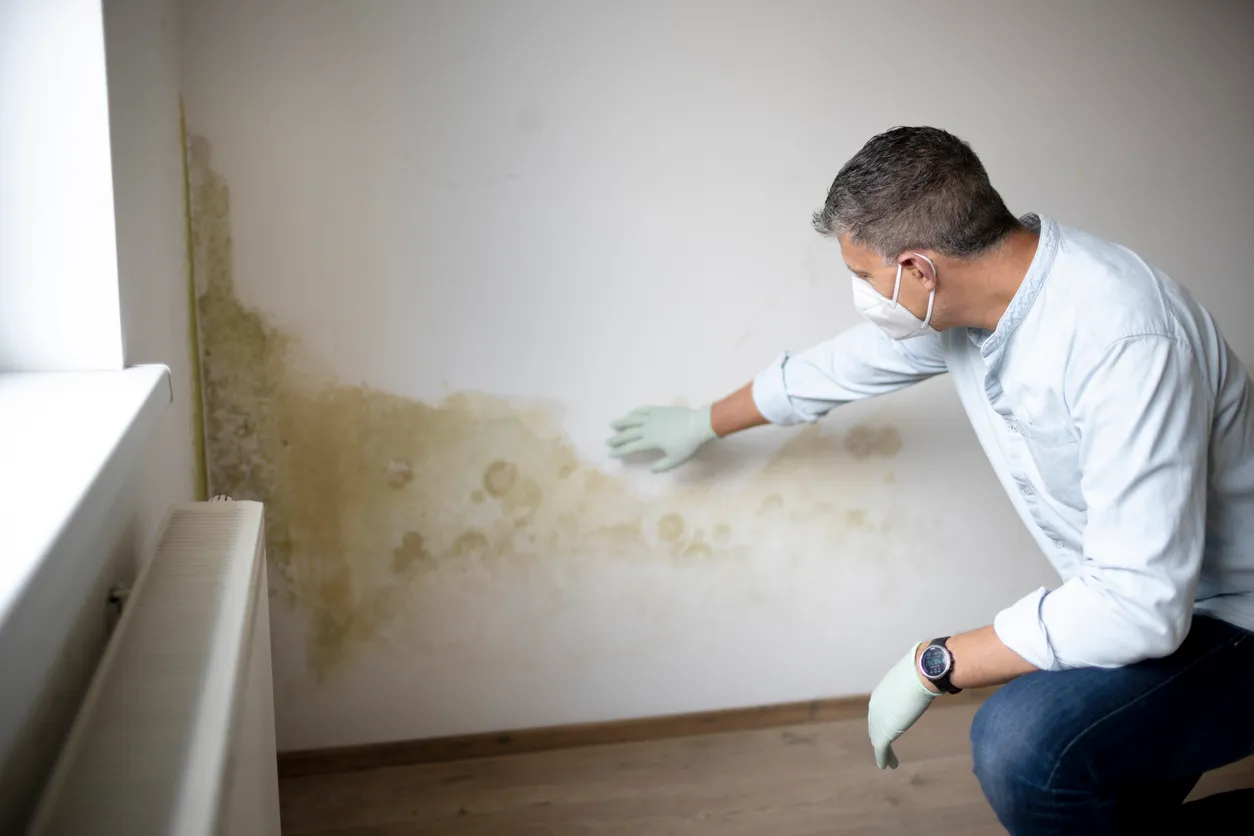
In Italy, the healthiness of domestic environments remains an open issue for millions of families: according to ISTAT data analyzed by Saint-Gobain Italia, 16.3% of families report humidity problems in their homes: in absolute terms, approximately 4.3 million families, equal to 9.4 million people. A phenomenon that not only affects the comfort of internal spaces, but can also have effects on health: the World Health Organization in fact links 13% of cases of chronic childhood asthma in industrialized countries to excess humidity in buildings.
The picture of housing quality also includes other critical factors: damaged structures, reported by 11.9% of families, poor light, indicated by 9.6%, and exposure to noise in the area of residence, which concerns 11.7% of families. They are four indicators which, read together, provide a snapshot of the main fragilities of the Italian residential heritage and pose a concrete challenge to the construction sector: to intervene on the comfort and quality of internal environments with effective solutions, compatible with the renovation of the existing and less invasive than in the past.
>> Are you interested in articles like this? Receive them directly
The starting data
The basic data – processed and interpreted by Saint-Gobain Italia – comes from the ISTAT survey Aspects of daily life (2025 survey), in the sections dedicated to problems in housing and in the area of residence, distributed by region, type of municipality and characteristics of the main income earner. The percentage values refer to families with the same characteristics, and calculated on the basis of 26.6 million families residing in Italy, as per ISTAT 2025 demographic indicators. The data on the health impact of domestic humidity is instead taken from the WHO report on indoor air quality, taken from the Istituto Superiore di Sanità.
So 4.3 million families struggle daily with humidity in their homes, 3.1 million families live in homes with damaged structures, 2.5 million in homes poorly lit by natural light, and 3 million families live with noise pollution.
“The data tells of a concrete urgency, experienced within the homes of millions of Italians. Healthy housing is today one of the areas on which the quality of buildings is measured – commented Gaetano Terrasini, CEO of Saint-Gobain Italia – Over time, the construction industry began to look at energy performance as the main indicator of quality. Today, however, living comfort and indoor well-being must be considered equally decisive: they speak to health and quality of life. We continuously continue to innovate our products so that those who live in a house can do so in conditions of real well-being, and so that those who build or renovate have tools capable of responding to the challenges that the data tells us.”
The geography of the problem, from North to South Italy
The domestic humidity ranking shows an Italy split in two. Sardinia is in the lead, where 25.7% of families report the problem: more than nine points above the national average. Followed by Friuli-Venezia Giulia (21.1%), Abruzzo (20.8%), Province of Bolzano (20%) and Sicily (19.4%). This group is contrasted by Campania (11.1%), Umbria (13%) and Puglia (13.5%), all below average.
In terms of damaged structures, the distribution is more transversal: Bolzano in the lead (19.3%), followed by Sardinia (16%), Abruzzo (15.4%), Lombardy (13.3%) and Friuli-Venezia Giulia (13.1%). Here the North enters the ranking alongside the South, a sign that the problem of maintenance is not a geographical question but one of age and quality of the buildings.
Low light, however, has a clearly northern center of gravity: absolute peak in Bolzano (19.1%), followed by Friuli-Venezia Giulia (15.5%), Sicily (11.7%), Lazio (11%) and Lombardy (10.8%).
The demographic profile of the most exposed families
Which families are most exposed to these problems? Humidity is more widespread in the homes of younger families: in those with the main income earner up to 35 years of age, the share rises to 18.1%, almost two points above the national average.
An opposite trajectory is observed for damaged structures: the share grows with the age of the recipient, from 10.2% in families aged 35-44 to 12.8% in families with a recipient over 65. This is the profile of the building stock that is not regularly maintained.
Dry systems and dehumidifying plasters as a possible solution
Domestic humidity is not an inevitable phenomenon. It arises from the encounter between environmental conditions and the characteristics of the building: thermal bridges in the perimeter walls, insufficient ventilation, dated insulation, infiltrations from the outside. Good daily management practices (ventilate the rooms several times a day, avoid excessive condensation of steam in the kitchen and bathroom, keep the heating systems under control) contain the problem, but do not solve it if the casing is inefficient.
Ignoring humidity in the home, in addition to deteriorating the quality of life, entails concrete risks: structural degradation of the walls, mold formation, worsening of the indoor air, with effects that international health literature has now documented.
When the conditions of the building require a more structural intervention, there are construction solutions capable of acting in a targeted way. Among these, plasterboard and dry systems offer a versatile approach: for example, there are technologies capable of absorbing and neutralizing up to 84% of the formaldehyde present in the air of closed environments.
Furthermore, the system’s closing elements (for example the combination of a plasterboard sheet with formaldehyde absorption technology and a specific water-based paint for plasterboard) play an active role in purifying the air over time, reducing the concentration of formaldehyde and allowing you to live in increasingly healthier spaces.
Another useful solution for limiting humidity damage in the home is to use a dehumidifying plaster capable of restoring all types of damaged walls. There are diversified solutions, valid for both exteriors and interiors, formulated with cementitious binders or based on natural hydraulic lime.
These are light interventions, quick to install and consistent with construction with a lower environmental impact, compatible with the renovation of existing assets and capable of reducing CO emissions2 along the life cycle of the building and energy consumption to heat and cool the environments.