
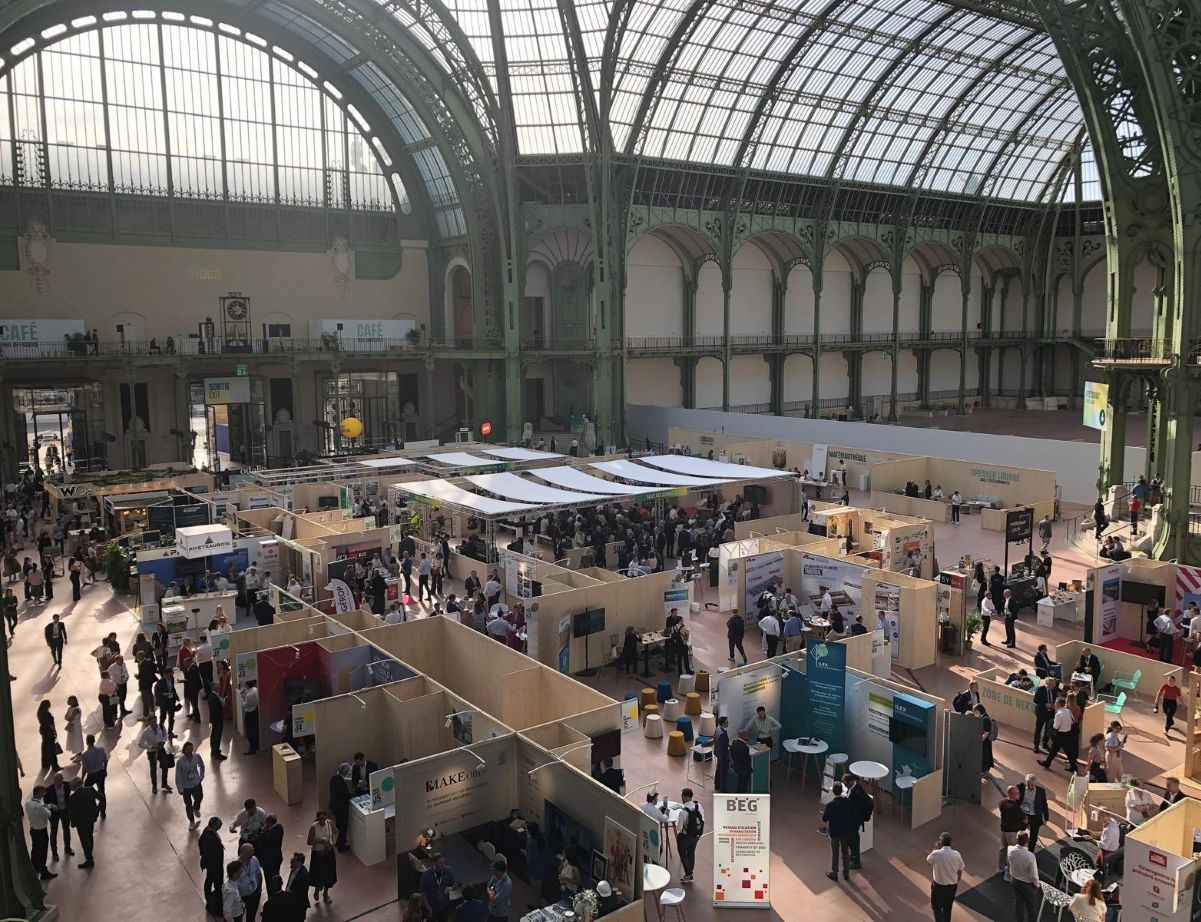
The 5th edition of the Low Carbon Real Estate Show, the SIBCA, for the second consecutive time at the Grand Palais, marks the start of the school year in a particular context.

The SIBCA trade fair, sponsored from the start by climatologist (ex-IPCC) Jean Jouzel, takes place at a time when the UN warns that we will exceed the increase in global temperatures by 1.5°C. However, the IPCC has contributed, particularly within the framework of the Paris Agreement, to underline how crucial this limit is, to prevent uncontrollable upheavals. In terms of uncontrollable upheavals, the first debate of the presidential candidates, at MEDEF on August 27, indicates that a good part of the political spectrum wants to call into question the mitigation in the French building, therefore the limitation of GHG emissions during construction.
The week before the debate, France was emerging from its fifth heatwave, with a quarter of the rivers dried up, megafires in France and throughout Europe, a nightmare scenario that we did not expect so quickly.
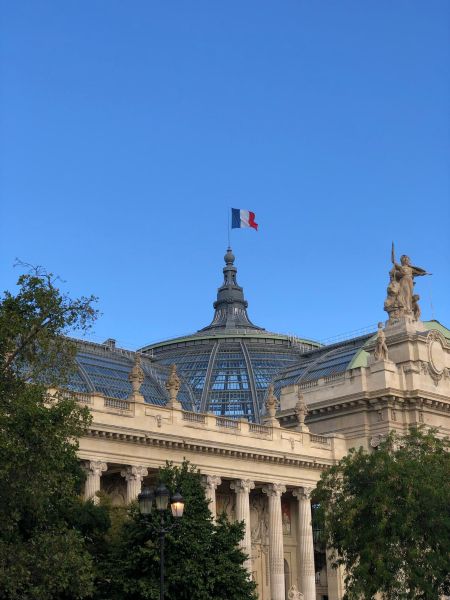
The Grand Palais, magnificent explanation of the greenhouse effect. © Jonas Tophoven
The building in question
For Building, the bill is severe. It is estimated that a good part of the housing with a DPE A or B are in fact thermal kettles. So-called virtuous housing no longer shelters the population as it should and, above all, the lack of prolonged night-time cooling leads to them being air-conditioned in one form or another, with serious consequences for energy supply and common convivial urban life.
And to complete the picture, France’s financial difficulties are raising fears of a rise in interest rates which could undermine the painful little recovery in the residential real estate market.
SIBCA summer school
For theFrench real estate, the situation is catastrophiclike the climatic catastrophe that the country is going through. And yet, the SIBCA succeeded in its bet to increase the number of conferences – 180 speakers – and auditoriums (seven) to attract a large and attentive audience, interested in the themes proposed or in the stature or commitment of the “speakers“.
There are several reading grids for this.
SIBCA, agitator of a sector in search of solutions
The first is that events kick in the anthill. The world of real estate is coming out of its torpor, looking for solutions, coming to life, and SIBCA benefits from its committed positioning – low carbon – in the face of events such as SIMI or MIPIM (the upcoming animation of which still remains to be evaluated). At SIMI, we drank champagne in the middle of the financial crisis, in 2008.
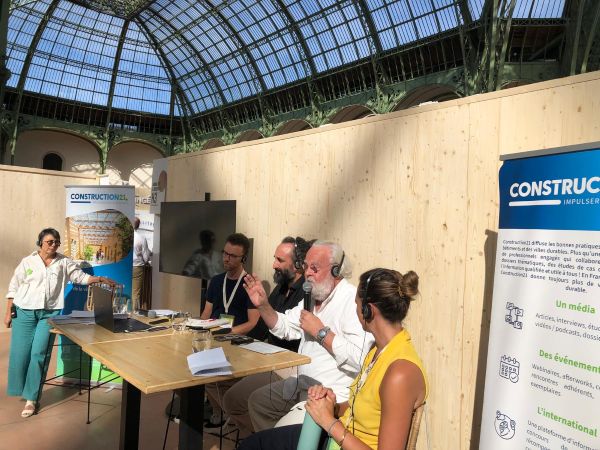
Philippe Madec intervenes in a debate at the wood-biosourced Agora, full room. © Jonas Tophoven
The prospect of deregulation
The second, more sneaky explanation is that the prospect of the destruction of RE2020 and a failure to take into account the next European directive on the energy balancing of housing – as colleague Pascal Poggi points out in the aisles – will make it possible to better monetize gains from storage or non-production of GHGs. The more permissive the regulations, the more valuable the efforts. Unless Trumpist-type deregulation opens the floodgates to low-cost land and construction, and therefore to a theoretically strong recovery in the real estate market.
Behind the taboos
It is possible that these options will emerge through the interventions of high-level speakers who must be able to decipher, knowing that bet on the end of carbon regulationseven if it would possibly favor a label like BBCA which underlies the demonstration, today represents a taboo in the profession, despite the admittedly very recent declarations of certain candidates for the Presidency of the Republic.
In five years of development, SIBCA has never stood out for cynicism and the sponsorship of Jean Jouzel is a strong sign. Just as the very term degrowth remains a taboo, even at the International Wood Construction Forum.
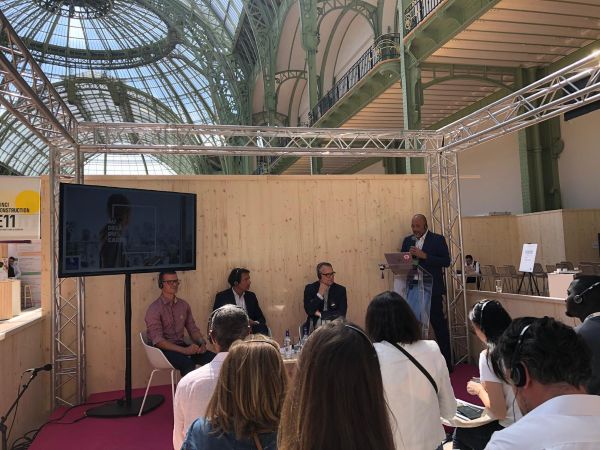
Prospective study on construction in 2050 carried out for the Liébot group by and with François-Gabriel Perraudin, full room. © Jonas Tophoven
Show solutions
So the possible response to the success of the 5th edition, in terms of management of the conference program in particular, lies on two levels. First, the SIBCA does not play the bidding of catastrophic scenarios but insists on professionals who show solutions (by making people think that there are solutions).
Second, there may be a lag effect in this real estate environment, and the disaster of summer 2026 acts as a trigger for everyone to be interested in decarbonization.
Decarbonization as an investment axis
And there is undoubtedly also another fundamental explanation for the good synergy recorded for the 5th edition of this show. Quite simply, the industrial decarbonization is underway. THE BBCA label, E+C- calculation then RE2020 have initiated a general movement in France, the consequences of which can be seen. France becomes the European epicenter of research low carbon constructive solutionsnot only by wood and biogeosources, but for concrete, steel, aluminum… And also, now, for equipment. Certainly, some solutions are international, such as the capture of carbon from cement plants, practiced by Heidelberg Materials in Norway – and which should arrive in France –, or the certification of carbon stored in the structure of wooden structures (Switzerland, Timber Carbon), not to mention the Dutch event initiative Built by nature, sponsored by a Dutch patron, and which is attempting to establish itself in France in association with theBBCA labeling body.

Sequence from Wednesday late afternoon, Grands Débats room, “Wood construction at market price, info or misinformation?” with Stéphane Miget, moderator. © Jonas Tophoven
big bang ?
In principle, regulatory unraveling on carbon seems to take industrialists on the wrong foot and open the market to all those who have not focused on climate R&D. This is pure ideology. Because we understand that the Building market only evolves under regulatory constraints, not through spontaneous generation, especially if it involves improving well-being and action on the climate. The industrial world of construction has become accustomed to a progressive logic since the first oil crisis of the 1970s, moving towards energy sobriety, and towards carbon sobriety. It adapted to the progressive strengthening of RT then RE. And yet, as counterintuitive as it seems, it is possible that investors in new low carbon technologies do not be frightened by a possible big bang regulatory, favored by the per reliability of current normative benchmarks, such as the DPE. By this crisis of legitimacy into which building regulations entered 18 years after the Grenelle environmental summit. This would be a possibility of rethinking, and as the carbon issue will remain significant, the solutions which actually contribute to mitigation would perhaps emerge from it.
The SIBCA formula driven by climate collapse
In any case, the SIBCA fruit does not seem to be held by the thread of RE2020 and its organizers, with Built by nature, may wonder if it is not time to spread to the four corners of Europe and the world, for the benefit of the planet.